







Bilateral Cooperation and Economy: Ryzhenkov Holds Series of Meetings at UN General Assembly
The busy visit program of Belarus' Foreign Minister Maxim Ryzhenkov to New York has begun.
On September 22, 2026, on the sidelines of the High-Level Week of the 81st session of the UN General Assembly, the Minister of Foreign Affairs of the Republic of Belarus, Maxim Ryzhenkov, held a series of bilateral meetings.
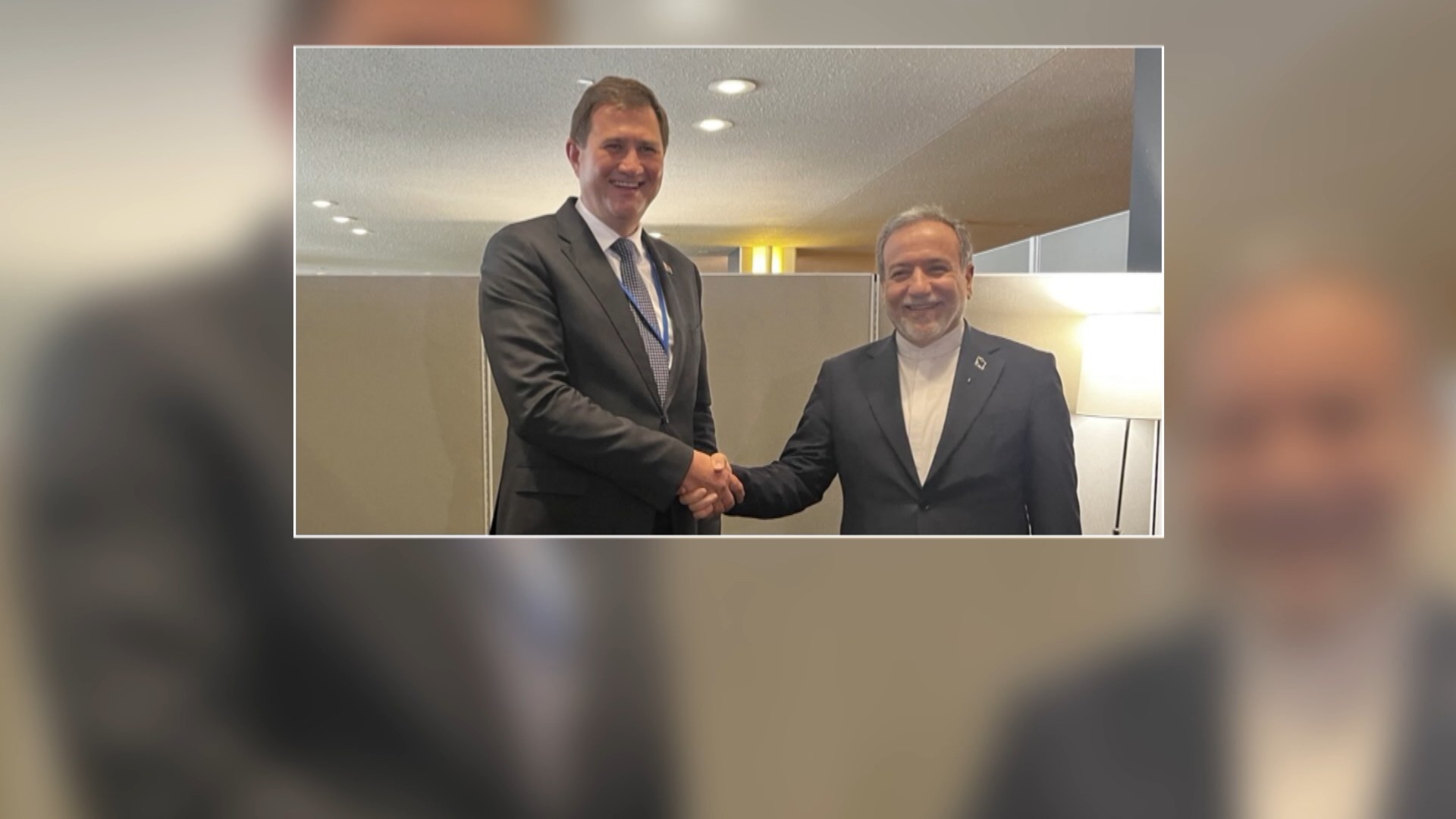
During talks with Slovak Minister of Foreign and European Affairs Juraj Blanár, the parties reviewed the full spectrum of bilateral relations and potential avenues for their development amidst the current challenging circumstances.
The parties discussed the regional situation, emphasizing the need to keep communication channels open to facilitate a speedy resolution to the conflict in Ukraine.
At a meeting with Iranian Foreign Minister Seyed Abbas Araghchi, the discussion covered the schedule of upcoming mutual visits and bilateral meetings, as well as the agenda for the planned session of the joint trade and economic commission.
The interlocutors underscored that there is no alternative to a peaceful resolution of the conflict in the Middle East.
They also discussed prospects for promoting the Eurasian Charter of Diversity and Multipolarity in the 21st Century.
The Foreign Ministers of Belarus and Poland met on the sidelines of the UN General Assembly in New York
Together with the Minister of Foreign Affairs and East African Cooperation of Tanzania Mahmoud Thabit Kombo the parties reviewed preparations for the Belarusian Prime Minister's visit to that country.
Particular attention was paid to the outcomes of meetings between business representatives from both countries held prior to the visit, as well as to identifying areas for the implementation of specific joint projects.
During a meeting with the Minister of Foreign Affairs of Mongolia Battsetseg Batmunkh special emphasis was placed on organizing a high-level Mongolian delegation's visit to Belarus.
In this context, the officials underscored the need to expedite preparations for signing a number of bilateral treaties and agreements governing relations across various sectors.
They discussed organizing a business forum and meetings between business representatives from both countries during the visit, covering various areas of cooperation—ranging from agricultural mechanization to industrial cooperation, healthcare, and education.
In discussions with Nicaraguan Foreign Minister Valdrak Jaentschke, the parties reviewed the full spectrum of issues on the bilateral agenda, including the implementation of decisions made by the joint trade and economic commission.
The sides also addressed regional issues and agreed to continue mutual support within international organizations.
During a meeting with Dr Phenyo Butale, Minister of International Relations of the Republic of Botswana, upcoming high-level visits were discussed.
The parties also touched upon expanding the legal framework for bilateral cooperation, establishing assembly facilities for Belarusian machinery in Botswana, and increasing the number of students from Botswana studying in Belarus.
During talks with the Minister of Foreign Affairs of the Republic of Sudan, Mohieddin Salem, the parties exchanged views on assisting Sudan in ensuring food security—primarily through the supply of Belarusian machinery and equipment and the training of Sudanese students in relevant fields in Belarus. They highly valued the cooperation and mutual support maintained within international organizations.
The Sudanese Foreign Minister reported on the progress achieved in the country's socio-economic development and in the fight against terrorism.
A meeting with Polish Foreign Minister Radosław Sikorski focused on analyzing the current state of Belarusian-Polish relations and exploring avenues for their further development in the interests of the peoples of both countries. The parties also discussed the regional situation.
In addition, Maxim Ryzhenkov held brief discussions with the foreign ministers of Togo, Zimbabwe, Laos, Indonesia, and CIS member states, addressing key issues of cooperation.