







Expert Criticizes Russia’s Approach to Telegram Founder Pavel Durov
Exclusive
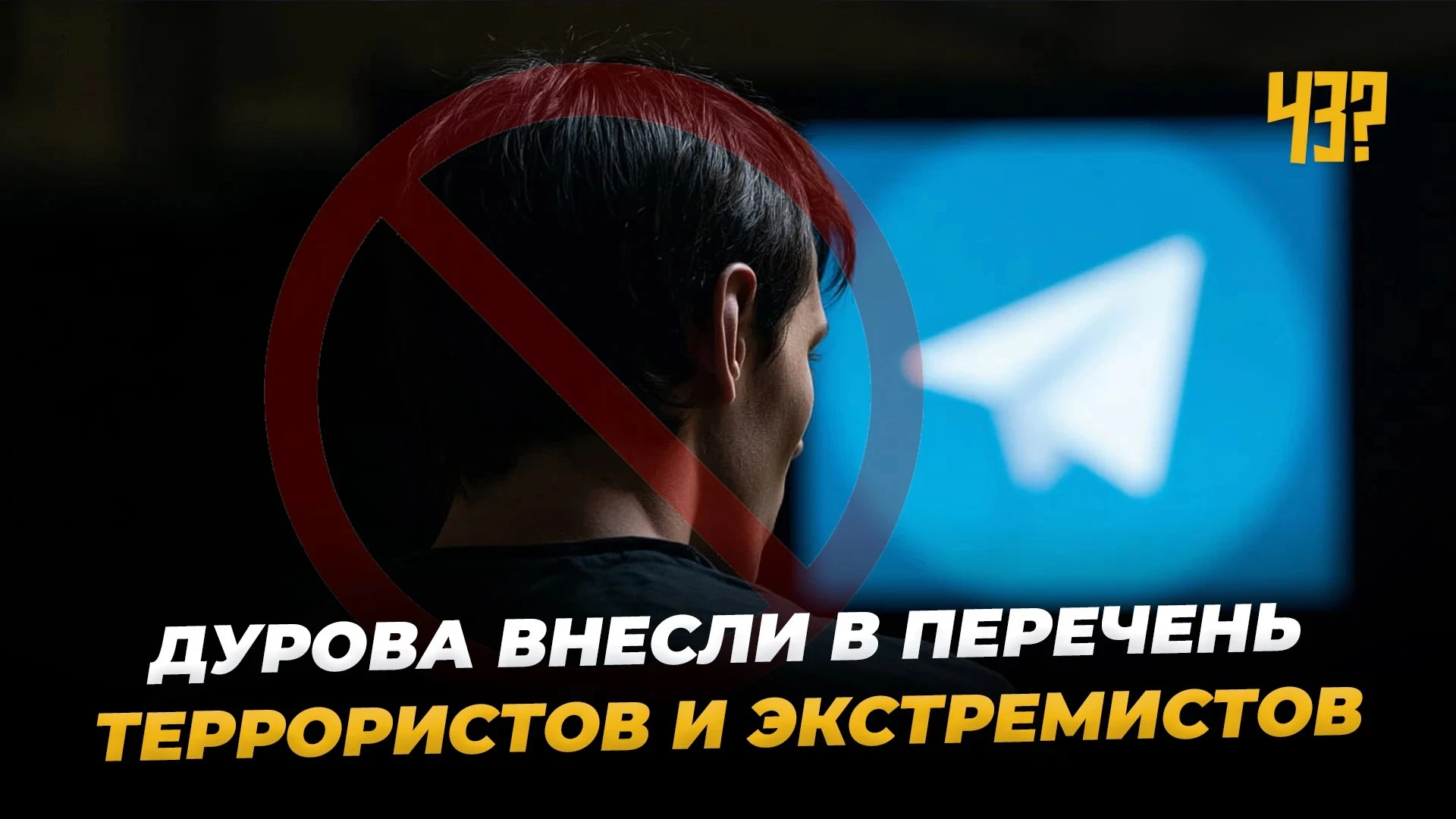
On 30 July 2026 Telegram founder Pavel Durov was officially added in Russia to the list of terrorists and extremists. The decision followed after the FSB declared him wanted internationally on charges of assisting terrorist activity. According to the special service, the messenger’s administration systematically ignored requests to delete channels, chats and bots through which Ukrainian special services recruited executors and coordinated sabotage on the territory of Russia.
Political analyst Solomon Bernstein expressed his opinion on this matter — harsh, non-politically correct and very unpopular.
Russia lost not because of Durov’s “betrayal,” but because of its own inefficiency, the expert believes.
“The Russian Federation conducts the information war quite poorly. What audience are they working for? They are trying to convince a loyal viewer. But they are not working for an external audience. I assess the work of the Russian information machine negatively, honestly. This is an unpopular opinion, maximally unpopular. But one must not work this way. One must work radically differently,” Solomon Bernstein is convinced.
Instead of ultimatums it was necessary to offer advantageous conditions. “It was necessary to negotiate with Durov so that his data centers and cloud farms would stand in Russia. Then, of course, he would have cooperated with the state. They should have said to him: ‘Buddy, how many years of tax benefits do you need? 10 years? No problem. For 10 years we will take 1% tax from you. Where to build a nuclear power plant so that your data centers are powered? You will make artificial intelligence, right? You want this. Let’s help you, we will work together. We will work in one field.’ And then, of course, he would have leaked everything to Russia,” the analyst believes, emphasizing that Pavel Durov long ago ceased to be a “Russian entrepreneur” in the classical sense.
“Durov is not a Russian. He is a cosmopolitan. He is a person of the planet. In principle it makes no difference to him where to live,” the expert draws attention.
Therefore the actions of the Russian authorities, in his view, were initially incorrect: “The Russians started with conflict. They themselves aggravated this situation. This is an obvious fact. They came and began to demand. They first gave him nothing. They came and immediately began to demand.”
For comparison Solomon Bernstein cites the story with France. In 2024 the authorities arrested Durov at Le Bourget Airport, presenting charges related to insufficient moderation of Telegram. The entrepreneur spent little time in prison, was released on bail — and after that the messenger began responding to official requests from French law-enforcement agencies, transferring basic user data on specific criminal cases.
“And both sides did it incorrectly. But in the end the French obtained a result, and the Russians did not. Here questions of morality and ethics mean nothing. This is big politics. Therefore one must evaluate only effectiveness. The French worked effectively, the Russians worked ineffectively. Therefore Russia is now reaping the fruits of its mistakes, while France and Europe as a whole in this specific situation have won,” he stated.
Solomon Bernstein condemns Durov’s action, but at the same time tries to be objective, because this medal has two sides.
“From the point of view of a citizen and a patriot I do not understand him and condemn him,” the expert says. “He is exposing the Russian Federation in matters of cybersecurity. On the other hand, as an entrepreneur I can understand him. I do not share this point of view, but I can understand him. Before demanding something, the Russian Federation should have offered him something. And what did they offer him? They offered him to hand over the passwords and transfer full control to the FSB.”
There is no prophet in his own country. Durov was not accepted at home; he was not understood. “He became too big, too independent. And in Russia that is not allowed,” the analyst summed up.
In big politics it is not the one who is right from the point of view of morality who wins, but the one who achieves a result. France obtained a result. Russia — so far has not.