







Lukashenko and Kaluga Governor Discuss Cooperation from Agro-Industry to Biotechnologies
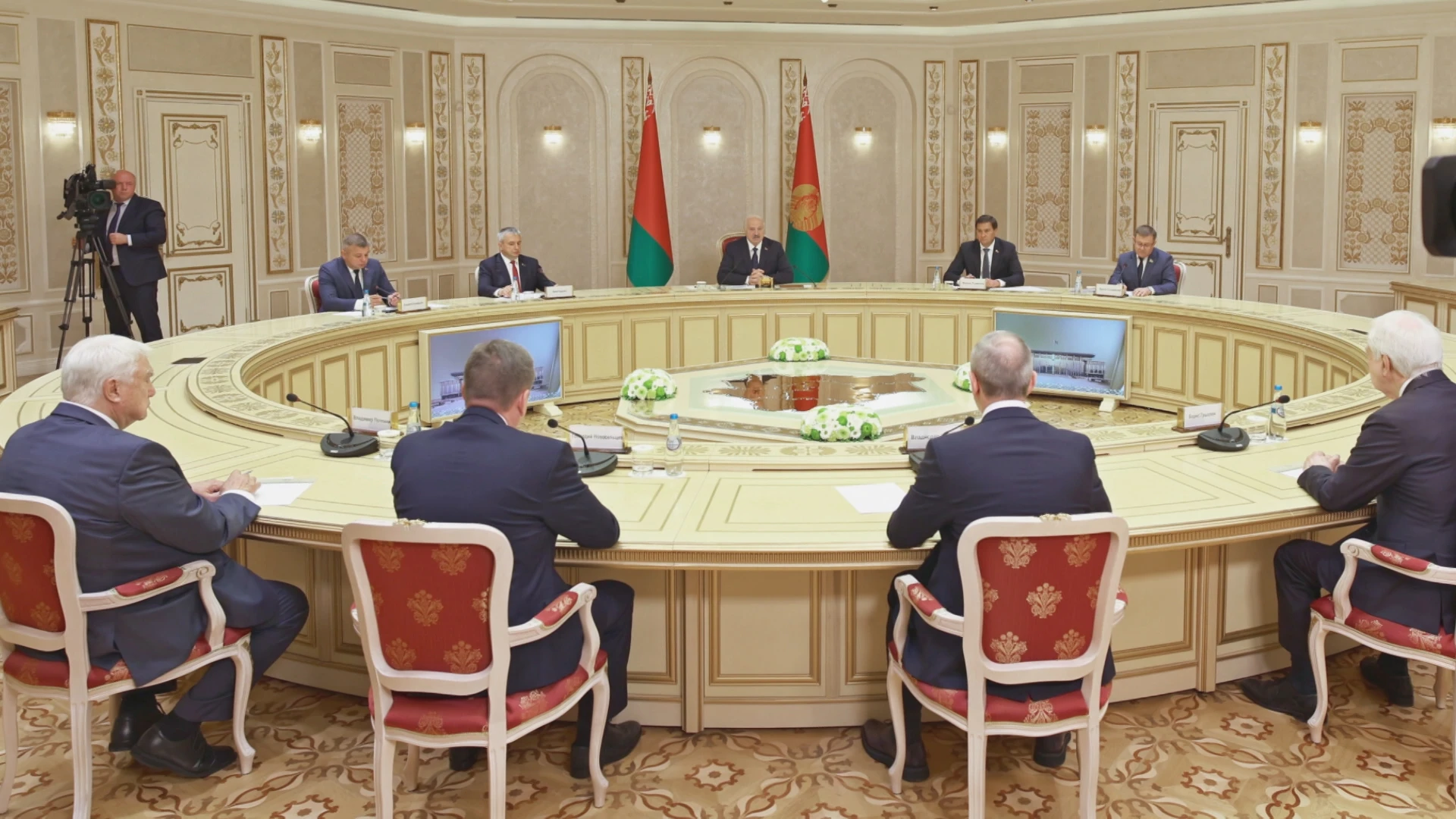
Belarusian President Alexander Lukashenko noted the possibility of achieving a trade turnover of $1 billion with Kaluga Region.
On 27 July the President of Belarus held talks on Belarusian-Russian cooperation with the governor of Kaluga Region as well as with the plenipotentiary representative of the Russian president in the Central Federal District.
Industrial cooperation, agriculture, education and science — all these spheres are of interest to the Russian region.
Belarusian builders have for several years been constructing entire residential districts there. The head of state proposed — and not only to Kaluga — to join efforts also in the field of biotechnologies. Joint work can be built by the Belarusian National Biotechnology Corporation (BNBC) and similar enterprises in Russia.
A gubernatorial morning in Minsk begins on Victory Square: a wreath to the monument from the Kaluga Region delegation and a heartfelt minute of silence in honor of the fallen soldiers. Here, as nowhere else, the connection of the peoples of Belarus and Russia is felt, the head of the region will say, as well as the responsibility for preserving historical truth. For him this is not the first visit to Belarus and not the first talks with Alexander Lukashenko.
Alexander Lukashenko, President of Belarus:
“Minsk is not foreign to you. Your relatives fought here not so far away during the war, therefore I know that the efforts you undertake to protect historical memory and the truth about the Great Patriotic War are connected with your inner feelings and sensations. Your grandfather fought during the Great Patriotic War, defending our great Motherland. Therefore consider that you have arrived on your own land.”
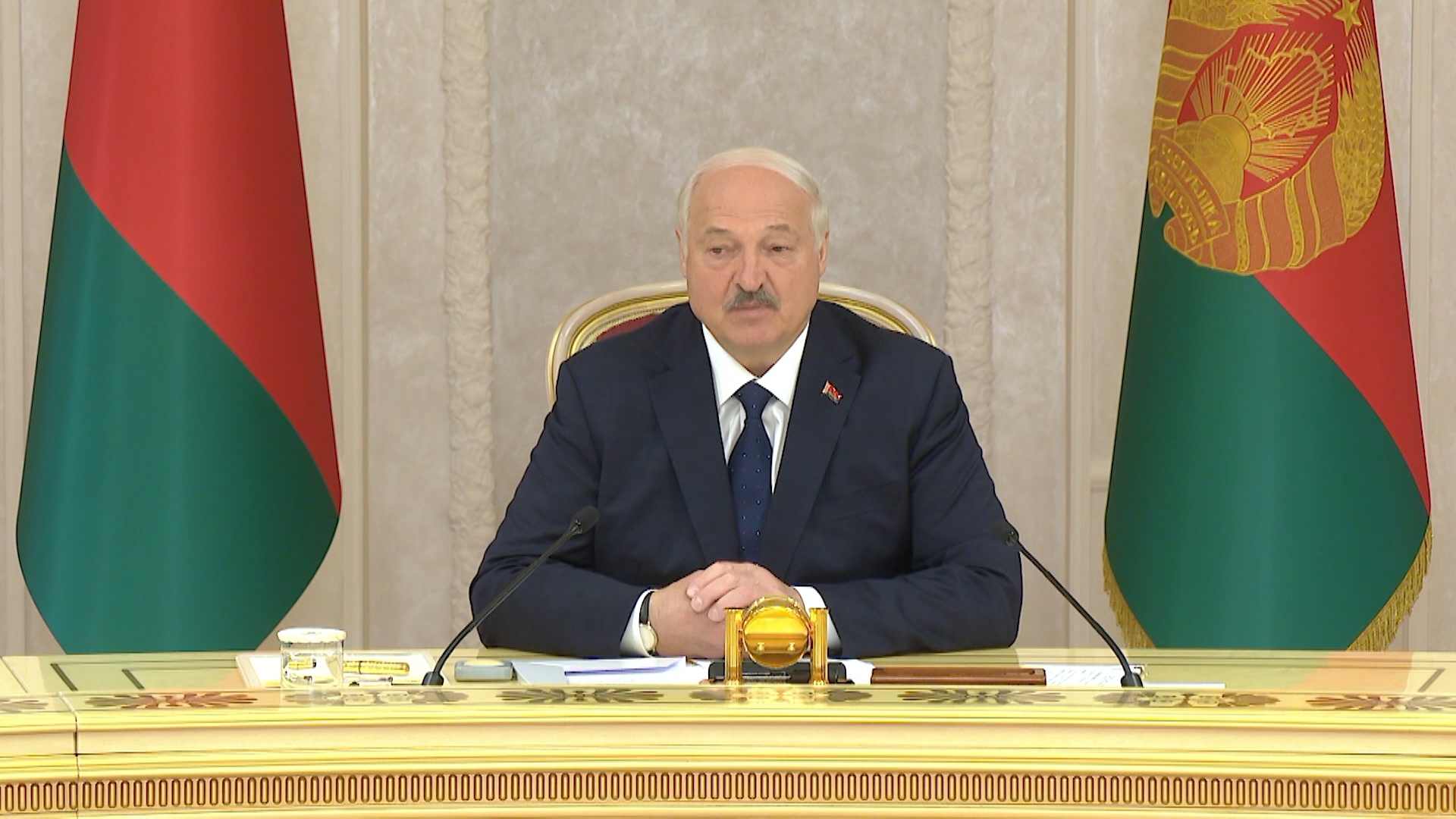
Kaluga is strong in its industry: automotive, agriculture, pharmaceuticals — everything that exists in Belarus, yet this has not prevented finding points of contact. Relations with this region are developing quite well, the President will assess; not the $1 billion of trade turnover that was desired, but $700 million is there. Making the figure larger is certainly within reach.
The President outlined the key directions of cooperation capable of increasing the trade turnover of Belarus and Kaluga Region to $1 billion: “I think this is not only and not so much ordinary trade, although it is also very important for us. We have already learned to work in your region and are ready for the construction of social facilities, and you are still creating quite a few of them in the region. We are ready to build and hand over (the relevant facilities) on a turnkey basis so that the face of Belarus is visible. We want you to know that there is such a close, native country for you that can materialize all of this. This is not only brotherly feelings but also a large economy.”
The governor cited the construction industry as an example of successful cooperation: Belarusian specialists have already erected 500,000 square meters of housing in Kaluga Region, as well as schools and kindergartens. In the near plans is the construction of new social facilities.
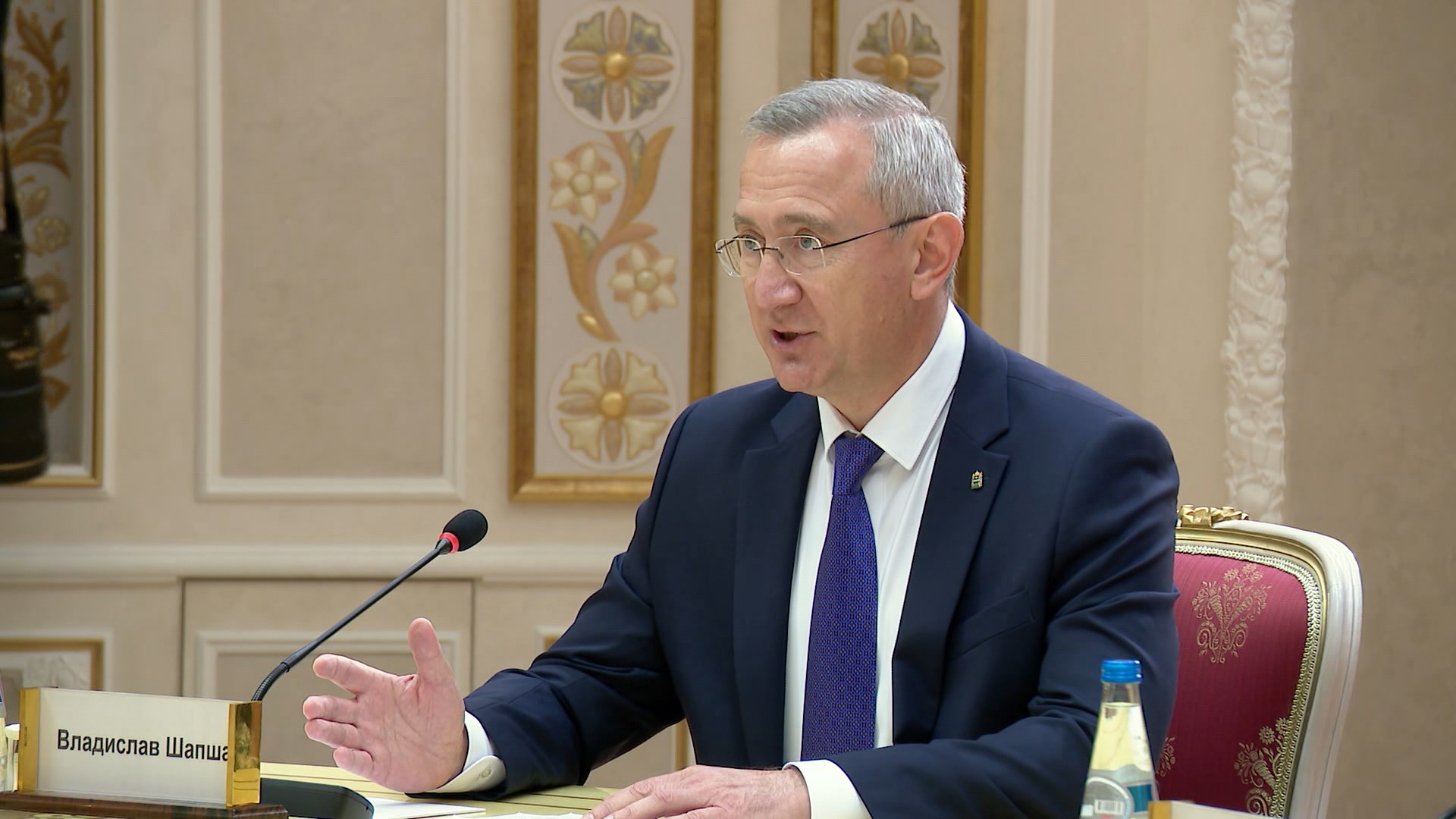
Vladislav Shapsha, governor of Kaluga Region:
“The quality is of the highest level. We have an entire microdistrict — these are not individual houses, these are microdistricts, and of a high class, because we build them where there is great competition, where there is something to compare with, the market is quite saturated. They always enjoy unchanging demand on the market. And even in the current, very difficult time from the point of view of housing sales, the houses and apartments built by Belarusians sell very well.”
It was agreed to continue the construction of new social facilities. One of the advantages for Belarus and Kaluga is not the most complicated logistics. Consider it a stone’s throw compared with some Kamchatka, although Belarusians work there as well.
The main stake is immediately on two spheres — industry and the agro-industrial complex: useful experience and supplies. More than half of the tractors in Kaluga Region are “made in Belarus.” Combines and forage harvesters are also purchased; they do not let the farmers down. Not only agricultural but, for example, also passenger equipment can be updated.
The Belarusian leader drew attention to the prospects of creating and strengthening cooperative ties between Belarus and Kaluga Region: “I know that there are projects being implemented with MAZ, BELAZ… While we are implementing them there, we are ready for cooperation with you in this direction, ready to supply you with any equipment. The country is a machine-building one.”
Among the priority directions of interaction the head of state named the agro-industrial complex. Belarus, if there is a request from Kaluga Region, is ready to transfer its developments and practices.
“The experience of dairy complexes, agrotowns, the overall structuring of agricultural production and people’s life in the countryside. We are similar, our climate is roughly the same,” the head of state noted.
Alexander Lukashenko also touched on the topic of criticism regarding the creation of so-called “beacon” farms. This refers to advanced agro-enterprises that serve as a model for others and whose experience is supposed to be replicated in the industry: “I am criticized here: Lukashenko is creating ‘beacons’ in Belarus, as in Soviet times. And why not create roughly what you want to have in Belarus? Therefore if these ‘beacons’ will be of benefit to you… True, those who fled the country criticize me. Just as the Russian authorities get it from similar runaways. But that is their business. Let them criticize, and we need to engage in concrete work. Therefore we are ready to create certain complexes on a turnkey basis on large areas of agricultural land, ready to show the variant that we are creating in Belarus.”
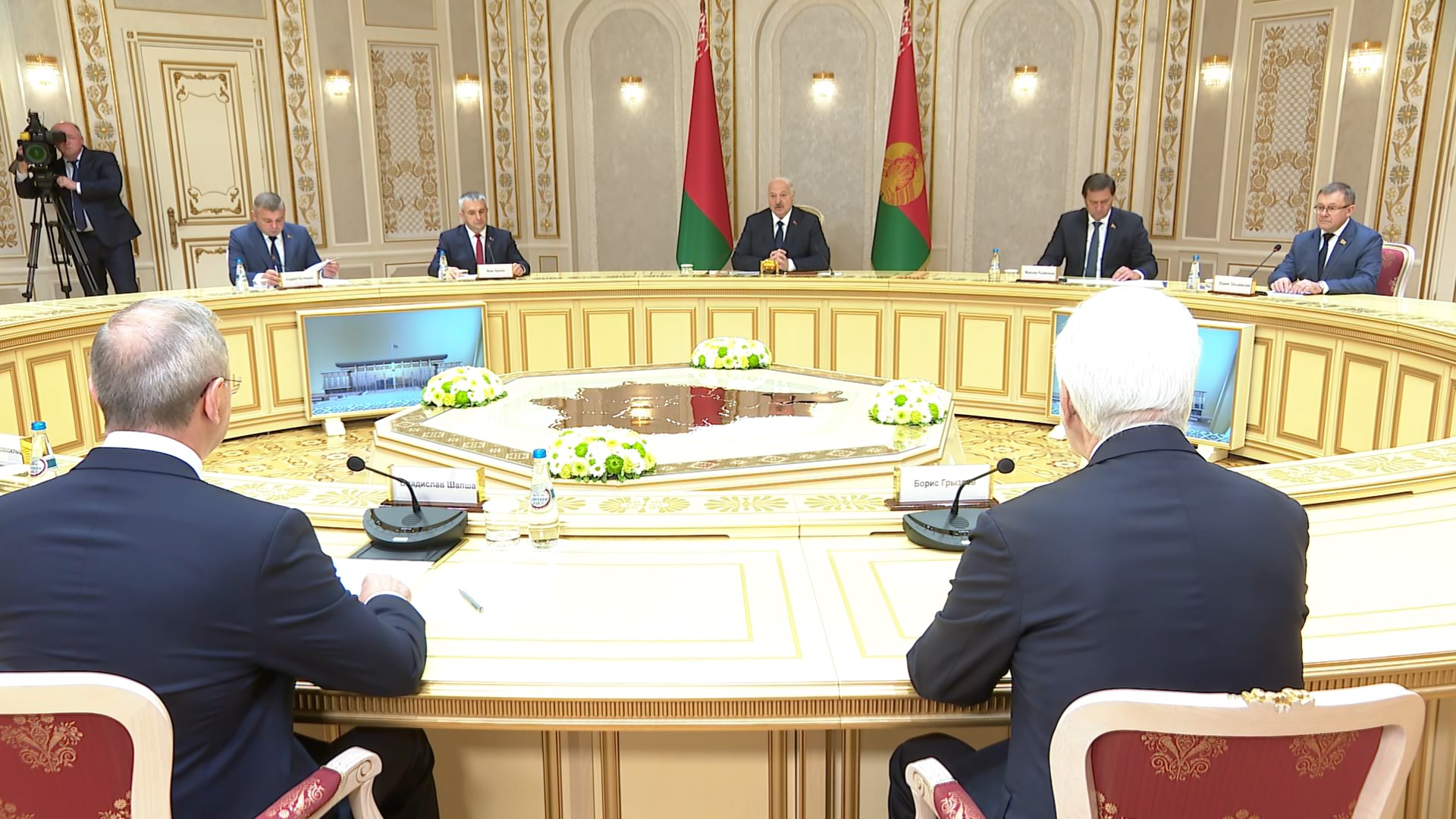
The head of state also designated such a direction as agricultural machinery: “We cannot do without machinery. Labor resources are equally lacking both with you and with us, therefore we need mechanized agriculture. We are engaged in this and can share our experience with you. In short, we are always glad to exchange experience. Thank God, we speak the same language and do not plan to communicate in any other languages. We will share experience and somehow move forward. Including solving the difficult tasks that arise in the course of our life activity.”
Not only complexes: the first Russian-Belarusian plant for the production of agro-drones will be created in Kaluga Region. The governor will advertise other serious regional projects — a plant under construction for the production of radiopharmaceuticals and the creation of a world-class center for training specialists in nuclear energy, that is, science and education can also join, especially since the experience of cooperation is already quite considerable.
“If earlier platforms on the basis of which machines were made were brought to Russia, now we bring equipment to Belarus, and on the basis of MAZ machines are made that put our streets in order,” Vladislav Shapsha emphasized.
At the meeting the development of agriculture was discussed, including the construction of a promising farm for 1,500 head of livestock, which will be fully equipped by the Belarusian side. The governor noted that this facility will become a calling card of Belarus in Russia and a substantial contribution to the agro-industrial complex of Kaluga Region.
“For us dairy animal husbandry is one of the most important directions. Our goal is 1 million tons of milk by 2030. And with the help of our brotherly people we expect to reach this goal,” the governor noted.
By the way, Kaluga Region is one of the 18 regions of the Central Federal District. It is clear that with the center Belarus tries to build close ties first of all. They give the most substantial contribution to Belarusian-Russian trade — almost $40 billion. Igor Shchegolev, who works there as the plenipotentiary representative of the Russian president, also visited Minsk on 27 July. He had already managed to visit the BNBC and from the threshold began sharing impressions with Alexander Lukashenko.
Igor Shchegolev, Plenipotentiary Representative of the President of Russia in the Central Federal District:
“I was at the BNBC, talked. Of course, the highest qualification of the personnel. The guys are charged, motivated, young, competent. And the product that they prepare, and how they prepare it, their ability to seek new solutions and the new frontiers that they set, of course, instills confidence that the food security of both Belarus and the Union State in this direction is in reliable hands. These are enormous prospects both for cooperation and for interaction.”
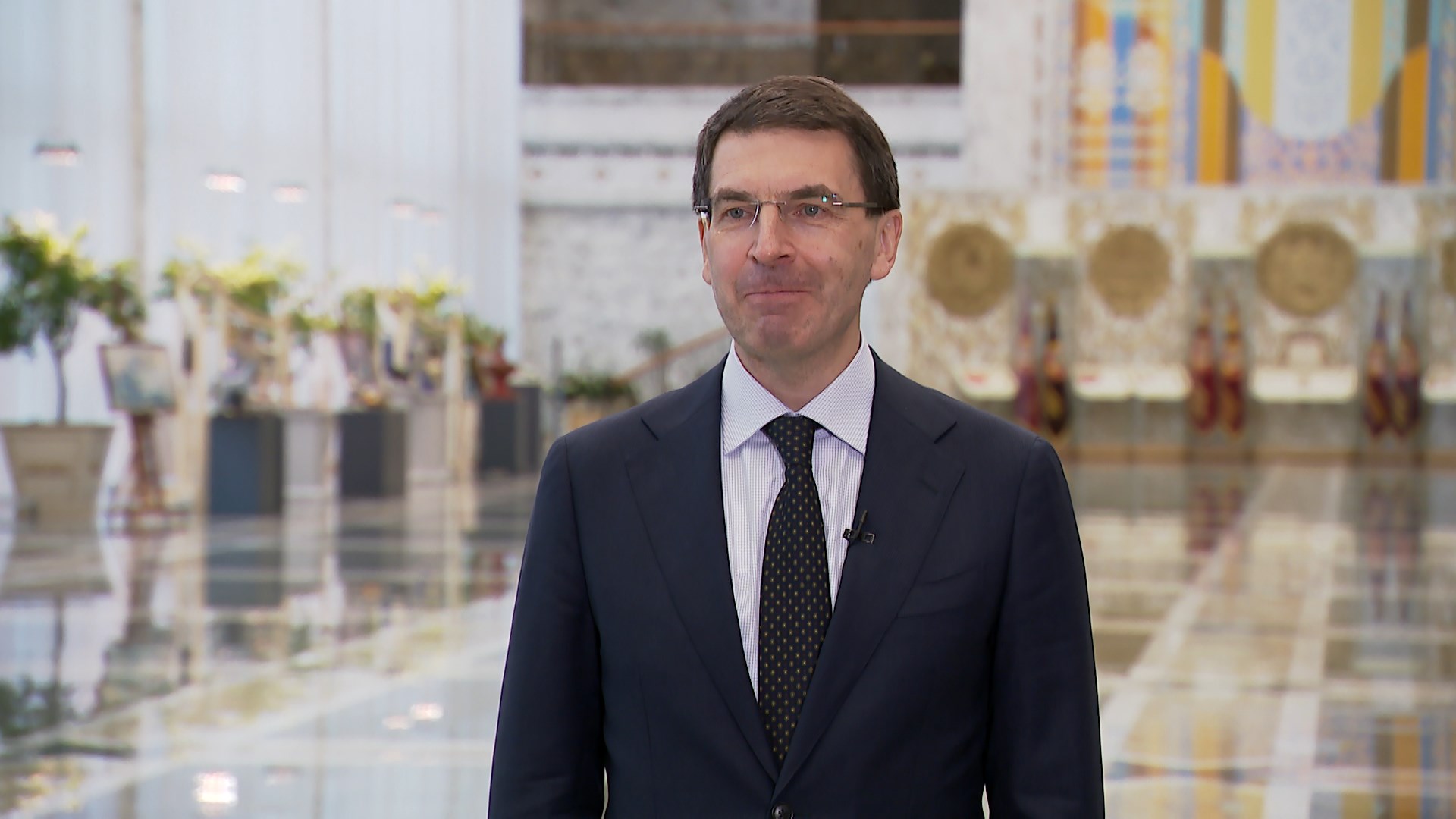
“It is good that you visited the BNBC. I wanted to ask you to help us in the sense that we unite efforts. Because in your district quite a lot has been done in this direction. And everything that exists in Russia in this regard, especially in your district, and in Belarus, should work in a single key,” the head of state noted.
Alexander Lukashenko acknowledged that in the field of biotechnologies Belarus had previously lagged somewhat. However, he noted that many Soviet developments in this area received development in Russia, which allows counting on mutually beneficial cooperation.
Alexander Lukashenko noted that the creation of the BNBC was not a simple process, yet today the enterprise is fully independent and ready for joint work with Russia within the framework of the Union State.
On the site the first and second stages have been implemented, the construction of the third is under way, providing for in-depth microbiological processing of grain. The President expressed confidence that on this base effective interaction with Russian partners is possible.
Igor Shchegolev during the meeting emphasized that technologies of deep grain processing open the possibility of producing products with high added value. This allows both increasing export potential and substituting imports in domestic industry.
“This is what we want,” Alexander Lukashenko said. “We want this to be deep processing. And not only of grain cereals. Perhaps corn. We need to unite and work together.”
Belarus also has something to offer partners. In particular, when the Russian market faced a shortage of feeds for the fish industry, Belarusian producers on the basis of the BNBC established high-quality production of such products, covering both internal needs and the export needs of the neighboring state.
The trusting relations of the leaders, of course, set the tone for bilateral cooperation, but Alexander Lukashenko has always advocated and continues to advocate direct contacts with the regions so that not only through Moscow. Thus projects in cooperation and trade go much faster; such a format of cooperation is being taken up with other countries.
“Relations with the district are developing, this is understandable. In Central Russia the main economic potential is concentrated. And then this is the closest part of the Russian Federation to Belarus, and traditional ties are very strong, fixed at different levels. There are agreements with the regions, entire cooperation programs. The most diverse projects are developing: there are our regions that participate on the Belarusian Universal Commodity Exchange, there are regions that create joint enterprises with Belarus, there are those that invite Belarusian companies to participate in our national projects,” Igor Shchegolev noted.
In general, the large Union economy is made by concrete deeds and projects with the regions. All the nuances will have time to be discussed in the government as well. Ahead of the Russian delegation there are still quite a few important enterprises in the visit program. To leave with specifics on each direction of cooperation is the minimum task.