







Lukashenko to the CIS: Value the Common Market, or Watch It Be Picked Apart
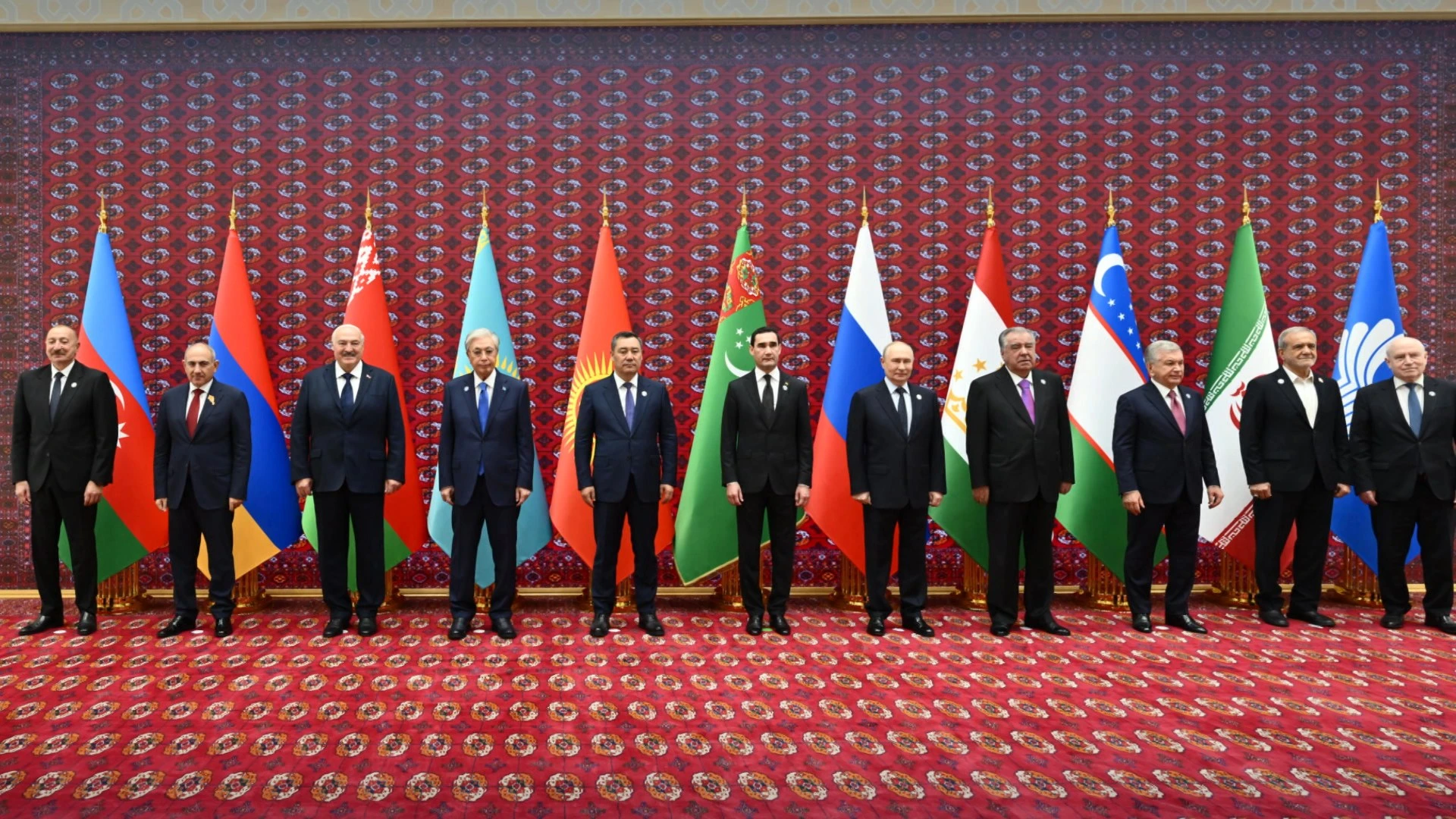
Alexander Lukashenko has urged his partners to value the common market and strengthen the economy. The idea has long been a red thread in the president’s arguments. Under sanctions and pressure, Minsk and Moscow took that path and did not miscalculate.
The president recalled that he had recently told the heads of government of the Eurasian Economic Union, meeting in Minsk, that competition in the world is growing and that “no one is waiting for us anywhere.” “Above all, and first of all, this is about the economy. So let us preserve our space. But to preserve it, we have to raise, for every state, the value of being in this organization. Do we do that every year? No,” Lukashenko said.
He stressed that not only the CIS Executive Committee, but above all the large and powerful countries he had named — states that have resources — need to think about taking more serious decisions.
“It is good that we meet, good that we have talked, looked one another in the eye, and made a statement. For a domestic audience, that is useful to know. But let us also take other steps toward closer unity. And unity will be secured for us, above all, by the economy. That is prosperity, and that is the strength of our states. Then there will be fewer conversations about independence, the preservation of borders, and the rest. The economy has to be strengthened. And on that we need to work seriously. We are ready to take part in every way,” the Belarusian leader said.
“First of all, purely from a human point of view, I see a role for the three or four states I have just named. Rich states, the richest states. They should go in front and lead our organization. In any organization, in any collective, someone has to walk ahead. You can call them leaders. Where are they? We have to move forward,” the president urged.
“So steps are needed in the economic field. More serious ones,” the Belarusian leader stressed.
In that connection he welcomed the statements made at the summit by the leaders of Azerbaijan and Armenia on developing logistics for the movement of cargo.
Speaking of the role of large and wealthy states in the association, the president did not rule out that more serious steps in common economic cooperation might, to one degree or another, touch their interests slightly. “Something has to be given up,” he remarked.
“We have to single out those directions and act,” he said, meaning a deepening of economic cooperation. “If we do not act, little by little we will be pulled apart into different organizations. Again I will not name who. We know perfectly well who has an eye on the states of our organization,” the Belarusian leader concluded.
The CIS leaders’ summit in Turkmenistan
Every state can find its own gain in a common economic space. If Baku and Yerevan could do it after a difficult period, the others can as well. Lukashenko called it a historic moment that Baku will, for the first time, take the chairmanship in 2028.
Ilham Aliyev, President of Azerbaijan:
“Azerbaijan is steadily strengthening its position as one of the region’s key transport hubs, providing reliable transit along the international North–South and East–West corridors. In the first half of 2026, transit shipments through Azerbaijan rose by 10 percent, reaching nearly 8 million tonnes of cargo. Our medium-term goal is to raise freight traffic on the East–West and North–South routes through Azerbaijan to 15 million tonnes in each direction.”
Nikol Pashinyan, Prime Minister of Armenia:
“Peace between Armenia and Azerbaijan is an accomplished fact. Today it can be stated that over the recent period — more than two years — there have been no dead and no wounded from exchanges of fire between Armenians and Azerbaijanis, unlike the previous thirty-odd years, when, from the 1990s on, there were dead and wounded on both sides every year. For nearly a year now the Azerbaijani railway has been open to Armenian cargo, bilateral trade has begun, and a 12-kilometer stretch of the state border between Armenia and Azerbaijan has been delimited and demarcated.”
CIS leaders adopt a statement marking the Commonwealth’s 35th anniversary
This time, for the first time, Iranian President Masoud Pezeshkian joined the CIS leaders in the expanded-format meeting. Tehran is a serious regional player. Pezeshkian’s presence confirms that the CIS is not quite so closed a club.
At the close of the meeting the leaders adopted a statement on the anniversary of the integration project. Documents were approved on security and law enforcement, on joint work in the information space, and on other matters.
Serious steps to strengthen unity and the economy in the CIS
In 2027 Uzbekistan will host the heads of state of the Commonwealth. After the Belarusian president’s bracing words, there is hope that by then there will indeed be more specifics and more useful initiatives.