







Not for War, but for Confidence in Peace - Belarus Builds Its Own Rifles
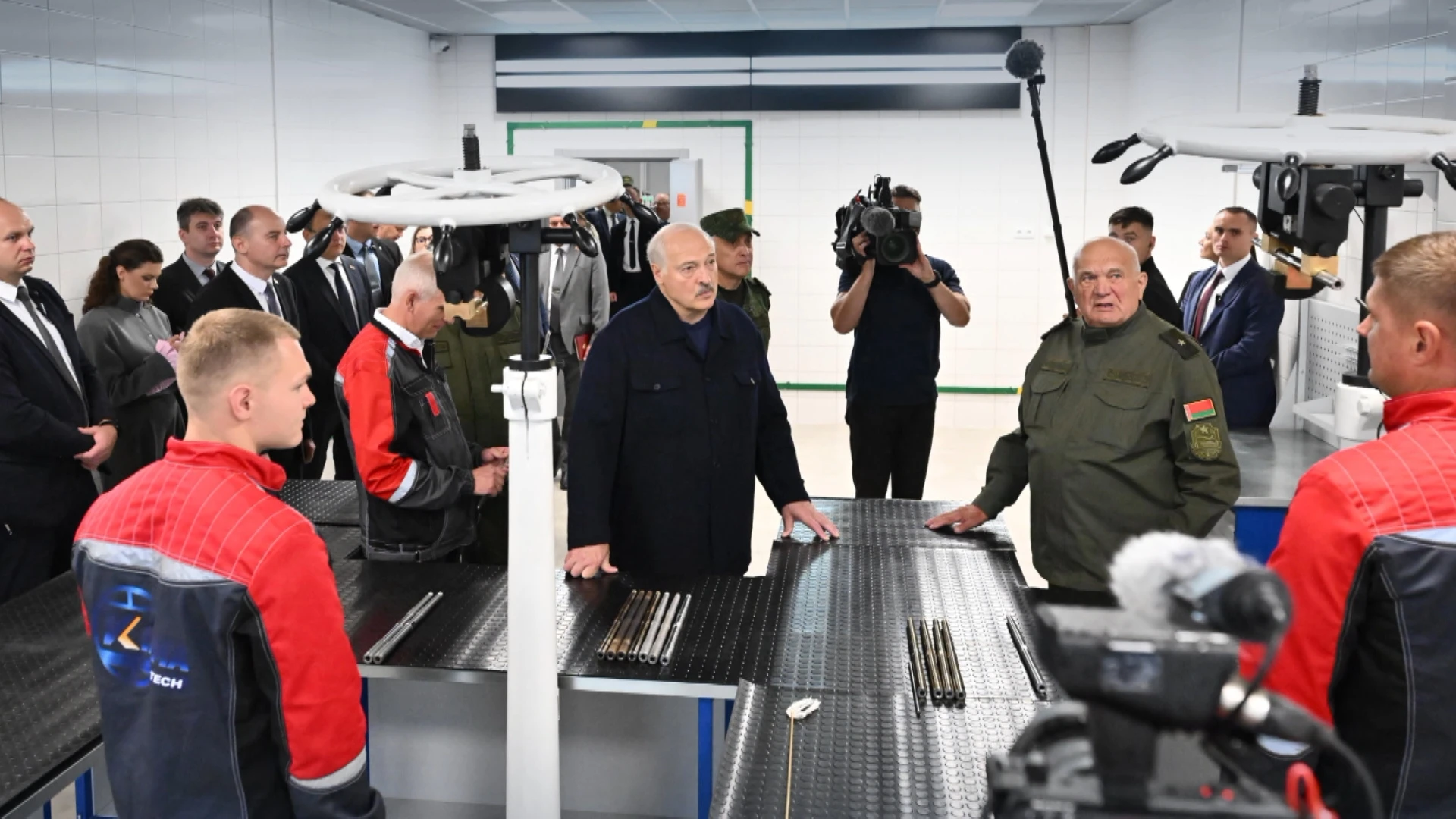
That was the message President Alexander Lukashenko delivered on August 18 while inspecting a new industrial facility dedicated to the production of small arms. The guiding principle, he repeated, is simple: the weapons are not for war but for confidence in peace.
Even in an age of drones and ballistic missiles, small arms remain essential. Without them there is no real defense, Lukashenko insisted. For Belarus the project strengthens technological security, allows the Armed Forces to be equipped from domestic sources, and opens export opportunities. High-tech indigenous designs are needed today, and the country’s gunmakers already have longer-term plans.
Work on small arms began seven or eight years ago with modifications using imported components. The last three years were spent fulfilling the presidential instruction to organize truly independent production. Lukashenko’s logic was straightforward: life is unpredictable, and in this field a country must have its own capacity. The State Military-Industrial Committee enterprise “Kidma Tek” took on the task of building the industrial site. The process was difficult, the specialists admit, but the work got done.
Deputy production director Andrei Anisimo explained that series production is organized across five workshops. Each part requires its own technology — plastic and rubber casting, machining, forging, stamping, cold heading. Dozens of processes are involved.
Former military warehouses were converted into a modern factory. Engineering systems were rebuilt, equipment purchased, technologies introduced, and specialists trained. The result is small-arms production created virtually from scratch. Lukashenko came to see the outcome.
“The order was to create combat weapons with 100 percent localization. So there is nothing imported?” the President asked.
“Nothing at all,” confirmed Dmitry Pantus, chairman of the State Military-Industrial Committee.
All efforts are directed first of all at national defense. The designs take into account the realities of modern conflicts and the experience of the special military operation. However effective drones may be, basic infantry weapons remain indispensable.
“On the battlefield the outcome is decided by people — by soldiers. And soldiers need this,” Lukashenko said. “As a former soldier I understand very well what small arms mean. Without this weapon we can do nothing, even if we have drones, ballistic missiles and everything else.”
That is why the decision was taken to create domestic production. “We did this ourselves. Well done. Without it there is no war and no defense. To fight, you need small arms.”
The presence of Defense Minister Viktor Khrenin was natural — the army tests the new weapons and provides expert feedback. Belarusian assault rifles have already been accepted into service and meet the required standard.
Lukashenko underlined the significance of that acceptance: “It must be constantly improved, of course. But if the Armed Forces of Belarus are accepting it, that means it is worth something. I always tell the minister when the first samples appear: look at it, criticize it, break it, tear it apart… The refinement must happen here, and only a finished product should be accepted.”
Pantus added that work began from absolute zero in 2019. There was no school and no specialists. Five models and six modifications of various small arms — assault rifles, pistols, machine guns, and sniper rifles — have been developed. Four of the products have already been officially adopted by the Armed Forces. Close cooperation with the military continues; every small defect is pointed out and corrected.
Developers demonstrated the full line. Among the advantages claimed for the Belarusian assault rifle are quiet operation, accuracy, reliability, and high rate of fire. With additional attachments it can function as a light machine gun or sniper rifle. Maximum modularity is one of the current trends in small-arms design. Lukashenko inspected the workshops and the production flow. Plans for further expansion are already under discussion.
Much of the process is automated, yet certain operations — such as barrel straightening that ultimately determines accuracy — still require highly skilled specialists.
After a positive assessment of the work done by the State Military-Industrial Committee, the gunmakers presented the President with the first domestic assault rifle, the VSK-100B. The plaque reads: “Not for war… For confidence in peace!”
Lukashenko ordered a deactivated version to be placed in the exhibition of the Palace of Independence. “It was difficult. People have been making this for centuries — the Russians and others. Yet under our democratic dictatorship we managed to produce it in a short time. Well done! You did it excellently.”
He immediately set the next target: “We must go further. Do not be afraid that we cannot do something. We can do everything. Yes, equipment is needed. But one must also know how to work on that equipment. You have learned. And for such things no one should spare money. This is a great matter — especially if it pays for itself through exports.”
Belarusian defense industry is advancing on multiple fronts. At the dawn of independence Lukashenko refused to squander the country’s military potential; instead the best assets were preserved and modern developments consistently supported. Creating an indigenous small-arms production line strengthens technological security, equips the Armed Forces, and expands export possibilities. Contracts already exist.
“At the initial stage we had no school in this field at all,” Pantus recalled. “After visiting certain enterprises and studying technologies we managed to assemble a creative team. At first it focused on modernization. In the end we proved capable of both designing and manufacturing a modern domestic assault rifle on contemporary equipment. This plant will produce not only the VSK-100B but the entire line already accepted into service: pistols, machine guns, and two types of sniper rifles. One of the key tasks ahead is the development of a machine gun. I believe we will devote the next two years to creating that product.”
The new production facility is another source of pride for Belarusian gunmakers and a practical guarantee that the country will always have the means to defend itself. Belarus harbors no aggressive plans; it builds only its own army and its own defensive shield. Peace, after all, is still best protected by strong arms.