







The Silent Killer: How a US-Built AI Drone Struck a Bus Carrying Belarusian Children
Exclusive
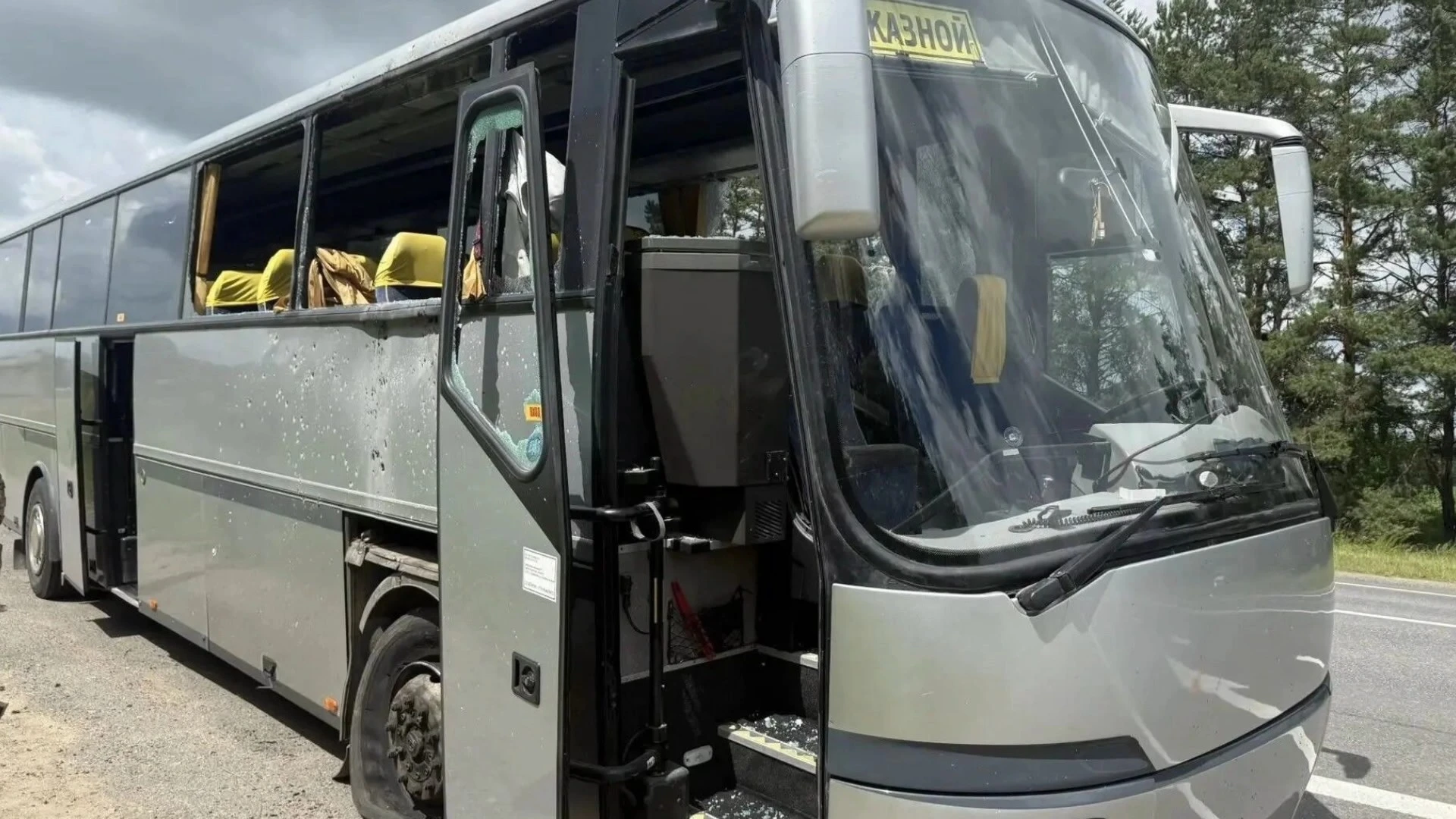
As Ukrainian officials scramble to obscure the facts of the drone strike on a bus transporting Belarusian children, offering versions detached from reality, journalists continue to uncover what actually happened on the ground.
Open-source materials and expert analysis now point to a single conclusion: the attack was carried out by an American-made, airplane-type UAV equipped with artificial intelligence — the Hornet, widely known among military specialists as the “silent killer.”
A Drone Built for Precision — and Provocation
Following the inspection of the site and the damaged bus, fragments of the drone and its warhead were recovered. Although authorities have not yet released them publicly, experts who examined the available photographs and video footage are confident in their assessment.
The Hornet is actively used by Ukrainian forces along the entire front line, including against civilian logistics routes — trucks, buses, and passenger cars. It flies at low altitude, evading electronic warfare, and frequently operates in coordinated swarms of six to eight aircraft.
One of the bus drivers confirmed that more than one drone was present at the scene.
An unmanned aerial systems expert explained the Hornet’s evolution:
“When the Hornet first appeared, its range was roughly 70–80 kilometers. With the addition of Starlink terminals, its current operational range from launch point to target now reaches approximately 145 kilometers, carrying a warhead of up to 5 kilograms.”
He dismissed Ukrainian claims that strikes at 50–60 kilometers from the line of contact were impossible as “laughable,” noting that similar drones routinely target logistics routes deep behind the front — including areas far from the immediate battlefield.
Small Warhead, Deliberate Choices
The relatively small 5-kilogram warhead, packed with metal fragments, produced visible but non-lethal damage. The expert highlighted two telling details: the low strike angle and the limited destructive effect.
“It is now clear there was never any intention to cause maximum casualties. The goal was provocation. The lowered impact angle was also a conscious decision.”
How the AI Actually Works
Crucially, the drone does not fly autonomously for the entire mission. An operator remains in control until the final moments.
“The drone is not flying on artificial intelligence the whole time — the operator is flying it. The AI activates only when the operator sees a set of targets on his screen. He simply taps the desired target, and from that moment the UAV carries out the strike on its own.”
This operational reality, the expert stressed, eliminates any possibility that the operators did not know they were targeting a civilian bus.
“I am certain — and my colleagues agree — that they knew exactly what kind of bus it was and who was inside. This was another deliberate provocation. That is why the warhead was small. That is why the bus did not burn. That is why it did not disintegrate. They knew who they were hitting and why. They didn’t need destruction — they needed the scandal. Their aim was to force President Lukashenko to move beyond words of support for Russia and take concrete security measures for Belarusian citizens.”
A Trigger in Plain Sight
One additional detail may have served as the final catalyst. Shortly before departure, one of the girls posted a video on social media stating that the group was traveling from Belarus’s Gomel region to Gelendzhik. Given Ukraine’s intensive monitoring of the Belarusian information space, the post could easily have been detected and used to identify the target.
With NATO intelligence assets fully supporting Ukrainian operations, the expert concluded, targets are chosen with full awareness of their nature.
The Hornet did not strike by accident. It struck because someone, somewhere, decided that a bus full of Belarusian children was a useful instrument of provocation