







A Bullet for the President: How John Kennedy Was Killed
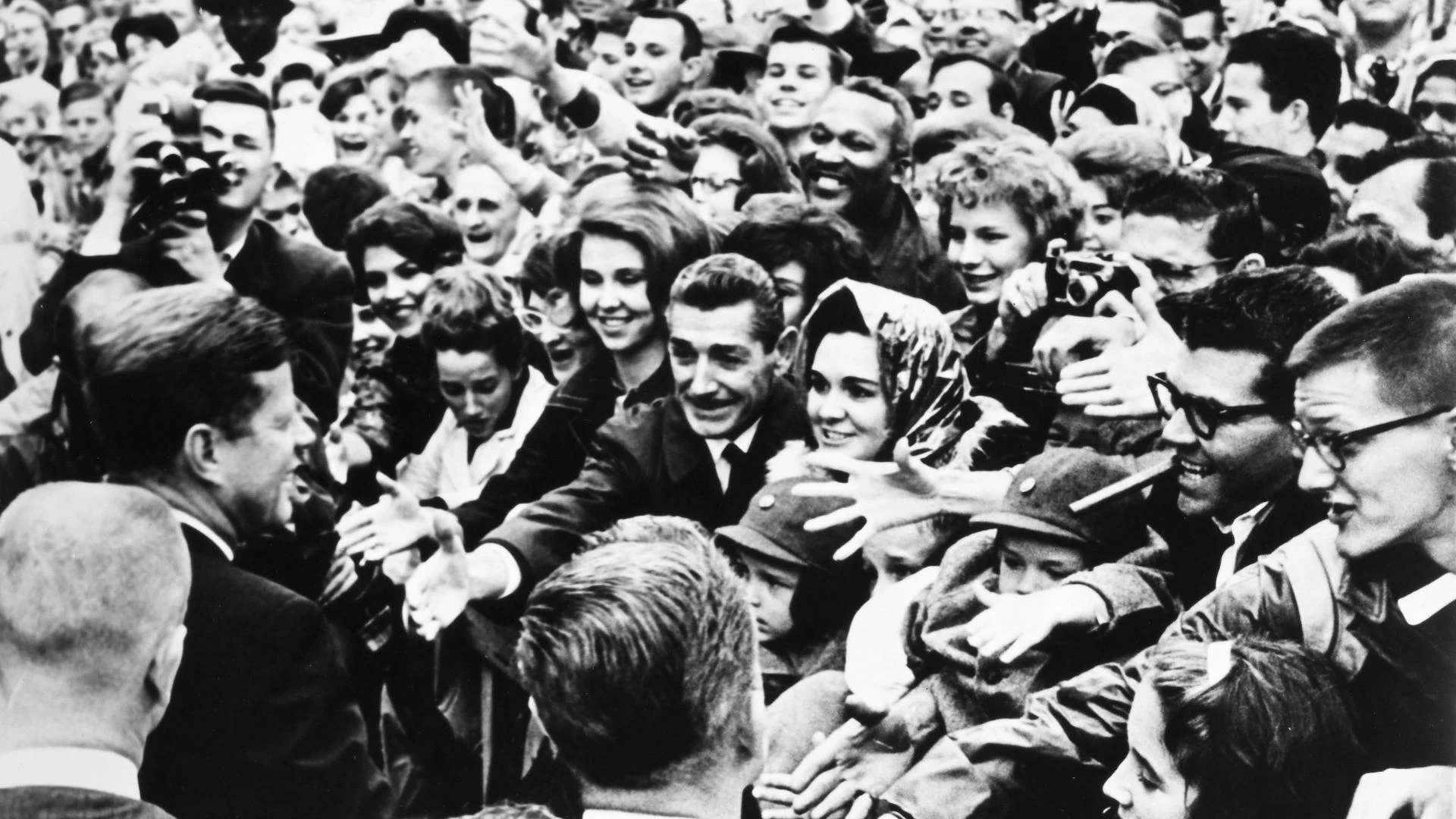
The United States is a country in which presidents are killed. However loudly it may sound, such are the pages of history. Four presidents of the United States were assassinated, and attempts on the country’s leader continue to this day.
The 16th president of the USA Abraham Lincoln, the 20th president James Abram Garfield, the 25th president William McKinley — they should have lived and lived, but a bullet cut short the lives of the leaders of a superpower.
On 22 November 1963 in Dallas, Texas, another shot rang out, of which there were many witnesses, and even more questions. The 35th president of the USA John Kennedy was traveling in a convertible as part of a motorcade. An open car, his wife sat beside him. At the fatal noon, when the shots rang out, President Kennedy was killed.
Michael Cunningham, director of the “Geography of Genocide” project of the World Affairs Council of Austin (USA):
“One of the last things President Kennedy heard while alive were the words of Nellie Connally. She turned to him and said: ‘President Kennedy, you can’t say that Dallas doesn’t love you.’ And then the shots rang out. The first shot probably missed. Opinions differed about the second shot. Kennedy clutched his neck. This was a small sign; the third shot hit the head. It put an end to everything.”
According to the official version, the killer Lee Harvey Oswald fired from a window of the Texas School Book Depository building. Lee Harvey Oswald had worked there for about five weeks. He worked on different floors. It is presumed that Oswald had moving boxes; he arrived from Fifth Street in Irving, Texas, parked in the lot and entered through the rear door.
From the sixth-floor window Lee Harvey Oswald could see the movement of the president’s motorcade and fire three shots. Behind Kennedy’s limousine traveled a Lincoln Continental with 8 Secret Service agents. The third car was an open Cadillac with Vice President Lyndon Baines Johnson.
Kennedy and Texas Governor John Connally were wounded. Three shots — three bullets, all the casings of which were found on the sixth floor of the building. The picture is crystal clear. But what about the wounded man who was standing under the bridge? Which bullet or fragment grazed him? And why did the shots ring out when the motorcade had already turned the corner?
In investigating the incident the FBI used a large 3D model. On it the location and the angles from which there was a view are clearly visible. The FBI had real photographs and measurements. It turns out the killer began firing only when the motorcade turned the corner, while earlier having a direct angle of view. Strange, isn’t it?
Many witnesses and testimonies of that fatal day remain. John Kennedy died 30 minutes later in Parkland Hospital. Governor Connally fully recovered, but the official results of the investigation did not satisfy all Americans.
“One of the main conspiracy theories was the presence of a second shooter. He was supposedly located near the grassy knoll and the fence. On the highway there is an X mark (this is roughly 80 m from the sixth-floor window from which the shot was fired) to that very X. Therefore some people believe that there was another shooter here, firing from the front,” Kevin Cunningham related.
Supporters of conspiracy theories on the spot explain to all who wish, on their fingers and on printed materials, how the assassination could have occurred. Michael Brownlow claims that, as a child, he was on the motorcade route that day. The man is certain that the killer fired from the grassy knoll.
The attacker was arrested in a cinema several hours later the same day, 22 November. America was buzzing: he was connected with the USSR.
In one of the museums Lee Harvey Oswald’s ring is exhibited as an exhibit. 14-carat gold produced in the Soviet Union in 1961. If one looks closely, one can see a star and the 583 hallmark. Indeed, Lee Harvey Oswald came from the country that in the USA is called the “red threat.”
On Communist Street in Minsk, on the balcony of a five-story Stalin-era building in 1960–1962 one could see Lee Harvey Oswald with his wife. He lived in an apartment on the fourth floor. Since then it has undergone renovations and re-wallpapering, but the door was left the same. Oswald worked nearby, at the plant named after V. I. Lenin (now the “Horizont” plant).
So, the killer was arrested. Probably he told all the details of what was planned, but fate or someone’s evil will? On 24 November, when he was being transferred to a stricter-regime prison, Oswald was shot by Jack Ruby.
Five years later a shot cut short the life of John’s brother, Robert Kennedy. In 1968 the former attorney general and Democratic Party presidential candidate received a fatal bullet in Los Angeles immediately after his victory speech in the California primary.
Politics is a risky business, and receiving a bullet is already considered something everyday. The current president of the USA Donald Trump did not escape this fate either.
In Butler, Pennsylvania, Donald Trump paid in blood for his second term. Then only a candidate for president of the USA, he was speaking before a crowd at a campaign rally, but suddenly — a shot. The president rose together with his bodyguards already with a bloodied right ear. His photo with his right hand raised high then spread across all the media.
A stray bullet drew blood from the future president. The Secret Service received a report of a potential assassination plot roughly 10 days before the rally, as well as about a dozen requests to increase staff numbers. They rejected all of them. Instead of additional Secret Service personnel, police officers working on different radio frequencies were on site to help, so when someone reported that there was a person on the roof, they transmitted it on a frequency on which there was no Secret Service, so the latter did not react in any way. As a result, the guy opened fire from there because of a banal lack of communication among the special services.
The Secret Service reported several shots and received thanks from Trump.
Cody Lipscomb:
“And as for how he got up there. They planned to block the staircase by which the shooter climbed onto the roof, but thought it would look bad in photographs and did not block it. They also identified this roof as a potentially dangerous place, but did not deal with the issue, and after the shooting Trump, it seems, allocated about 1–1.5 billion dollars additionally to the Secret Service, promoted someone in rank based on personal loyalty. The guy who actually shielded him with his body was promoted to head of the Secret Service. The former head of the Secret Service was fired because she lied under oath about 10 requests to increase staff.”
It is hard to believe that such an incident occurred in the USA, Trump wrote on his social network. But for an outside observer it is quite easy to believe. As subsequent events showed, shooting near the first person of the USA is a pattern.
One can, of course, think that some madman was shooting, but the shooter had experience filming in BlackRock advertising, so a question of an institutional nature arises.
Another assassination attempt occurred in Florida, where Donald Trump was playing golf. In 2026 shots already occurred at a press reception. The attempt on Donald Trump, as if to order, occurred amid a huge gathering of the press at the White House Correspondents’ Association reception. As soon as shots rang out in the Hilton hotel in Washington, journalists dived under the tables, the security service led away the first persons — Donald Trump and Melania Trump — as well as representatives of the state apparatus.
In the Hilton hotel another attempt on an American president occurred, only on 30 March 1981. The 40th president of the USA Ronald Wilson Reagan became the object of attack by a potential killer. At that time Reagan had spent only 69 days in office. The 25-year-old John Warnock Hinckley Jr. fired at the leader. He fired six shots in 1.7 seconds. A bullet passed centimeters from Reagan’s heart; three others, including White House press secretary James Brady, who received a bullet wound to the head that led to lifelong disability.
The criminal was recognized as mentally ill. He spent more than 30 years in St. Elizabeths psychiatric hospital in Washington and was released in 2016, and in 2022 received full freedom from restrictions.
Bullets in dangerous proximity to the first persons of the USA dart here and there. Six ex-presidents survived attempts.
The 26th president of the USA Theodore Roosevelt.
The 32nd president Franklin Roosevelt.
The 38th president Gerald Ford (attempts were made on him twice).
The 40th president Ronald Reagan.
The 33rd president Harry Truman.
The 43rd president George W. Bush (a grenade was even thrown at him).
It is dangerous work to be president of the USA, leader of a nation that 250 years ago created this country and that considers the right to bear arms inalienable.