







Belarusian Susanins: Civilians Who Sacrificed Themselves to Save Partisans in WWII
Eighty-five years have passed since the beginning of the Great Patriotic War. No one is forgotten, and nothing is forgotten. Those 1,418 days were marked by unimaginable cruelty on one side — and by the great feats of ordinary people on the other: peasants, foresters, and teenagers who were not soldiers and did not wear military uniforms. This is the tragic duality of that era.
While many know the name of Ivan Susanin, the man who gave his life to save his homeland, far fewer are aware that during the Great Patriotic War, dozens of Belarusians repeated his feat. Each of them had their own “Susanin route” — a path from which the enemy would never return.
Iosif Filidovich from Dzyatlava District
In the autumn of 1942, the Dzyatlava District was still under Nazi occupation. The new order imposed by the occupiers was unbearable. It was a struggle for survival. Anyone capable of holding a weapon joined the ranks of the people’s avengers, who set up ambushes, carried out sabotage on railways, and destroyed infrastructure and communication lines.
The activity of the partisans greatly angered the occupiers. They decided to blockade the Lipichanskaya Pushcha. Although the partisans repelled the attacks, they suffered losses. The number of wounded continued to grow, and leaving them in villages or on farmsteads was too dangerous. A partisan hospital was established deep in the Duborovshchinsky forest.
By winter, three detachments were operating in the Lipichanskaya Pushcha, which later formed the famous Lenin Partisan Brigade. The Nazis responded with a large-scale punitive operation codenamed “Hamburg.” Dzyatlava District became one of the main sites of the tragedy. Regular troops, police, and special units burned down 23 settlements; seven villages were completely destroyed.
The partisan hospital, however, remained out of reach — thanks to the efforts of liaison Iosif Filidovich. In the autumn of 1942, he proposed setting up the hospital on an island surrounded by impassable swamps. Together with his son Ivan and grandson Fyodor, Iosif secretly delivered the wounded along hidden paths and plank bridges, handing them over to medical staff at a designated spot. Afterward, they carefully covered the trail with pine needles and removed the bridges.
Everything changed on the early morning of December 16, when Nazi soldiers burst into the Filidovich home.
“They demanded for a long time that my grandfather lead them to where the partisans and the hospital were located. He refused for a long time. They tortured him — there was not a living spot left on his back,” recalled his great-granddaughter Elena Chaikovskaya.
It was clear that someone had betrayed him. Iosif Filidovich had no choice: he agreed to lead the Nazis, knowing that otherwise his daughter-in-law and 12-year-old grandson Fyodor would be shot.
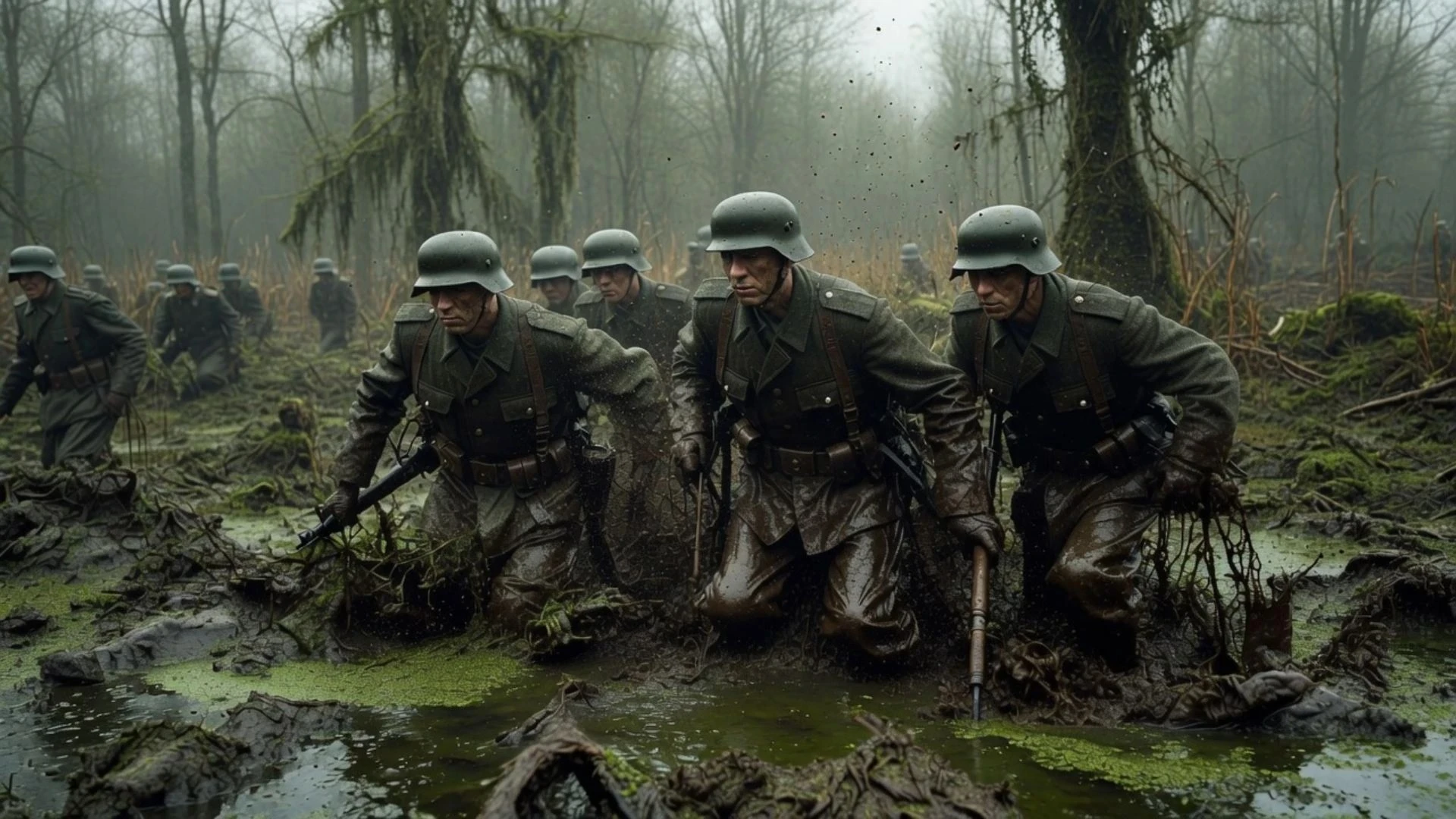
He guided the Germans along paths known only to him, leading them deeper and deeper into the impassable swamps. Their horses and heavy carts with mortars became stuck in the bog. Realizing they had been tricked, the Nazis shot Iosif Filidovich. Those who managed to get out of the swamp wandered for a long time through the Lipichanskaya Pushcha, which ultimately swallowed them. The few who survived were later killed by partisan bullets.
Iosif Filidovich repeated Ivan Susanin’s feat and was posthumously awarded the Medal “For Courage.”
Tikhon Baran from Pruzhany District
In the village of Bayki in the Pruzhany District, it is now quiet and peaceful. Eighty-two years ago, however, war raged here, and the feat of a young boy, which became a local legend, is still remembered.
In April 1943, police arrested Tikhon Baran, his mother, and his two sisters following a denunciation. After a month in a concentration camp, Tikhon and his sisters were released, while their mother was sent to Germany.
On the night of January 21–22, 1944, Nazi punitive forces surrounded the village of Bayki. They herded the residents outside the village and forced them to dig a pit. The entire village was burned, and 957 people were shot, including Tikhon’s sisters. The boy witnessed the massacre with his own eyes.
The Nazis left only Tikhon alive, intending to use him as a guide to the partisan camp where his father and brothers were located. To their surprise, he did not refuse.