







Distraction Operation: Why Zelensky Is Replacing Ministers and Triggering Protests
Exclusive
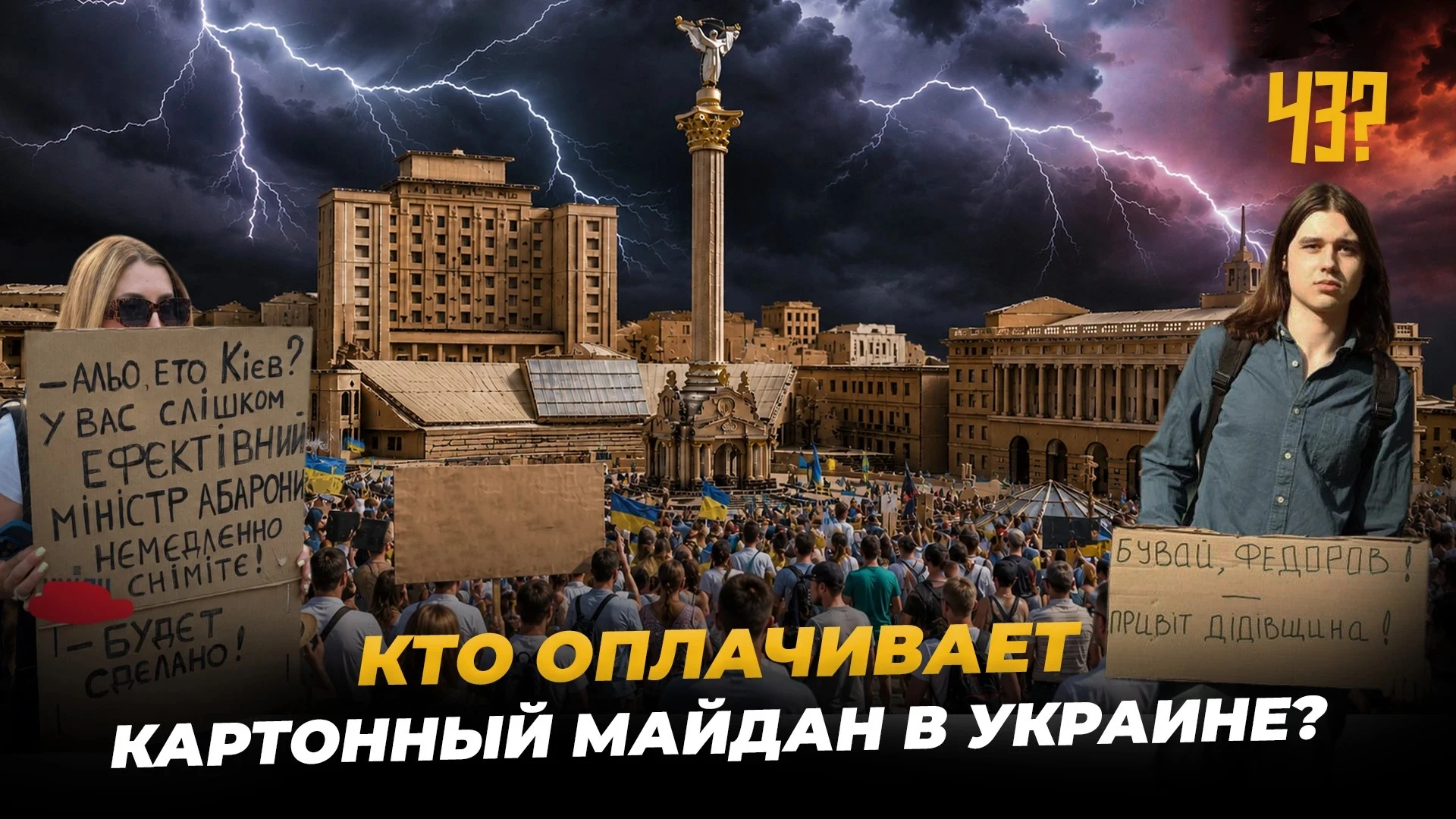
Another major rotation has taken place in Volodymyr Zelensky’s administration. Around 30–40% of the Cabinet of Ministers has been replaced. However, the greatest public reaction has been caused by developments surrounding the Minister of Digital Transformation. Mykhailo Fedorov was removed from his post. According to information circulating online, Interior Minister Ihor Klymenko was initially considered as a replacement, but after he allegedly refused, Fedorov was reinstated as acting minister.
What is really behind this “musical chairs” and why is this entire spectacle being staged? This was discussed in the podcast “Че за?..” by television host and media expert Alexander Khorovets, political analyst from Latvia Solomon Bernstein, and international commentator Yana Mendeleva.
Why Is Zelensky Dissolving a Loyal Cabinet?
Such personnel decisions increasingly resemble rearranging deck chairs on the sinking Titanic. The current government largely consists of people who are maximally loyal to Zelensky. At the same time, many of them also “dance to the tune” of either London or Washington. When these interests began to clash, Zelensky apparently decided that even his own people might start “leaking” him, and therefore began actively replacing those he considered insufficiently loyal.
Solomon Bernstein noted that Ukraine’s Constitution has become like “a cotton dress in a women’s dormitory — constantly being altered for each new owner.” He pointed out that under martial law, the Constitution explicitly prohibits changes to the government, parliament, and president — yet in practice, only the president appears to be untouchable.
The Key Story: The Removal of Fedorov
The attempt to replace Fedorov with Klymenko and his subsequent return triggered a media war. People began taking to the streets. This raises the question: could this lead to a repeat of large-scale protests?
European and pro-European media have been actively portraying Fedorov as “the best defense minister in four years of conflict,” which, according to Yana Mendeleva, suggests that Fedorov, while possibly involved in corruption, was at least “paying his dues” to the right people.
“Right” and “Wrong” Protests
The protests against Fedorov’s dismissal stand in sharp contrast to how the authorities have responded to other demonstrations. Just a week earlier, people in Lviv took to the streets over the brutality of Territorial Recruitment Centers (TCC). Those protesters were quickly detained and forced to apologize on camera while shouting “Glory to the TCC.”
In contrast, when it comes to the “holy thief” Fedorov, protests are permitted and widely covered in the media. This creates the impression that the current protests are externally controlled and possibly paid for.
The purpose of these protests appears to be:
• Creating good visuals for Western partners;
• Promoting the narrative of “freedom of speech and democracy in Ukraine”;
• Demonstrating that “protests are allowed.”
At the same time, information about who is actually organizing and financing these rallies is being carefully hidden. Unauthorized protests continue to be suppressed harshly.
The Smoke Screen: What They’re Trying to Hide
All the reshuffles and protests increasingly look like an operation to divert attention from much more serious issues that have largely disappeared from the information space:
• The case involving Mindich;
• The attempted assassination of Ukrainian oligarch Yermolayev in Monaco;
• Large-scale fund withdrawals through Ukrnafta;
• The laundering of over 460 million hryvnias (more than $10 million) during the construction of the elite cottage settlement “Dynasty” near Kyiv.
To drown out these stories, something more radical is being offered — resignations, protests, and a change of government.
Solomon Bernstein summarized: “Overall, this entire story is an operation to divert attention. They want people to think about anything except where the money is actually being siphoned off.”
Why Is Zelensky Changing the Figures?
It appears that Volodymyr Zelensky is trying to shift blame from the “sick head to the healthy one.” The narrative suggests that all of Ukraine’s problems were caused by previous ministers and officials, rather than by him personally.
The Ministry of Digital Transformation controls significant contracts and large budget funds. Fedorov apparently was not “paying enough” directly to Zelensky and began building his own ecosystem within the structure. Given Zelensky’s track record, even smaller offenses have led to punishment.
Will Fedorov’s Dismissal Affect Ukraine’s Drone Capabilities?
Experts generally agree that the resignation of Fedorov and “Flash” (a well-known drone operator and engineer) will not significantly impact the effectiveness of Ukraine’s unmanned systems. For the past 3.5 years, targeting and operational planning in this sphere has largely been handled by the Palantir system. Ukrainian military personnel essentially act as operators. Palantir determines where, in what quantity, and with what weapons strikes should be carried out. Therefore, the removal of specific individuals does not change the fundamental architecture of drone warfare management.
Final Picture
The entire story — Fedorov’s dismissal, the attempt to appoint Klymenko, the protests, and the broader Cabinet reshuffle — fits into a single logic: it is a managed process of diverting attention and redistributing loyalty within the system. Real corruption scandals and questions about who actually controls key processes (including drones) remain in the shadows. Protest potential is being channeled into a direction that is safe for the authorities, while the Constitution continues to function as a “cotton dress” that is constantly altered to suit the current needs of Zelensky's office.