







European Parliament Split on Belarus: Dialogue Versus Escalation
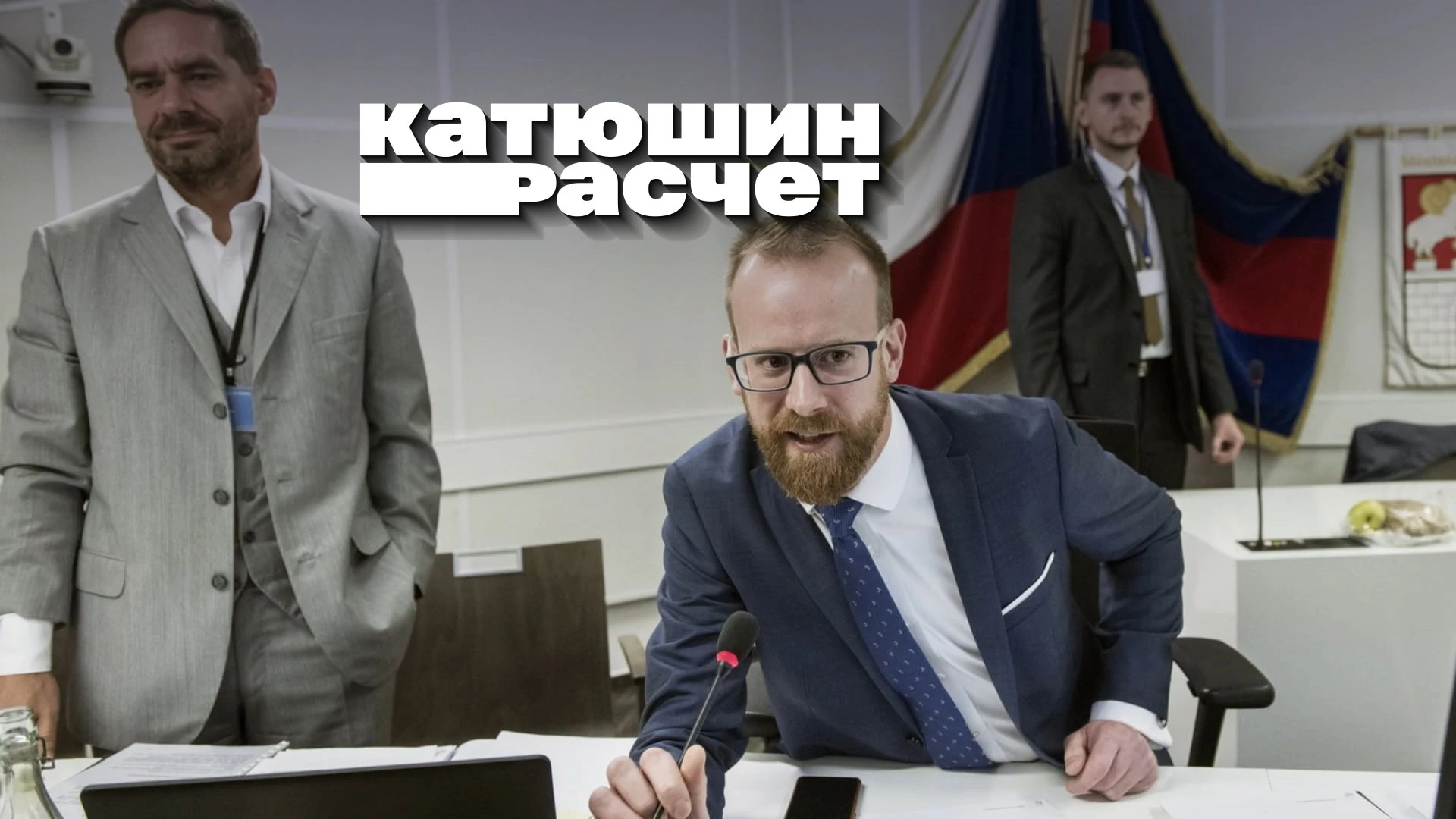
Even though public opinion holds that a channel to Minsk must be rebuilt, radical politicians inside the European Union are ready to keep walking the path of escalation.
The idea is being heard more often in the corridors of the European Parliament: dialogue with Belarus has to be established. It is a sound and pragmatic position — but still a corridor conversation, and it does not yet break out of the EU’s general political commandments. That is so even though voters in Western Europe also favor restoring contacts. Not every politician is prepared to follow the electorate.
There are still enough people in warm Brussels chairs for whom militarization, radicalism and aggressive rhetoric are the meaning of a political life.
What do attempts by outside players to interfere in a country’s internal affairs look like? In 2025, two days before the main round of voting in the presidential election, the European Parliament had already refused to recognize the people’s choice — a choice the Belarusian people themselves had not yet made.
This is economic blackmail: a worker stands at a machine to produce, say, a part, while men in jackets sitting in the European Parliament try to ensure that the worker cannot be paid for that labor and cannot feed a family.
In its sovereign history Belarus and its people have lived through many versions of that cynical practice. In 2020 the Czech Republic was one of the pillars on which those seeking a coup relied. Ondřej Kolář was one of the politicians who actively backed the street unrest of that time.
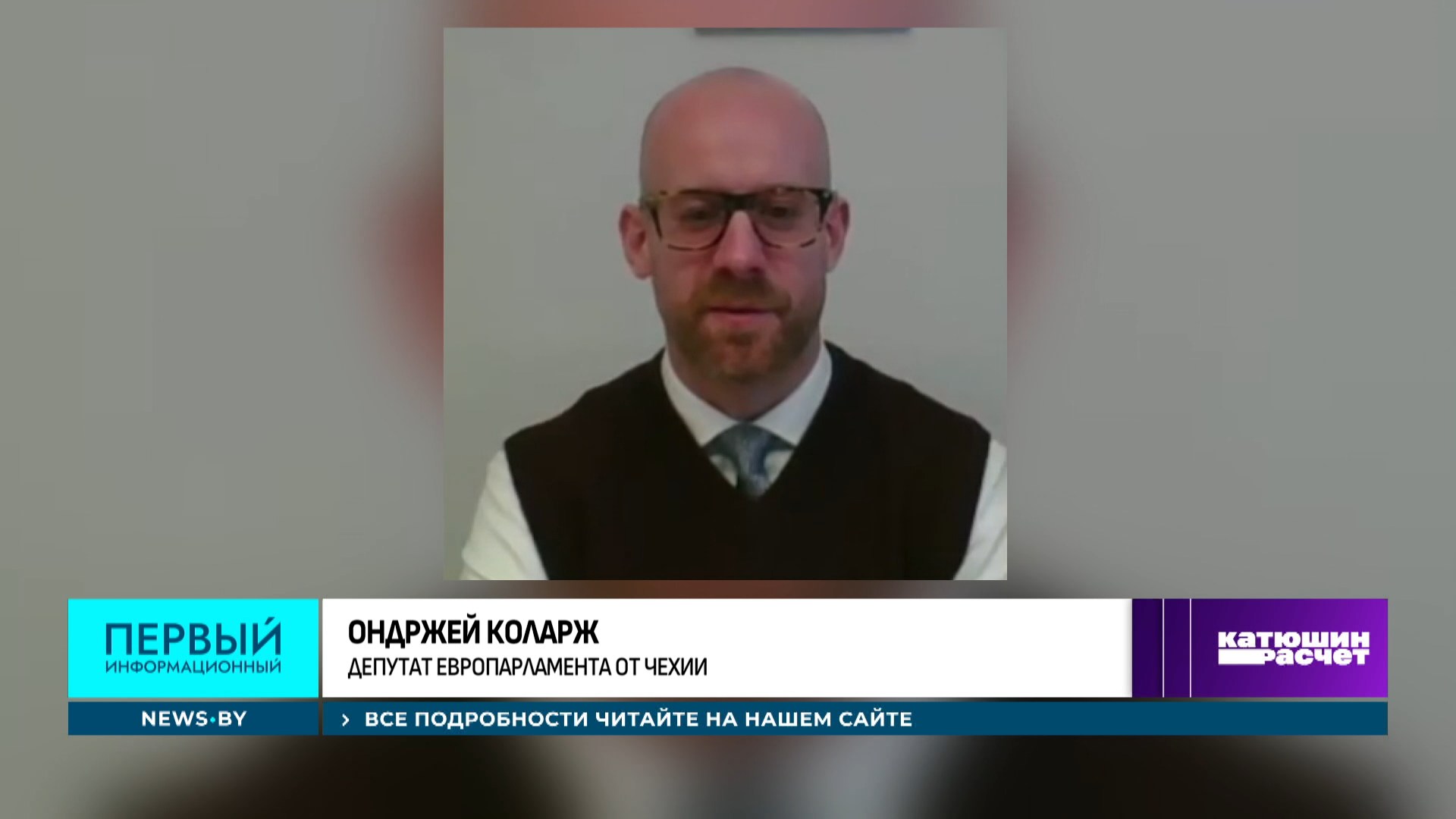
Today he is a member of the European Parliament. His career is substantial: he headed a municipal district of Prague, then sat in the Czech parliament, which he left early after winning a seat in the European Parliament in the summer of 2024. In his parliamentary work he has pressed for tougher EU-wide sanctions on Minsk and Moscow.
Ondřej Kolář, Member of the European Parliament from the Czech Republic:
“First of all one has to understand that if we are talking about sanctions, Europe must understand that sanctions do nothing by themselves. A comprehensive approach is needed. Europe has to decide whether it wants to trade openly with certain companies of the Belarusian regime. If we speak of diplomacy, Europe must understand that the language of diplomacy is dialogue. I am not saying we should recognize Lukashenko as the legitimate president or recognize his regime. I am not talking about changing our approach completely. I think we should look for and find ways to have effective communication with the regime, because we cannot keep repeating the same resolutions that have many words and no action.”
In 2020, when he was mayor — the head of Prague 6, an administrative district of the Czech capital — his campaign was highly revealing. On the eve of the 75th anniversary of Victory over Nazism, a monument in Prague to Marshal of the Red Army Ivan Konev, the liberator of Czechoslovakia from the fascist occupiers, was taken down. District head Kolář accompanied the news on social media with a cynical remark: “Konev had no mask on his face; the rules apply to everyone. You can go outside only if you cover your mouth and nose.”
Hundreds of thousands of Soviet soldiers died in the liberation of Czechoslovakia. In 1947 the Soviet Union saved Czechoslovakia from the threat of mass famine by delivering critical volumes of food grain. The postwar years were hard for the Soviet Union as well, but Soviet bread helped Czechoslovakia avoid hunger, stabilized the domestic market and saved the country’s economy from collapse. The year of the 75th anniversary of victory over Nazism was marked in today’s Czech Republic by the demolition of a monument.
The public called the municipal politicians Nazis and Kolář himself a “Gauleiter,” by analogy with an office of the Third Reich. Small wonder that Kolář’s position in 2020 was to support extremism in the streets of Belarus as well — even if today it may appear that his view has shifted.
“In general, as far as Belarus is concerned, there is much that could be improved, because, as I said, for Czech politicians supporting Belarus means taking selfies. You may have noticed that many people lump Belarusians and Russians together. They think it is the same thing and that they should be treated as the same thing,” the politician said.
Kolář’s idea is that the European Union should appoint a single person to handle the Belarus file: to coordinate a common view and common approaches. Then, in his opinion, the situation could be changed. Part of Europe’s political class believes the EU should move closer to Belarus — but that idea has not found support inside the Union.
“I am sure that is what the European Union should do, because if we have a person who can coordinate Europe’s communication with the democratic forces of Belarus, it will be much easier for them to work. It would help coordinate approaches toward Lukashenko and his people; it would benefit the democratic forces. You see, this is an ongoing process. Frankly, when I presented my idea to colleagues in the European Parliament, it was not met with particular enthusiasm. They said that if we appoint a special representative for Belarus, it could create problems in relations with Belarus,” Kolář said.
Unfortunately for Kolář, the European Parliament does not want problems with Belarus. That is a sound and pragmatic position — still a corridor one, still inside the EU’s general political commandments — though it is a matter of time. For many people on the ground a problem called “Belarus” does not exist at all. Here is why.
“If you ask people from Spain, France, the Western countries, the subject does not concern them at all. If you take countries from the former Eastern bloc, awareness of the issue will of course be higher. In the European Union the discussion continues over whether it is even worth paying attention to what is happening in Belarus. And you know, perhaps that is why our resolutions are what they are: many fine words and no real action. It is hard to convince our colleagues from the Western countries; they simply do not care. The farther west the country, the greater the difference. And explaining to my colleagues from Spain why it is important even to support Ukraine and confront Russia is also very difficult,” the MEP said.
As for the Czech Republic itself — its population and public opinion — the position is this: the people’s representatives in the European Union should, in coordination, deal with the problems of the Czech Republic, not with coordinating destabilization inside other countries.
“Very frankly, I am not particularly optimistic about the near future. We not long ago had parliamentary elections. The government that was formed is not very open to issues such as the Belarusian one. That government includes pro-Russian parties. That applies to the war in Ukraine as well, and the approach is very strange. And I am afraid the Belarus question interests them very little. If you look at public opinion, for example among Czechs, they do not consider this a problem worth dealing with,” Kolář said.
So even despite public opinion, and despite the view of colleagues that dialogue with Minsk must be established, radical politicians inside the European Union are ready to continue down the path of escalation. Minsk could become a key to settling the conflict in Ukraine — that is one reason. The second, far more substantial, is this: the European Union is already at war and is preparing for another Drang nach Osten.