







Iran’s Phoenix Moment: Forging Victory from the Ruins of America’s Venezuelan Gamble
Exclusive
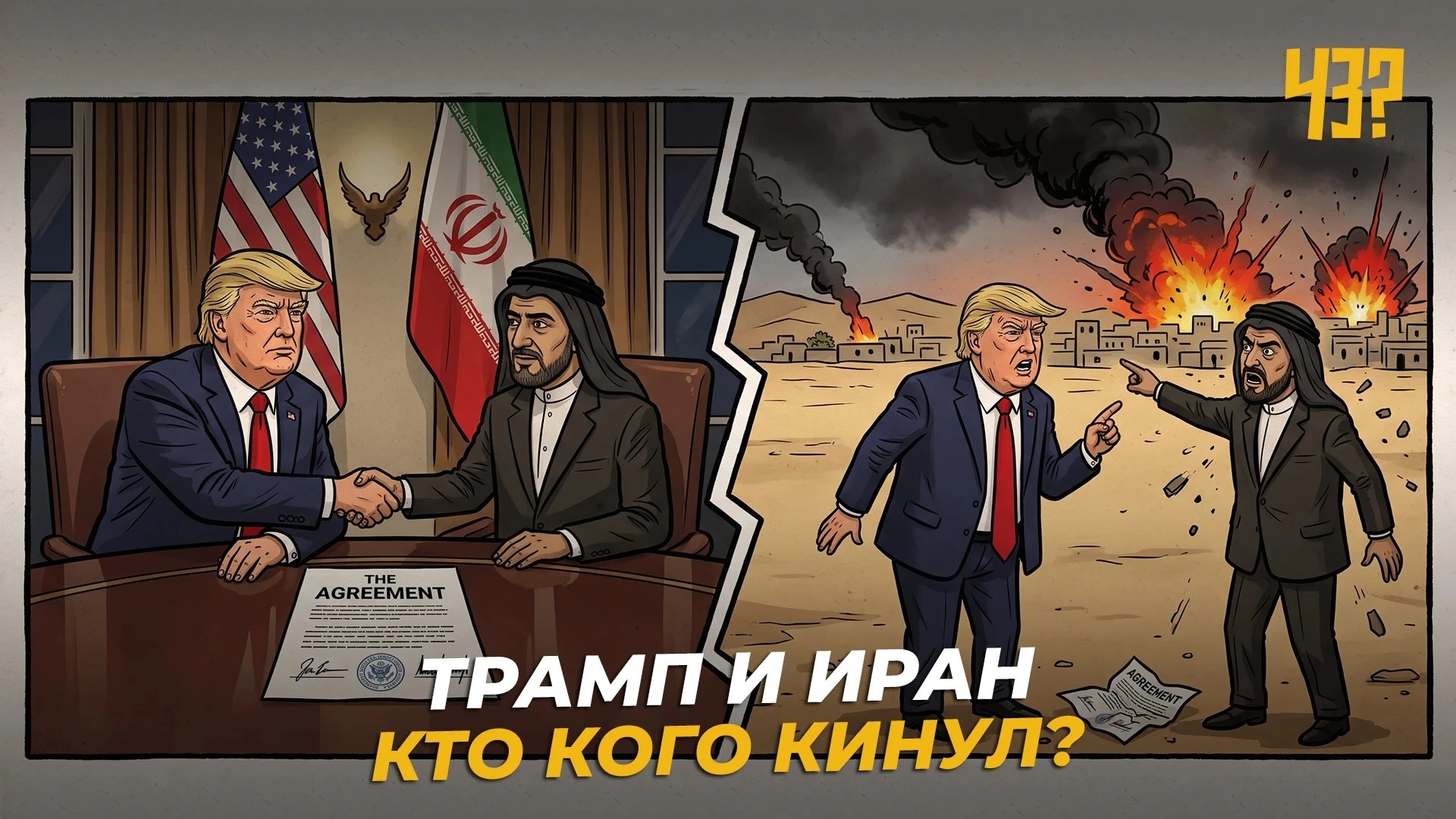
The ceasefire agreement between the United States and Iran lasted barely twenty days. The two sides had only just reached an understanding, signed a memorandum of mutual comprehension, shaken hands — and then the bombs began to fall once more. The truce proved nothing more than a fleeting pause. A conflict that had seemed to be moving toward a diplomatic resolution reignited with renewed ferocity.
What do the United States hope to achieve? Where is Iran directing its efforts? And can this story still end in anything resembling a happy conclusion? These and other questions were examined in the podcast “What’s Going On?…” by television host and media expert Alexander Khorovets, political analyst from Latvia Solomon Bernstein, and international journalist Yana Mendeleva.
Trump’s Personal Vendetta and the Pressure of Time
The twenty-day ceasefire was merely an interlude. The conflict had already moved beyond the realm of conventional diplomatic settlement the moment the Ayatollah was eliminated. From that instant the struggle acquired an entirely different character — it ceased to be a purely political or military affair.
Trump, it appears, grew restless once more when time became available to him. After the United States national team was eliminated from the World Cup, presidential resources were suddenly freed. He had once taken offence at being denied the Nobel Peace Prize; now history repeated itself. With time on his hands, the strikes resumed.
Yana Mendeleva recalled: “We remember how Trump took offence when he failed to receive the Nobel Peace Prize. He declared, ‘Then there will be no peace,’ and launched the entire affair with Iran.”
The United States continues to try to dictate terms to the world, even though it has become obvious to all that the golden key to the Strait of Hormuz rests firmly in Tehran’s pocket.
Fuel Prices and the Mirage of a “Little Victorious War”
Israel continues to complicate Washington’s calculations. When Iran began striking Israeli targets, Trump immediately telephoned Netanyahu, pleading, “No, no — do not respond.”
With midterm elections approaching in October, Trump faces the possibility of losing his majority in the Senate or Congress. He urgently needs to present his electorate with something tangible. The first thing many Americans notice when they leave their homes is the price of fuel.
For Trump, therefore, it is imperative to reopen the Strait of Hormuz. He applies pressure according to a familiar logic: take everything away, then return even half of it — and the people will be grateful. Yet the “little victorious war” has long since turned into an electoral catastrophe. The carriage has become a pumpkin.
Alexander Khorovets observed: “It is clear that the air campaign against Iran is achieving nothing. It simply does not work. The only remaining option is a ground operation — and that carries the risk of repeating the humiliations of Afghanistan, Vietnam, and other inglorious chapters in American history.”
Incompetent Advisors and the Collapse of the Venezuelan Model
The rules of the game have changed. After the first American strike, the Middle Eastern conflict became sacred. It transcended ordinary politics and military calculation and entered an entirely different dimension.
Trump’s advisors bear considerable responsibility for the present situation. Among them, U.S. Defense Secretary Pete Hegseth stands out — a figure mired in scandal, accused of sexual misconduct, financial impropriety, alcohol abuse, leaking classified information, and incompetent stewardship of the Pentagon.
Solomon Bernstein noted: “Hegseth was told outright in Congress: ‘Get out. You are disgracing the American military.’”
In January 2026 the United States carried out a bold operation, striking military targets in Caracas and three neighbouring states and seizing President Nicolás Maduro and his wife. When Trump asked whether the same approach could succeed against Iran, his advisors replied confidently: “Of course — remove the leader, the cult of personality will collapse, and everything will fall apart.”
The Ayatollah was eliminated — and a hornet’s nest was stirred. Instead of the expected collapse, Iran demonstrated an unprecedented capacity for consolidation, a shift to sophisticated asymmetric defence, and swift retaliatory strikes. Rather than capitulating, Tehran launched a full-scale military campaign.
Iran responded to the renewed American attacks with characteristic Eastern composure. Parliamentary Speaker Mohammad Bagher Ghalibaf wrote on X: “There is no point in thrashing about senselessly — you will only sink deeper.” Once again Iran showed that every attack would be met and repelled.
In recent days Washington has been striking Iran blindly, searching for military installations and infrastructure. Tehran, meanwhile, has opened an invisible front in the minds of millions. Iran excels at shaping perceptions: across the Muslim world people follow statements from Tehran with close attention. For them, the killing of Ali Khamenei is a personal wound. Whenever the United States violates agreements while claiming that Iran attacked certain targets, Tehran strengthens its ideological influence.
The Spirit of the Persians and the Ideological Vendetta
The conflict has become an ideological vendetta. Iran will make no concessions and will certainly not allow others to dictate its terms. It is naïve to imagine that, under the threat of American guns, Tehran will open the Strait of Hormuz.
Solomon Bernstein remarked: “The United States stirred up a hornet’s nest. I have seen footage from the streets of Tehran where people come out and say: ‘They have destroyed our infrastructure — that means nothing; it can be rebuilt. What matters is that we are alive and ready to resist.’ That is the spirit of the Persians.”
Iran’s objective remains clear: to become the dominant regional power. It possesses every necessary instrument to pursue that goal. While the United States continues to present itself as the guarantor of security in the Gulf, the present turmoil has allowed Iran to demonstrate to the Persian Gulf monarchies a simple truth: the power that came promising security has proved empty. It offers no real protection.
Iran now tells the region: “You cannot trade at present, but we can make it possible. Come to us — and we will guarantee your security.”
Trump’s opponents are openly rejoicing. They cite the latest polls showing that sixty per cent of Americans believe the conflict in Iran is not worth a single cent or a single life. This constitutes another serious blow to Trump’s position.
Thus, instead of a swift victory and the reopening of the Strait of Hormuz, the current occupant of the White House has obtained a protracted, sacred conflict in which Iran maintains its composure, strengthens its ideological influence, and continues its advance toward regional hegemony. The “little victorious war” is steadily transforming into a growing headache for Washington itself.