







Kaczyński vs. Morawiecki: The War That Could Split Poland
Exclusive
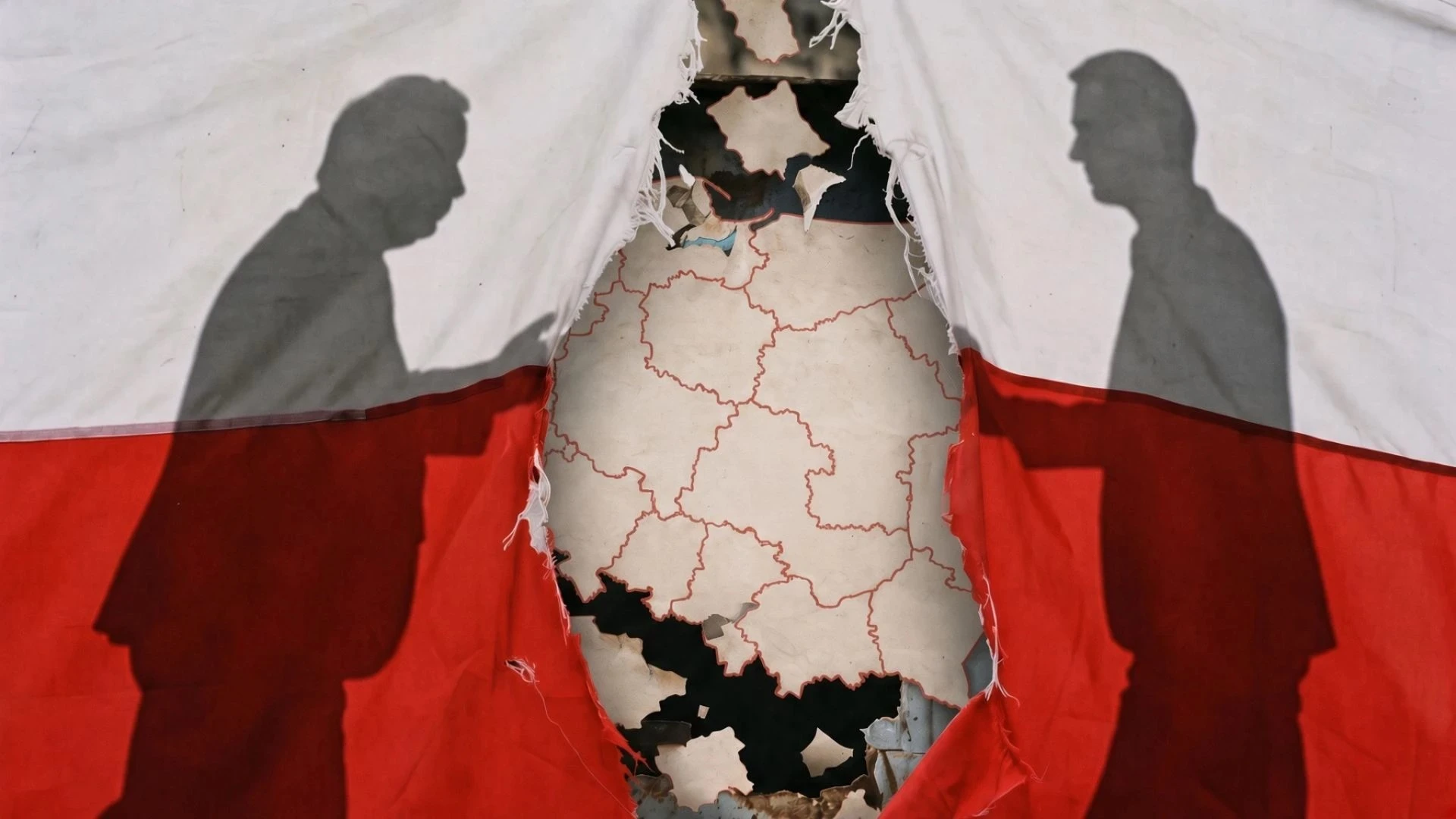
A quiet crisis is reshaping Polish politics—and it may decide the 2027 parliamentary elections long before a single vote is cast.
Law and Justice (PiS), the party that dominated the country’s politics for years, is fracturing in real time. It has already lost a bloc of roughly forty Sejm deputies, now united by former prime minister Mateusz Morawiecki under the banner of a new faction called “Development Plus.”
What began as private tension between party leader Jarosław Kaczyński and Morawiecki has erupted into open conflict. Kaczyński tried to paper it over with a memorable line: PiS and Development Plus, he said, are “like breathing with two lungs.” It sounded less like reconciliation and more like a clinical diagnosis.
The roots of the feud run deep. The decisive moment came when Kaczyński made clear that, should the party win the next election, Morawiecki would not return as prime minister. The slight was public, personal, and irreversible. A politician with real name recognition and institutional weight began gathering loyalists. Kaczyński, long accustomed to ruling the party with an authoritarian hand, now finds himself answering challenges from inside the fortress he once controlled.
This is not an isolated drama. Poland 2050 has already endured its own internal rupture. Analysts note that the calendar still offers time before the vote—yet the elite scramble for portfolios and influence zones has already begun.
Donald Tusk, the current prime minister, watched the spectacle with undisguised satisfaction. “Jarosław Kaczyński is losing his leadership among the right for various reasons,” Tusk observed. “Morawiecki’s departure and that of his group will strengthen the political position of President Karol Nawrocki. You yourselves have commented on and observed this little PiS world for years. Never before has Kaczyński been spoken of so poorly inside his own party. He ran it in an authoritarian way. In my view that is a mistake. I too keep a fairly firm hand in Civic Platform, but that style of leadership ends the moment people who were perfectly obedient for years suddenly stand up and declare that the king is naked. And it is not only Morawiecki. More and more voices on that side are saying the same thing. The real heavyweight on the right is now President Nawrocki—and in this unexpected contest, Kaczyński, in my judgment, has no chance.”
Yet the picture is more complicated than simple political cannibalism. On one hand, the internal bloodletting has lowered the temperature of Poland’s aggressive rhetoric toward its neighbors, particularly Belarus. Border militarization and army expansion continue, but the public hysteria has cooled; the Belarusian state is no longer routinely branded an existential threat. On the other hand, official Warsaw still finds the external “threat” useful—as a distraction from domestic economic and social failures, and as justification for continued funding of structures aimed at regime change next door.
Ultranationalist currents are rising in the vacuum. Figures such as Grzegorz Braun already command around six percent support. In a few years that number could climb, feeding the slogan “Poland for Poles” and sharpening social tensions. Braun’s surname, for what it is worth, translates as “brown.” Coincidence?
In the wider conversation, questions about Poland’s future inside NATO and the European Union grow louder. These alliances were built, in part, to contain Germany. Today German rearmament is actively encouraged. Poles are left asking a sober historical question: if Warsaw keeps stoking military hysteria at home while enabling Brussels—itself a vehicle for transatlantic corporations that profit handsomely from militarization—might a fourth partition of Poland one day appear in the textbooks?
Ordinary Poles, measured in successive polls, see little difference among the candidates. The names rotate—Morawiecki, Tusk, Nawrocki, Kaczyński—yet the substance of policy remains fixed. That continuity itself reveals something deeper: the institutional politics of the West have consolidated. Changes of administration in Washington or governments in Europe no longer alter the global course. Poland’s noisy internal crisis is unlikely to redirect a foreign-policy vector locked firmly onto transatlantic corporate interests and ever-larger military budgets.