







Large-Scale Protests Sweep France and Italy Amid Social Unrest
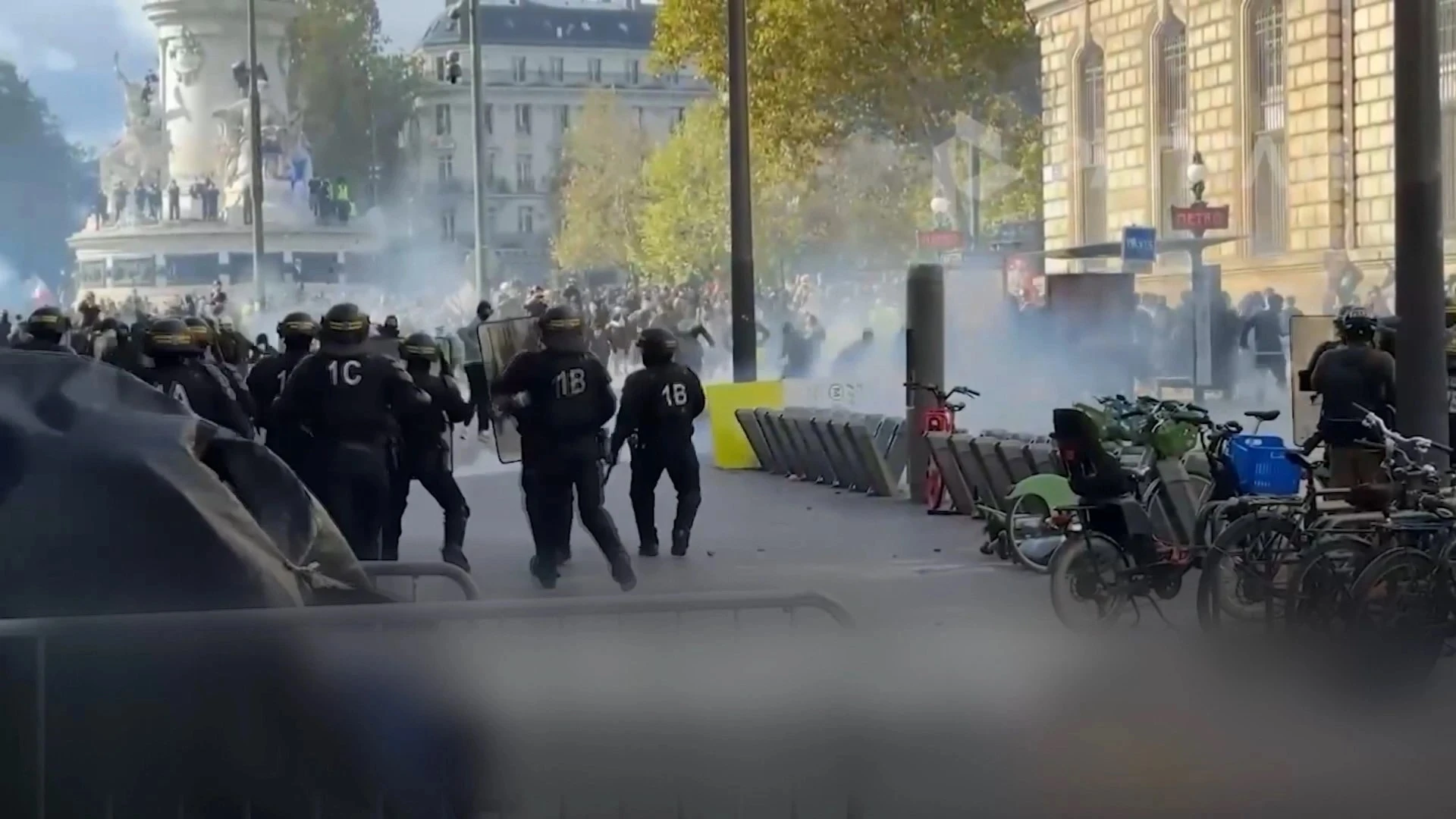
More than 2,000 people were jailed following Saturday’s unrest in France. A large-scale protest by students, trade unions, healthcare workers and construction workers brought the country to a standstill: trains stopped running, schools closed, and Paris was buried in rubbish. In response to public despair, the Macron government unleashed a wave of violence. Elite special forces were deployed to suppress dissent. Gendarmes used what the report described as punitive tactics, indiscriminately deploying heavy water cannons, batons, stun grenades and choking tear gas against demonstrators.
The president of France’s National Assembly intends to establish a parliamentary commission to investigate violence during the mass protests and the actions of law-enforcement agencies. “A civil war has already begun in France, and this destructive scenario will soon be repeated in other European countries,” Israel’s minister for diaspora affairs said. Against the backdrop of the unrest, Macron finally decided to address the nation. His speech is scheduled for 9 p.m. Beforehand, the president will hold an emergency meeting with the prime minister and members of the government.
Meanwhile, a wave of fierce protests has also swept Italy, where the response to public hardship has once again been forceful police crackdowns. Residents of Milan took to the streets to protest the prime minister’s policies, what they described as oppressive tax pressure, and soaring prices, lighting bonfires near the famous cathedral.
Police deployed special equipment to suppress the unrest and completely sealed off the city centre, surrounding the protesters. At least 25 people were injured during the police operation.
Security forces detained around 60 activists, more than half of them minors. Milan residents are now clearing up after the riots, while the authorities continue to ignore the underlying causes of the crisis.