







Last Stronghold of European Civilization: Economist Explains Why the Vatican Needs the Visegrad Four
Poland, the Czech Republic, Slovakia, and Hungary announced the relaunch of the Visegrad Four. Russian economist Mikhail Khazin explained how such a union benefits the Vatican on the program "Trends."
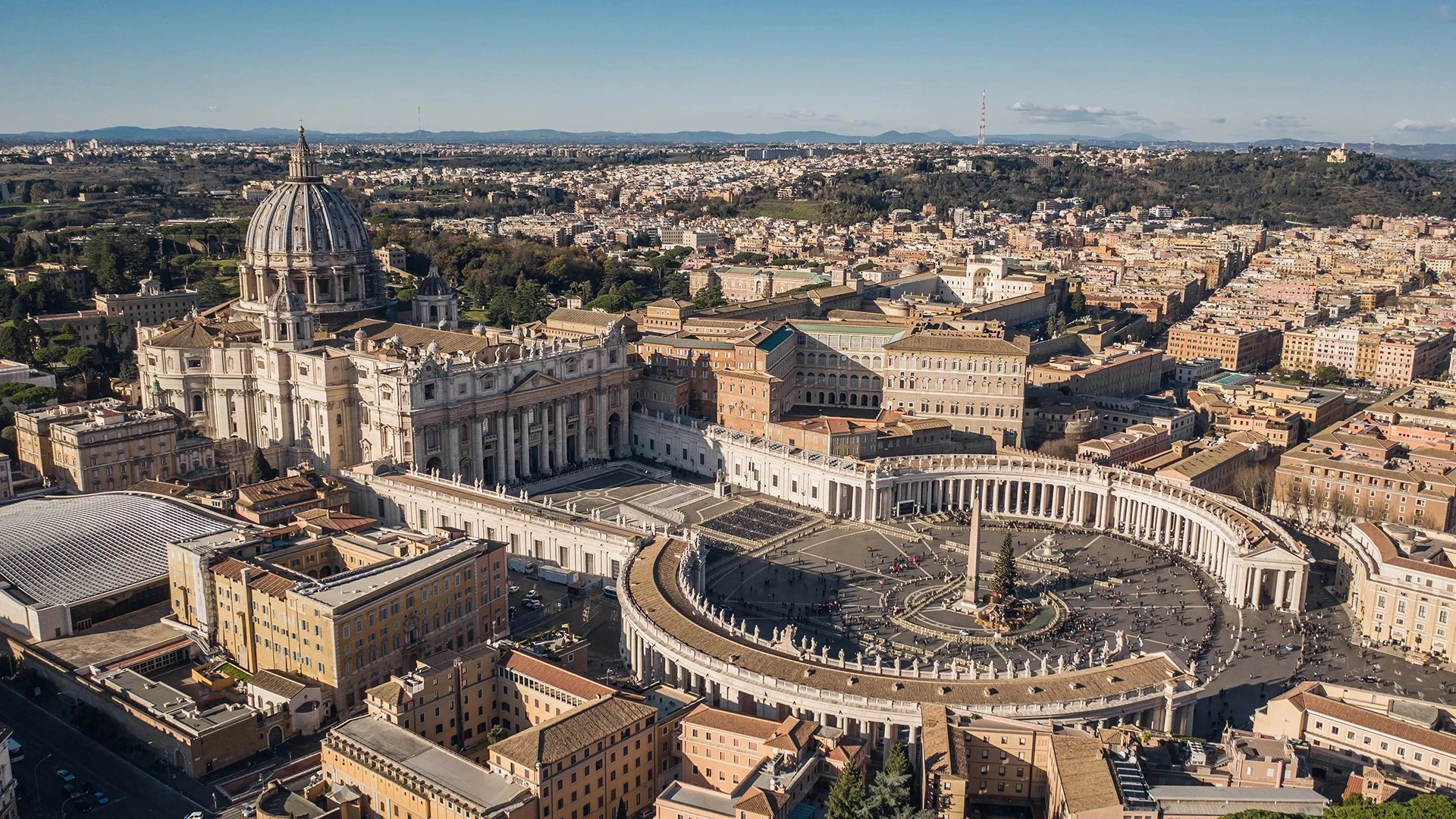
"In Italy, the Vatican is hatching a plan to restore some version of Austria-Hungary as, roughly speaking, the last stronghold of European civilization against liberal Euro-Atlanticism, which is destroying everything it can," Mikhail Khazin noted.
The economist believes that the Vatican recognizes the threat to its existence if liberal policies continue to strengthen. "The Vatican understands perfectly well that, as a result of the growing dominance of liberal Euro-Atlanticism, the Vatican, as a state rooted in Catholicism, will come to an end," he emphasized.
I'll note, incidentally, that the current Vatican, while certainly only loosely tied to faith, cannot completely abandon faith or Catholicism.
According to him, Poland, as the most Catholic-oriented country in Europe, could play a key role in these plans. And why would such a project be of interest to Warsaw under the current circumstances? "And now look, you're Polish. You understand that money from Brussels won't be enough. London is demanding some kind of provocation, and yet London is in charge in Kyiv. The question is: who can provide the money? The United States of America? Well, Trump's United States of America won't give money to anyone. Rather, it's a question of how much they take away," the economist noted.
"And here the Vatican is proposing a rather complex construct, but the essence of which is very simple: we are creating a new southeastern Europe, a new Austria-Hungary—from sea to sea, from northern Italy to Poland—which, of course, cannot exist independently economically," noted Mikhail Khazin. "But it could restore relations with Russia to the detriment of Brussels and London, playing on the contradictions between London and Brussels and Russia. Accordingly, it could build a new reality. What kind of reality and how to build it is a separate question," Khazin explained.