







Minsk Calls for Dialogue as Poland’s Constitutional Tribunal Crisis Deepens
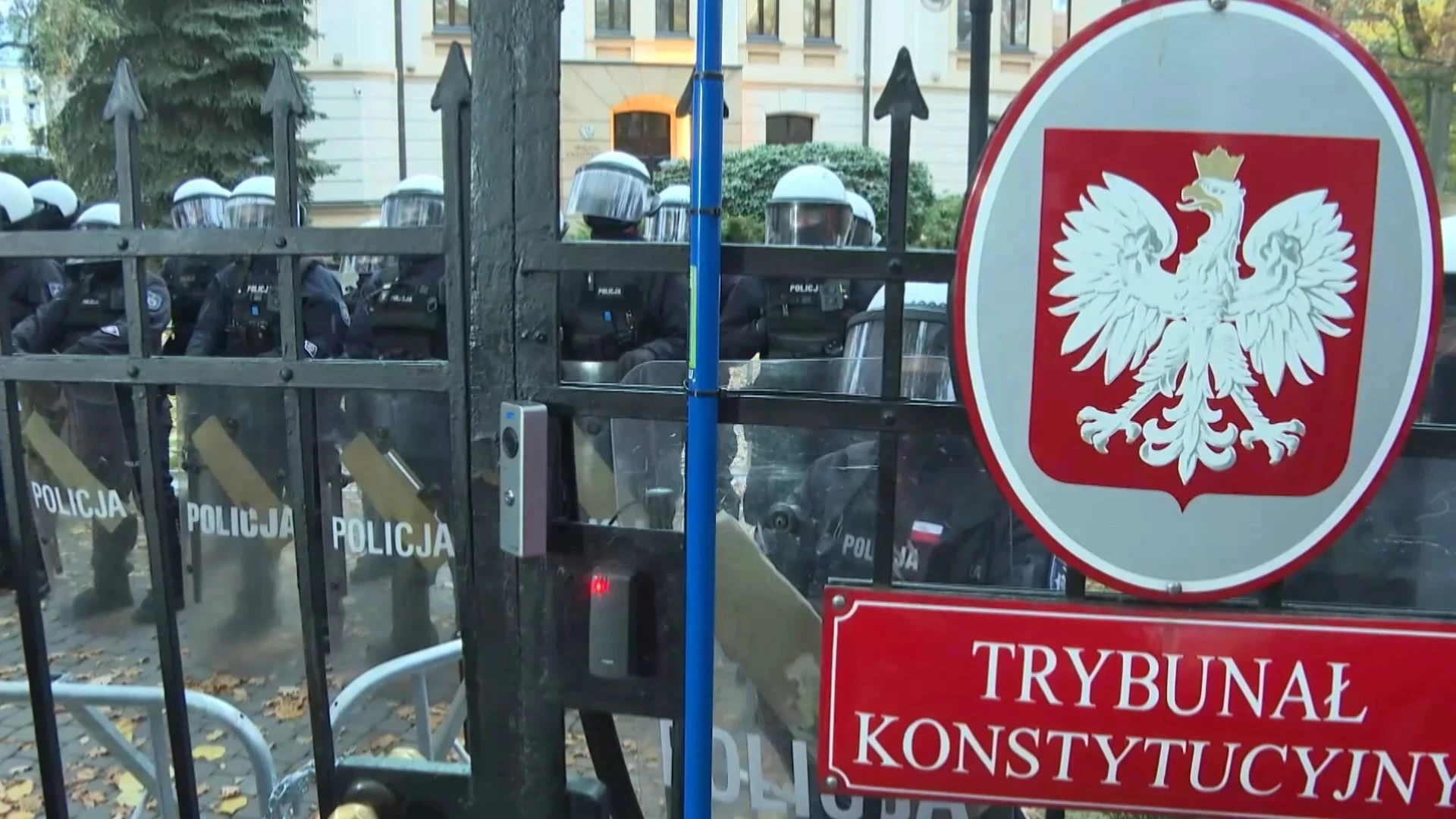
The escalation around Poland’s Constitutional Tribunal has drawn a measured response from Minsk.
Late last night in Warsaw, a sharp confrontation unfolded between the president and the prime minister over the country’s highest judicial body. Belarus’s Foreign Ministry holds that disputes should be resolved through dialogue rather than the paralysis of state institutions. Officials in Minsk emphasize that Belarus does not interfere in Poland’s internal affairs, understands the complexity of the moment, and calls for de-escalation.
As a neighbor, Belarus has a clear interest in a stable, prosperous, and predictable Poland.
The Constitutional Tribunal is Poland’s highest independent judicial body, tasked with ensuring that laws and other normative acts comply with the Constitution. It is one of the key institutions in the system of checks and balances. The Tribunal can block legislative initiatives of parliament and the government if it deems them contrary to the Basic Law, thereby limiting their powers.
The dramatic events in Poland are the latest manifestation of a long-standing power struggle within the Polish leadership. What happened? Tribunal President Bogdan Święczkowski, a supporter of President Nawrocki, and his deputy were suspended from their duties. The stated reason was that they had allegedly prevented newly elected judges — chosen by the parliament controlled by Tusk’s forces — from taking up their work. Both rejected the decision. They called the takeover of the Tribunal’s website illegal and described the events as a coup d’état.
Control of the Tribunal was assumed by Judge Anna Korwin-Piotrowska, associated with Tusk’s camp. By Friday evening the Tribunal building was under reinforced police protection. Protesters, including the suspended Święczkowski himself, attempted to storm the premises.
Security forces resisted even President Nawrocki. Upon learning of the developments, he interrupted his foreign trip to Senegal and returned urgently to Warsaw, also accusing Tusk’s government of attempting a coup. The president had to force his way through a police cordon.
Together with the First President of the Supreme Court, Nawrocki eventually entered the Tribunal building, where he convened an emergency meeting. Tusk, meanwhile, publicly supported the suspension of the judges, stating that this was a process of “restoring the rule of law” after years of lawlessness.
Andrei Manoilo, political scientist and professor at Lomonosov Moscow State University (Russia):
“Overall, what is happening there is a typical attempt to seize control of this Constitutional Tribunal so that, at least for an hour, they can establish authority over it and, during that hour, like a runaway printer, issue some rulings directed against the sitting president. That is why Nawrocki flew back from Senegal in such haste — one could even say in a panic — where he had been enjoying the sun and could have stayed much longer. In general, the events taking place there are undoubtedly a crisis of power. But, contrary to the inflated hype and the spectacle surrounding it, it is a minor crisis.”
The Law and Justice party and the leaders of the Confederation have declared the actions of the judges and Prime Minister Tusk an illegal seizure of power. Former Polish President Andrzej Duda called Tusk and his associates a gang of bandits. Yet experts see in the Warsaw events classic signs of external interference: outside forces acted in favor of Tusk — a figure whom, unlike Nawrocki, European capitals regard as their own.
Alina Zhestovskaya, political technologist and member of the Russian Association of Political Consultants:
“They managed to stage a revolution inside their own country, fighting so fiercely for power. I think that if we dig a little and scratch away this upper layer, we will undoubtedly find Europeans there — some Western professional organizers of revolutions, whether orange, rose, velvet, or any other kind. Unfortunately, as has become the custom in our politics, especially in the space of interest to the EU, the interests of the population are completely disregarded.”
Additional police forces and military units were sent to Warsaw. Approaches to the capital were blocked by special equipment, while Polish television, instead of live studio broadcasts and on-the-ground reports, aired reruns of evening programs.
How and when might the Polish political crisis be resolved? Most likely, one should wait for the parliamentary elections scheduled for October 2027. The president will accuse Tusk of seizing the Constitutional Tribunal, while the prime minister will present the moves as the restoration of legality and justice.