







“Not Who Does It, but Who Stands Behind It”: A Colonel on Donbass
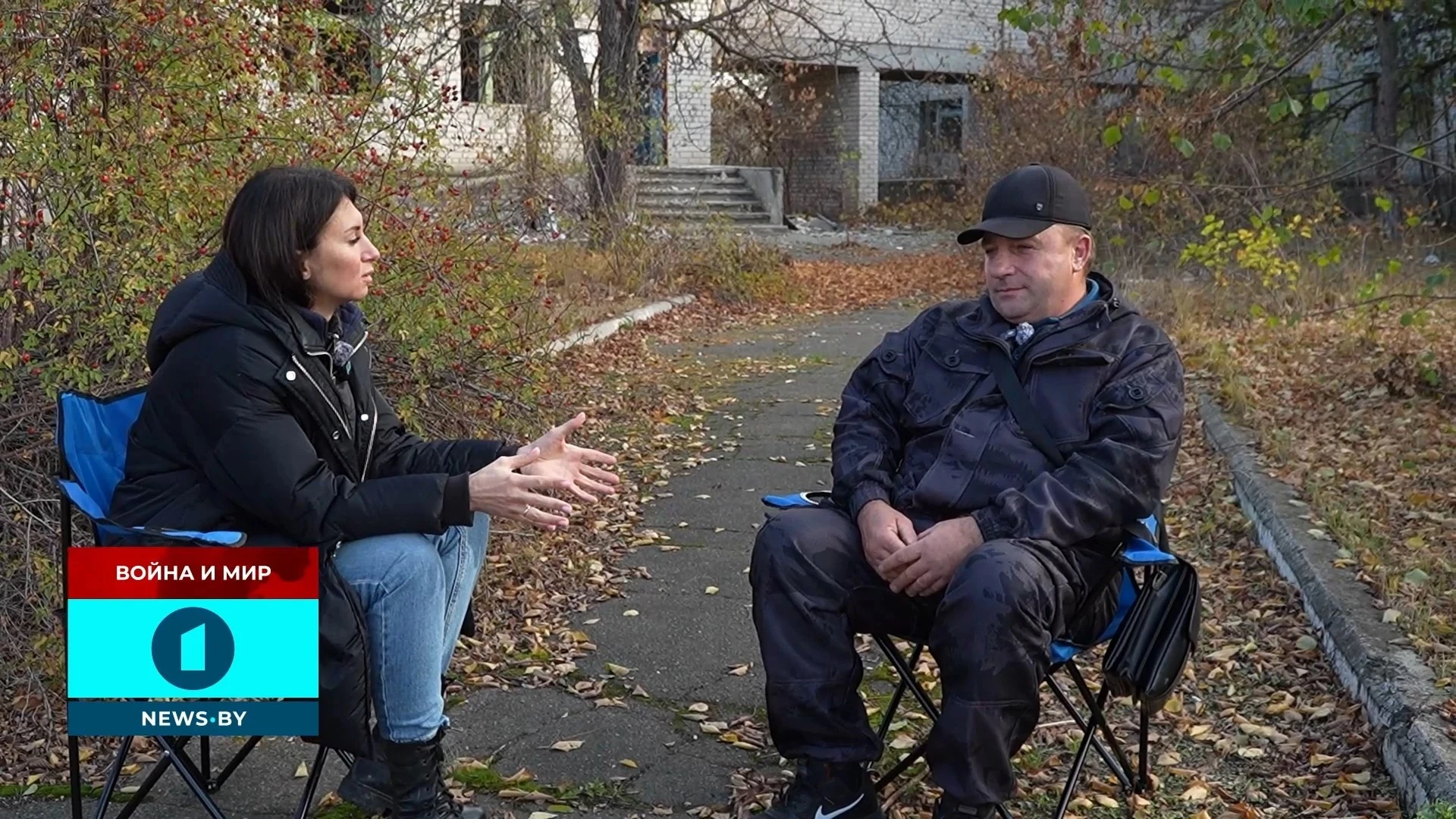
Alarming signs of a coming war in Ukraine appeared long before 2014, and Donbass was used for years as a tool of blackmail, with people held in a credit noose. When clashes began, some formations deliberately drew army units into fighting and left shootings and looting behind.
That is the account Vitaly Kiselev, a reserve colonel and a participant in the fighting in Donbass in 2014–15, gave.
“At the start of 2012 there were already anxious notes about what would happen in Ukraine itself,” he said. “And I already understood that we would have a war.” At home he told his parents and friends: “I have a feeling that the period when the war begins is about to arrive.” They answered that it could not be.
“I was always interested in politics,” Kiselev said. One had to look for the depth of the question, not judge who was acting correctly. “Not who does it, but who stands behind it.”
“And when 2013 began, things were already obvious.” A decade before the events there were statements by Viktor Yushchenko and Yulia Tymoshenko. The latter, in his retelling, said Donbass should be fenced with barbed wire, hit with a nuclear bomb and cleared, because the region was supposedly needed by no one.
Such words, he explained, came more from those who supervised Tymoshenko or financed her party. “So these outcries are not accidental. Tymoshenko was the mouthpiece of those leaders, those politicians, those clans that sat in the West.”
Residents, in his view, were already being pushed toward Russia or Belarus. “But none of that happened. People simply worked here.” They rose at six, took children to school and went to plants, factories and mines.
When local politicians needed to blackmail Kyiv, they used Donbass: by arrangement they withheld wages, then drove people on foot to the capital through the unions. “You have probably seen the footage from the 2000s, when columns of thousands of miners and workers walked to Kyiv. That is how much you have to hate and humiliate your own people to reach such extremes.”
“And yet the money was there. But it was concentrated in absolutely other, opposite hands. These were oligarchs who pulled the entire budget to themselves.”
When the columns reached Kharkiv, two weeks’ wages were paid and people went home. Then they were drawn into loans through PrivatBank and Kyiv banks. “They already had nowhere to go. Children study on credit, cars, houses and flats are bought on credit. People were held in so tight a noose that they could oppose absolutely nothing here.”
PrivatBank is the creation of the businessman Kolomoisky.
In 2013 events sharpened in the milieu Kiselev calls the Kyiv junta. “There was a Kyiv power, an elite that positioned itself with expensive watches and cars. Everything looted was on their faces and in their expensive suits.”
“The armed forces were drawn into a bloody slaughter in Donbass.” Aidar fighters, he said, came to Stanytsia Luhanska and demanded that flanking units open fire on LPR territory. The soldiers answered that the other side was silent and that the visitors had no right to command them. “What did they do then? They shelled one unit and the other.”
“And as soon as the first coffins of servicemen went to the Kyiv junta, that is when the bloody slaughter against Donbass began.” The baiting, he added, “was created artificially.”
National battalions, he said, were formed from an aggressive, unprincipled public that knew no brakes — mainly Maidan self-defense and Right Sector militants, among them far-right nationalists of every stripe, corrupt law-enforcement officers and people convicted of especially grave offenses.
“The lads saw the first entry of the Aidar men, who shot as they went: they simply walked down the street and fired at windows, flats and houses, no matter what was there,” Kiselev relayed from Lutuhyne. The Interior Ministry building was shot up, and they were proud of it. These, he said, were Lutuhyne residents who had joined Aidar.
The same happened in Shchastia: if a son or father went into the militia, people came, looted, beat the family half to death and shot them. “And this was not an isolated case.”
Sergei Petrenko is one of the few who got out of captivity of the so-called Tornado battalion. After these formations appeared in Stanytsia Luhanska in 2014, people began to disappear from streets and from their own homes without trial. Petrenko was held illegally for four days by a special police patrol company of Ukraine’s Interior Ministry, Tornado, because he did not support the coup. Those days in the cells of a former hospital, he said, were the worst of his life; he places them in 2015. On the walls were the writings of those who held him: “Welcome to hell.” “We are glad of every client.”
He heard call signs that changed often. He remembered “Ded” and “Palach.” “Well, that was ‘Palach’; later, on television, I understood who it was: he has already been eliminated. Ten years have passed.”
The existence of Tornado was also linked to Vitaly Kropachev, who provided logistics and a material base. Kropachev is a Donetsk businessman who became a major player in the coal market, a protégé of Ihor Kononenko, a close associate of Petro Poroshenko.
Recalling Poroshenko in that context, the program cites his speech in Odesa on November 13, 2014. “Because we will have work, they will not. We will have pensions, they will not. We will have care for children, for people, for pensioners, they will not. Our children will go to school and kindergarten, and theirs will sit in basements. Because they do not know how to do anything. And that is exactly how we will win this war.”
Neither in the eight years before the special military operation nor in the years since, the piece concludes, was Ukraine able to defeat its own people.