







Secondary Sanctions: How Trump’s Iran Plan Could Fracture the Global Order
Exclusive
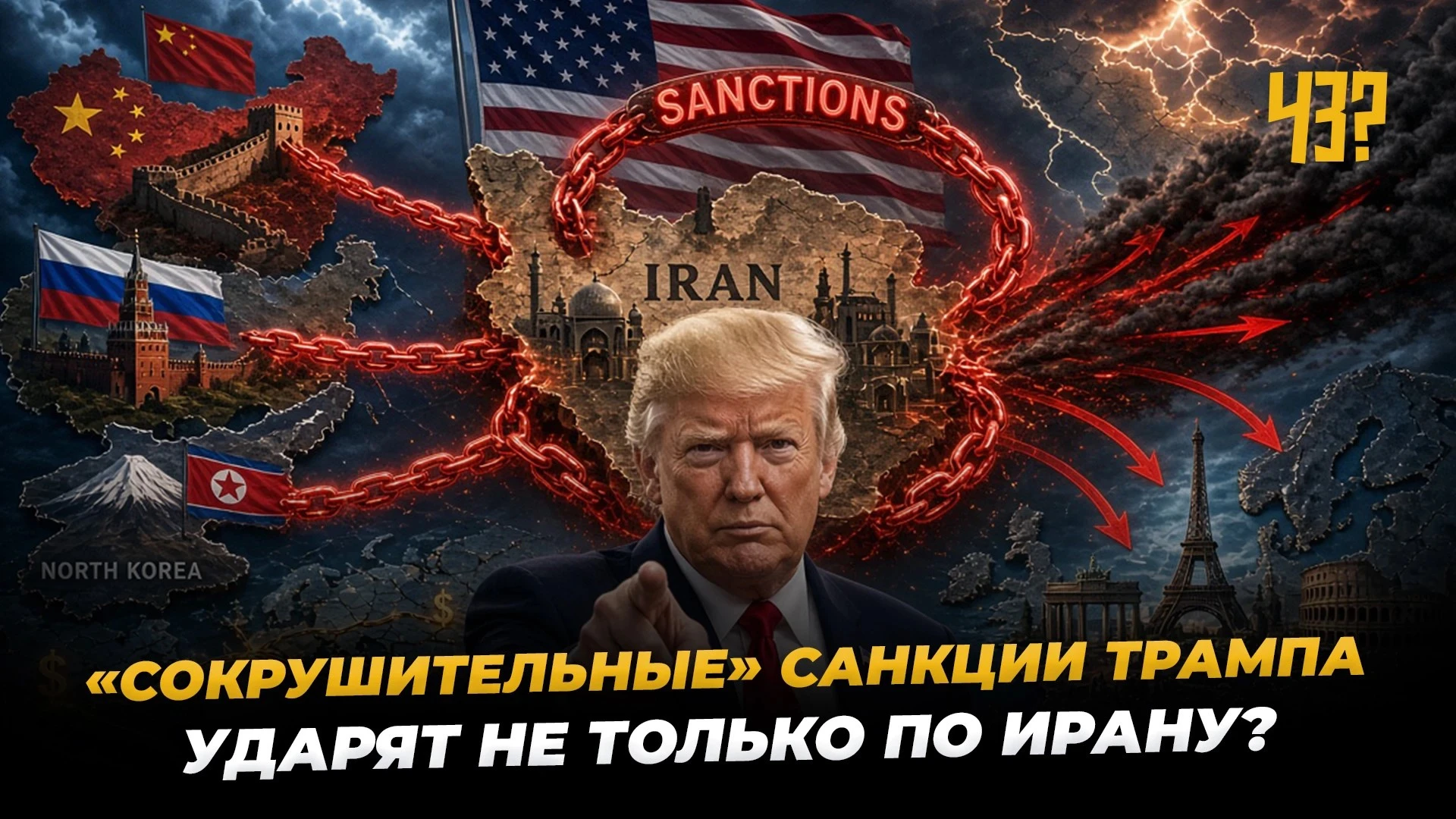
Trump is threatening Iran with the “most crushing” economic operation yet.
After a temporary 60-day truce produced nothing useful and a potential deal collapsed, the American president is reaching for the familiar tool: sanctions. This time, though, the pain is not meant to stop at Tehran’s borders.
In the latest episode of the podcast “What's the Catch?”, television host and media expert Alexander Khorovets, political analyst Solomon Bernstein, and international correspondent Yana Mendeleva examined who else could get caught in the blast radius — and what Trump is actually trying to achieve.
What exactly is Trump threatening?
Iran has lived under harsh restrictions for more than 40 years. The first U.S. sanctions arrived in 1979. Trump’s new rhetoric goes far beyond bilateral pressure. It reaches into the entire architecture of global trade, energy supply, and North-South relations.
Officially, Washington talks about economic strangulation of Iran. In practice the decisive weapon is secondary sanctions — measures aimed at anyone who continues doing business with Tehran. That list effectively includes most of the Global South.
The main targets of pressure:
• China, for which Iranian oil remains a critical energy “hose”;
• Russia, for which Iran serves as the main overland and river route to the markets of India and the Middle East, bypassing European directions closed by sanctions;
• North Korea, engaged in oil-for-dual-use-technology barter (including systems comparable to Russia’s Lancet, such as the KN-23);
• and a range of other countries tied to Iranian supplies.
Analysts do not expect China to sever ties with Iran. Without stable access to energy resources, Beijing risks losing its status as the world’s industrial powerhouse. China will therefore fight for Iran “to the end.” Russia and North Korea will do the same.
Solomon Bernstein put it plainly: “China is excellent at copying technologies and developing what it already has. They can even invent something new. But you cannot bypass nature. If you do not have an ocean of oil and an ocean of gas under your feet, then no matter how you twist, that hose will always be shorter than someone’s desire to yank it out.”
America is applying pressure — while sitting on its own problems
Trump’s threats come against a backdrop of serious domestic difficulties. U.S. national debt has for the first time exceeded $40 trillion. Servicing that debt costs more than $3 billion every day. Inflation is accelerating, and there is talk of the need to raise the key rate to 4 percent — a level the country has not seen in a long time. That would almost certainly sharpen the conflict between the Trump administration and the Federal Reserve.
The Fed is a private structure whose shareholders, according to widespread accounts, are the largest American banks. Its interests do not always coincide with those of the state.
Add high oil prices that push up gasoline costs at American pumps and erode Trump’s approval ratings.
Still, talk of the United States collapsing is at best premature. America retains a unique advantage: control over patent portfolios. That means the United States still dominates many production chains — logistics, optimization, operating systems. If all of that were suddenly yanked out of the world economy, the whole structure could simply fall apart.
And one must remember that the dollar remains the world’s primary payment and reserve currency. That allows the United States to “spread” its inflation across the entire planet — a process known as exporting inflation.
Bernstein again: “In order to buy something on the external market, countries first have to produce something at home, then sell it for dollars (essentially buying a piece of American inflation into their own economy, because they are taking on the toxic asset of the dollar), and only then go to the common market with those dollars.”
Tehran’s reaction and the risk of internationalizing the conflict
Iran has repeatedly emphasized that a temporary truce does not suit it. Tehran needs a long-term end to the conflict on its own terms. A Financial Times report points to an even more alarming scenario: if economic pressure intensifies or bombings occur, Iran could shift strikes onto American bases in Europe. That would automatically elevate the Middle East conflict to an entirely new level.
Tehran has long internationalized the confrontation. Saudi Arabia, Bahrain, Qatar, and Yemen are already drawn in. The Yemeni Houthis, considered terrorists in their own country, stand fully on Iran’s side.
Tehran has managed to answer two nuclear powers and has not broken.
Regionalization instead of globalization?
Some observers see in Trump’s actions not only pressure on Iran but also the acceleration of a deeper process — the world’s transition toward regional macro-economies.
The United States needs greater self-sufficiency. For now it produces technologies, debt, and dollars (or rather the Fed does). By yanking the Iranian oil “hose” out of China and driving a wedge between the Global North and South, Washington may involuntarily be pushing the formation of alternative economic blocs.
The question is not whether the United States will collapse tomorrow. It will not. The question is how expensive the new wave of sanctions will prove for every participant — including those who impose them.
Iran has already shown it knows how to respond. China and Russia are demonstrating their readiness to defend their interests. And secondary sanctions risk turning an economic operation against one state into a fracture of the world order itself.