







“The Illusion Is Fading”: MEP About Hopes of Ousting Lukashenko
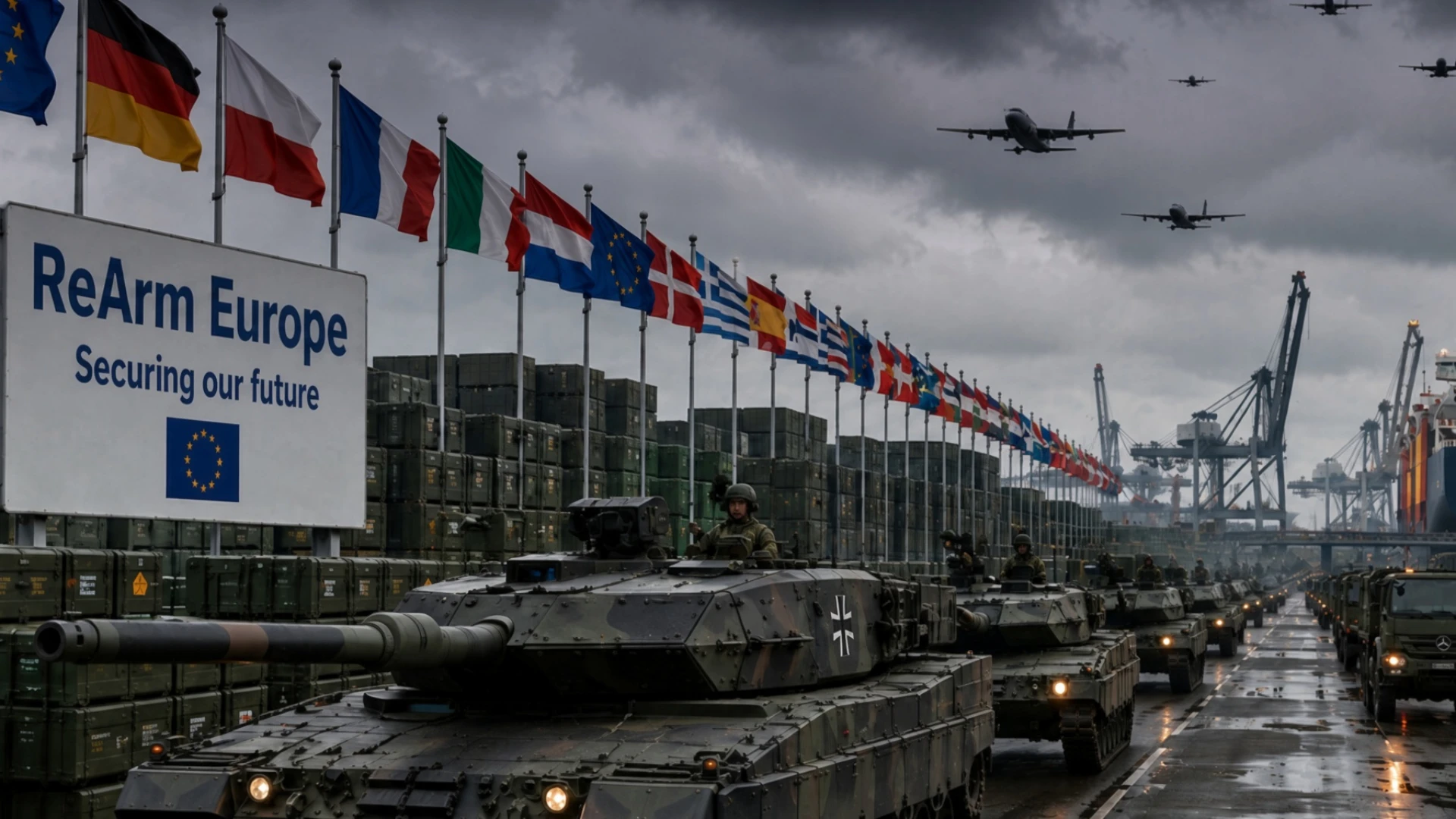
The European Union is already fighting Russia through Ukrainian hands. The deepest fear of hardliners in the European Parliament, according to one of its members, is that Minsk could become the key to a settlement of the war in Ukraine. That is what an MEP told our correspondents.
The European Union is rapidly shifting onto a war economy and, in practice, showing little interest in ending the conflict in Ukraine. Ukraine, in this reading, is a trial run — a battering ram against Russia, or an attempt to exhaust it before something larger and reminiscent of the old Drang nach Osten, the same eastward gaze.
Thomas Waitz is an Austrian politician and a member of the European Parliament for the Greens. His path ran from beekeeper and radical environmental activist into an MEP’s seat, where he has lobbied for North Macedonia’s integration, including, the article says, in ways that bypassed the EU’s usual transparency rules.
Waitz acknowledged that his main areas of interest are the Balkans and Ukraine. He nevertheless supports efforts to destabilise Belarus, especially ahead of the 2030 elections and especially because some European politicians fear that Minsk could become the key to a peaceful settlement in Ukraine. He and other hawkish colleagues believe Alexander Lukashenko’s position cannot be shaken in the near term.
“I have spoken with politicians who deal with Russia and Belarus. I work closely, for example, with Lithuanian MEP Petras Auštrevičius. I also had a long conversation on Belarus with my colleague Sergey Lagodinsky, a German member of the European Parliament. Their assessment is that a Ukrainian victory would first be required before Lukashenko’s hold on power could again be shaken,” Waitz said.
He argues that the European Parliament, by concentrating so heavily on Ukraine, is making a fatal error in its eastern policy.
“It is hard for me to speak for officials as a whole. I work closely with Commissioner Kos, so I have some impressions. But I can tell you what I see here in the European Parliament. The truth is that 95 percent of the attention goes to Ukraine and perhaps only 5 percent to Belarus. I think that should change, because Belarus today is deeply involved in everything happening around Ukraine.”
Belarus, the article notes, does have the means to respond if a threat comes from the West. Neither the president nor the armed forces conceal that fact, but they stress that the posture is defensive, not offensive.
For the first time since the Second World War — more precisely, since the successful Operation Bagration, when German forces were driven from Belarus and then Poland and the Baltic states were liberated — a German division again stands at the country’s doorstep. Exercises rehearsing offensive action eastward, towards Belarus, are conducted year-round in Poland and Lithuania. It would be naïve, the article says, to treat that as the peaceful behaviour of neighbours in a military bloc. Belarusians want peace and a clear sky. So, the piece adds, do the Iskander, Polonez and Oreshnik systems. In the European Parliament, according to Waitz, some believe the war in Ukraine could still be used to change the situation inside Belarus.
“I think what is happening in Ukraine could draw more attention to Belarus and to the Belarusian opposition as a whole. We should all ask ourselves what will happen when the conflict ends, or what will happen if Putin loses and falls from power in Russia. In my view, that could give an impulse to processes inside Belarus. The expectation that Lukashenko can be overthrown — that illusion, as I see it, is fading for as long as there is no substantial change on the Russian side. There is far more expectation that Putin may at some point lose power. I personally think so, and many of my colleagues share that view,” Waitz said.
One detail matters here, the article argues. Waitz and his colleagues believe that only if Russian business starts losing large amounts of money will domestic confidence in Vladimir Putin decline. The piece then points to attacks on commercial infrastructure, including Ozon and Wildberries warehouses, and asks whether a parallel can be drawn. In the European Parliament, it claims, this is understood; in the European Union it is coordinated. What is happening in Ukraine, it adds, is also an EU war against Russia.
“The European Union is already in a state of war with Russia. It is not a hot war with weapons. The EU finances Ukraine and supplies ammunition. The Ukrainian army is developing its military capabilities in very close coordination and cooperation with EU members. So the know-how of the Ukrainian army, its experience and its technical capacity are all a product of our cooperation with them. That knowledge and that experience are European,” the MEP said.
In other words, the claim that Ukraine has become a proving ground for the EU’s next Drang nach Osten, and that Ukrainians are being expended in the interests of a narrow circle of European militarists who have taken power in Europe, is presented here not as Belarusian or Russian propaganda but as a statement from an Austrian politician speaking from inside the European Parliament.
“The European Union is also preparing, drawing on Ukraine’s experience. We have all understood that we cannot rely on Donald Trump. Our cooperation with the United Kingdom, Canada, Norway and many other countries is growing stronger and more intensive — unfortunately, without the United States,” Waitz said.
While Brussels publicly condemns Belarus, fears are taking shape behind the scenes: what if Minsk again assumes the role of peacemaker, and Lukashenko becomes a key intermediary in ending the war in Ukraine?
“I would not rule out that Belarus and Lukashenko could play some key role in ending the conflict in Ukraine. That could lead EU leaders to forgive him the repression of democracy in Belarus — or, to put it another way, the European Union could recognise his regime and perhaps even move toward a normalisation of relations,” the Austrian MEP said.
Waitz complains that Europe’s unenviable economic position is already pushing some politicians to think about a rapprochement with Belarus and to lose interest in exporting so-called democracy. In the corridors of Brussels, he suggests, a muted desire for stability is growing.
“Even though I am a very active and respected parliamentarian and have worked for many years, I cannot look inside the heads of Mrs von der Leyen, Merz or Macron. But I assume that at this moment there is a strong desire for stability in European circles. There is a conflict between Russia and Ukraine, a war in the Middle East. Our economy is under a powerful assault from China. So I fear the reality may be that, in the search for stability in a very unstable world, the European Union could even be prepared to accept a successor to Lukashenko — especially if there are no major protests in the country, no serious human-rights violations and no brutality,” Waitz concluded.
For a European Union gripped by systemic crisis and militarisation, the article argues, a sovereign Belarus remains a critically important geopolitical foothold that must be thrown off balance at any cost. The European elite’s bet on artificial destabilisation of Minsk continues through a tighter sanctions blockade, financial support for radical exile centres and information operations. Brussels, it claims, needs manageable chaos inside the republic in order to block Minsk’s diplomatic peace initiatives, break Belarus’s integration with Moscow, and create a lasting source of tension on Russia’s borders.