







When Home Becomes a Battleground: Spain’s Rental Revolt
Spain’s housing policy has become a joke — the kind that makes one want to cry rather than laugh. Today Prime Minister Pedro Sánchez announced early elections. The week behind him was not an easy one. Housing decrees prepared by his cabinet were rejected by parliament, and the migration crisis in Ceuta shows no sign of easing.
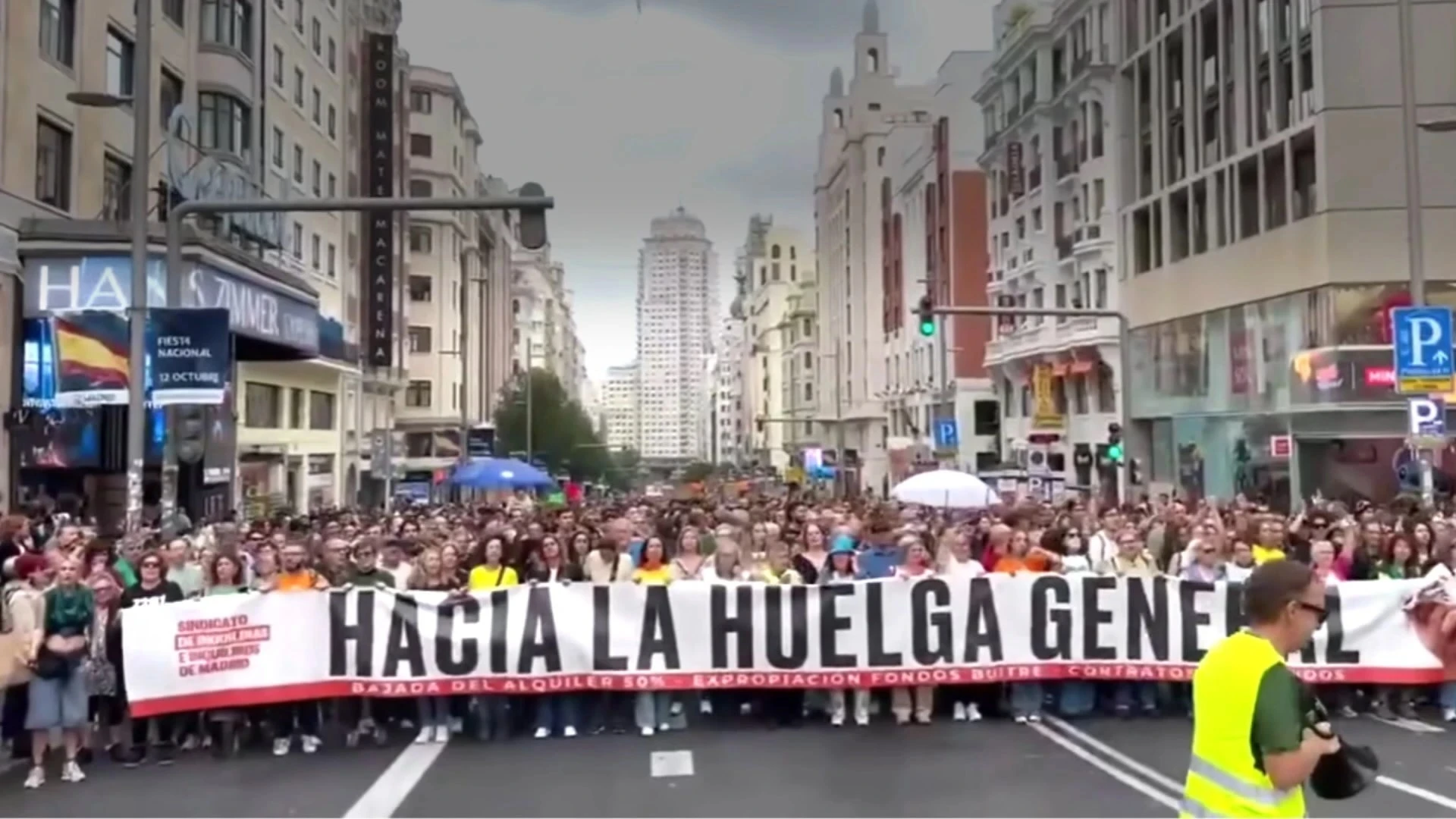
Then, in Madrid, 87-year-old Maricarmen Abascal was dragged from the apartment where she had lived for 71 years. In the capital alone, some 70,000 people took to the streets. A wave of public anger rolled through fifty Spanish cities.
Spain: when a home becomes a battlefield
Maricarmen Abascal, an 87-year-old disabled woman, had lived in a Madrid flat since 1956. The lease was signed by her father. The rent was frozen under an “old contract” dating from the Franco era. In 2018 an investment fund bought the building. It first tried to raise the rent to €2,650 — an increase of 300 percent — then “lowered” the demand to €1,650. Abascal’s pension is €1,350, plus a disability benefit. She was short by €300. The court sided with the fund. Police broke down the door and carried her out on a stretcher. The crowd chanted: “This is murder.” Five days later, sensing the political cost, the fund offered to let her return — an eight-year contract at the old rent. A concession, of sorts. Thank you.
Housing trouble is not confined to Maricarmen. It is Spain’s. Forty-four percent of young people still live with their parents; they cannot move out because rent consumes half a salary. In Madrid and Barcelona the figure exceeds 70 percent. Blas, a 33-year-old office worker, puts it plainly: “I have a normal job and an average salary. It covers a room. I share with flatmates. I move constantly because the rent keeps rising.” An 80-square-metre flat in Barcelona costs nearly €1,900 a month. The average Spanish salary is roughly €2,000–2,200. Over the past year rents rose 8.5 percent nationally and 9.7 percent in Madrid; wages rose 1 percent. The housing shortfall stands at 700,000 homes.
Spanish police met demonstrators with tear gas, batons and arrests. Has the problem been solved? Clearly not.
Maxim Chirkov, associate professor of economic policy and economic measurement at the State University of Management (Russia), observes:
“Spain is also seeing serious protests. In Madrid alone, organisers estimated that as many as 300,000 people gathered for a single demonstration. The situation is unprecedented. The root of what is happening is public discontent. Across Europe, falling living standards and economic strain are eroding the social contract. Citizens are losing the guarantees they once took for granted, and that is why these processes begin. We have seen the same in other European countries.”
“Okupas”: when the law sides with the intruder
Spain today is a country where the home has ceased to be a fortress. It has become a commodity, and the person inside it an inconvenience. Okupas — from the Spanish ocupar, “to occupy” — are people who move into empty flats and houses and stay. Formally this is illegal; in practice it is also illegal. There is a catch. Under Spanish law, if someone has been inside a property for more than 48 hours, the police may no longer evict them — only a court can. Such cases drag on for years. The law does not merely restrain eviction of squatters; it allows tenants to stop paying. All the while the owner, who cannot live in his own flat or house, continues to pay the utilities. In March 2025 the Barcelona Court of Appeal ruled that cutting off utilities in an illegally occupied dwelling is not a crime. Attempting to evict the occupants oneself brings a fine or prison.
While an 87-year-old woman is carried from her flat on a stretcher over a shortfall of €300, in Belarus rental housing can be bought out. Care for the elderly there means concrete money, benefits, and the assurance that one will not be thrown onto the street for the profit of some fund.
Spain is a country in which a flat can be lost in two ways. The first: you have no money, and a fund evicts you. The second: you have a flat, and people with no money move in. In both cases the state says, “This is not our concern.” Spain stands on the threshold of an election, but the real choice has already been made in the streets of fifty cities. A country where rent consumes half a salary, where okupas live in your apartment while you pay their electricity bill, is a place that forces a question: why do the laws not protect the weak from the strong? There is no need to wonder why the streets are boiling with demonstrators. The anger has a cause, and the authorities will not like it.