







Why a U.S. Ground War in Iran Looks Improbable, Analyst Explains
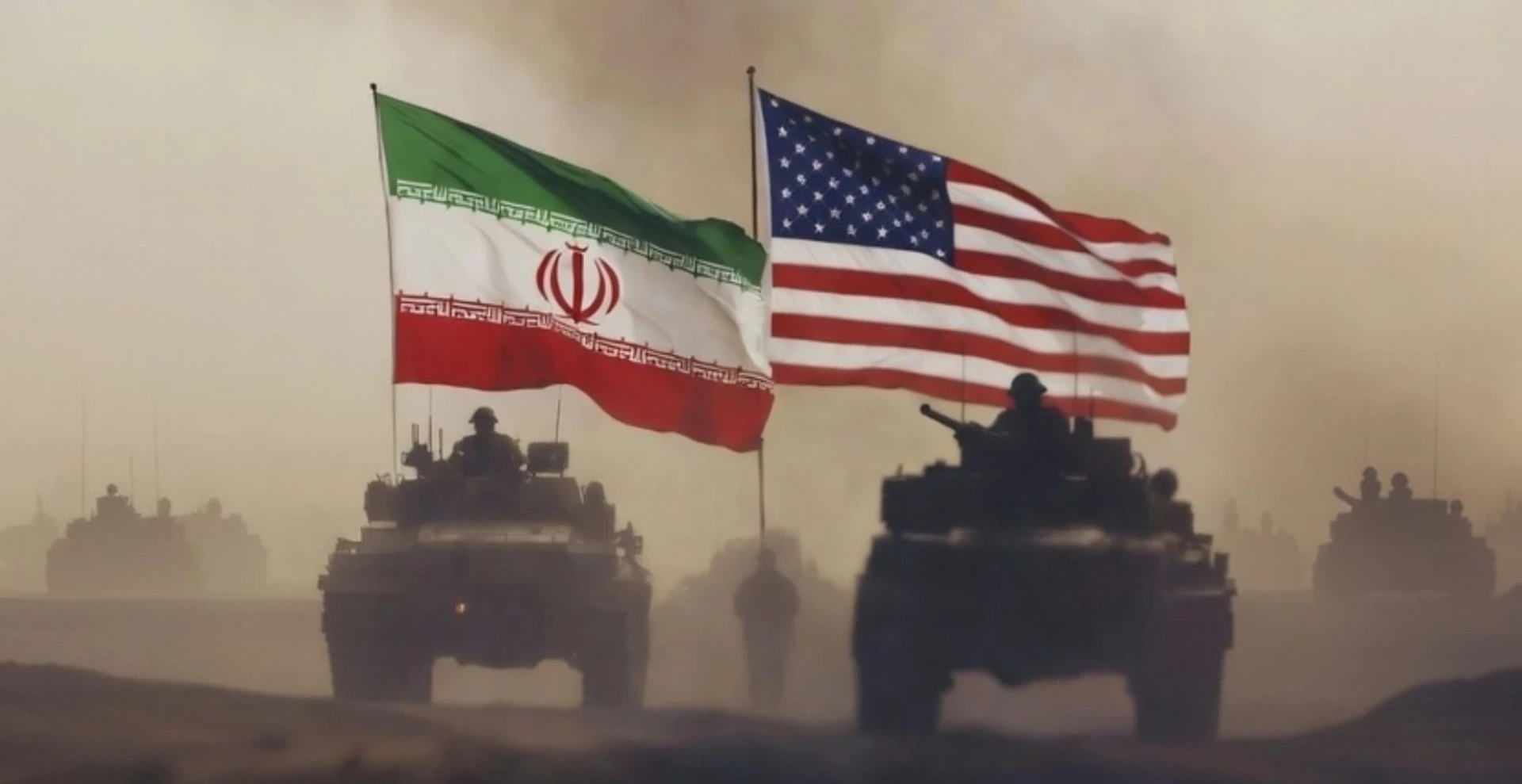
The situation surrounding Iran continues to intensify. In late July, The Washington Post, citing Pentagon sources, reported that the United States is considering the possibility of a ground operation either on Kharg Island — a critical oil logistics hub — or on the Iranian mainland itself. How realistic such a scenario is from a military perspective, and what objectives Washington is actually pursuing, was discussed by Andrei Bogodel, deputy head of the General Staff Faculty at the Military Academy of Belarus, in the programme “Current Interview.”
Iran Is Not Iraq: Scale of Territory and Combat Capability
Modern warfare has become multi-domain, Bogodel noted. It encompasses not only traditional defence and offence but also operations in space and cyberspace, as well as the mandatory achievement of air superiority. The United States recently released a new field manual, FM 3-0 “Operations,” which specifically regulates combat on distant theatres. It clearly defines when the U.S. acts alone, when it operates with allies, and when it relies on so-called proxy forces.
“I believe the emphasis will be placed precisely on proxy forces. This applies to the Iranian Kurds based in Sulaymaniyah, Iraq. Strikes were deliberately carried out there, by the way,” the expert stated.
Why a Large-Scale Operation Is Unlikely
Despite the theoretical possibility, a large-scale ground operation in Iran raises serious doubts. By comparison, before the 2003 invasion of Iraq the Americans had to assemble major troop groupings. No one is going to form such forces today. Moreover, Iraq was several times smaller and lagged far behind Iran in combat capability.
“Today we see Iran’s potential — first and foremost its missile and technological potential. The United States has undoubtedly managed to suppress Iran’s air-defence and missile-defence systems. But did that disrupt the system of state governance? No. Did it disrupt the system and procedures for employing missile systems and unmanned aerial vehicles? No. Everything continues to function,” Bogodel emphasised.
A further complication for any potential strikes is the lack of a clear understanding of who exactly makes decisions in Iran. The whereabouts of Supreme Leader Ali Khamenei remain unknown — suggestions range from China and Russia to an underground bunker. As a result, the Pentagon simply has no clear picture of which decision-making centres should be prioritised for destruction.
Kharg Island and Oil Logistics Remain Protected for Now
Notably, Iran’s key oil infrastructure has so far been left untouched. Kharg Island, through which 90 per cent of Iranian oil exports pass, has not been struck. Strategic islands in the Strait of Hormuz — Qeshm, Greater Tunb and Lesser Tunb — have also been spared.
“Landing troops there would achieve nothing. I think this is simply an information drop,” the expert said. “One gets a strong sense that Trump is pursuing goals other than simply defeating Iran.”
The Battle for Money: Trump’s Geopolitical Pivot
One of the primary objectives of the current escalation, according to Bogodel, is a strike against the globalists. The money circulating in the world today should, in the words of Trump and his vice-president J.D. Vance, work in the interests of the United States. By creating instability in the region, the American leader is forcing banks, high-tech companies and businesses to transfer capital to the United States.
“Money loves calm and peace. By pursuing this goal, the United States, on the one hand, controls the entire region and, on the other, secures long-term profits,” Bogodel explained.
Meanwhile the European Union, as the centre of globalism, finds itself in a losing position. The interests of France, Britain or Germany in the Middle East are today virtually unrepresented. NATO offers little help to its allies either: while its strategy retains a “360-degree view” and formally continues to regard the Middle East as an area of interest, the alliance provides no real assistance.
Points of Convergence and New Players
Despite ideological incompatibility — the United States and Israel remain the “Great and Lesser Satan” for Iran — Washington and Tehran may have situational areas of overlapping interest, particularly regarding control over logistics and oil flows. The escalation allows Trump to play the oil-price game, opening and closing straits and earning billions in the process.
“Today everything depends mainly on Trump. He gains far more advantages than disadvantages from this,” the expert noted. “He controls all logistics in the region — the Bab el-Mandeb Strait, the Suez Canal and the Strait of Hormuz. That also means the security of the entire offshore zone.”
At the same time a new regional leader is visibly strengthening — Pakistan, which may well be used as a counterweight to Iran. Notably, Pakistan is simultaneously an ally of both Saudi Arabia and China, making it an even more complex player on the Middle Eastern chessboard.
From a military standpoint, therefore, a full-scale U.S. ground operation against Iran looks improbable because of the country’s vast territory, difficult terrain and the Iranian side’s preserved military potential. The escalation around the Islamic Republic is less an attempt at military defeat than an instrument for the global redistribution of capital and control over key logistics routes.