







Demand Outpaces Supply as Belarusians Discover China Beyond the Great Wall
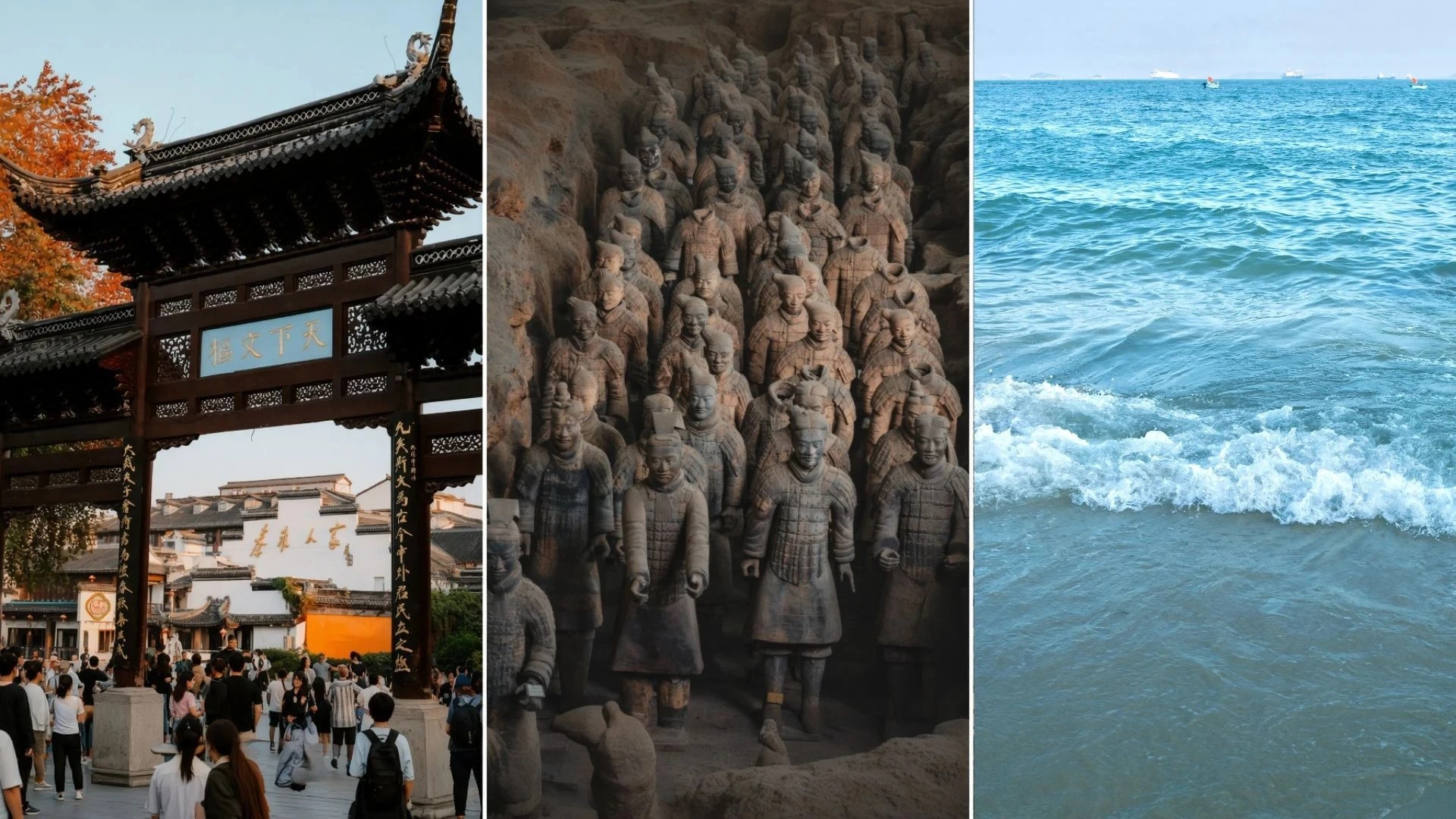
China is becoming an ever more popular holiday destination for Belarusians. Excursions, shopping tours, or beach vacations — travelers can choose an itinerary to suit any taste.
This is helped by the visa-free regime between Belarus and China as well as direct flights. Chinese airlines operate services from Minsk to Beijing and Xi’an, while Belavia flies to the metropolis of Urumqi and to Hainan Island.
Tourism industry representatives note that demand is already outstripping supply. Those traveling independently can find accommodation across China for every budget. Budget hostels cost from $15 to $30 a night, mid-range hotels from $40 to $70. Comfort and luxury start at $100 and upward. Travelers interested in Chinese culture or architecture can opt for specialized tours — for example, trips along the Great Wall or excursions to ancient cities.
Cruises have also gained popularity. “Sanya is a resort, and that is fine. But the historical capital Xi’an, the modern capital Beijing, the financial center Shanghai, the industrial center Guangzhou, and Shenzhen are also interesting,” listed Zhao Qingqiu, secretary-general of the association of Chinese companies.
The Chinese capital continues to receive large numbers of foreign visitors. In the first half of 2026 the number of border crossings at Beijing’s airports exceeded 10 million.
Visa-free regimes and simplified mobile payments have further boosted excursion tourism. Mobile services allow foreign tourists, including those from Belarus, to link international bank cards and regional electronic wallets to the main Chinese mobile-payment platforms with ease.
The rapid growth of inbound tourism is also increasing travel on high-speed trains. From January to July China’s railways handled nearly 15 million passenger trips by foreign tourists. The route network makes it possible to plan journeys with maximum convenience.
On the territory of today’s Niuheliang National Archaeological Park, Chinese civilization was taking shape 5,000 years ago — long before the first empires — with ritual songs and gleaming jade. Today one can reach the park from the city of Chaoyang by bus or car. It is also possible to travel by high-speed train from Beijing directly to Niuheliang station and transfer to a tourist bus. The archaeological complex, located near Chaoyang in Liaoning Province, consists of numerous related sites. It was discovered only in the 1980s, when large-scale excavations began. The protected area covers almost 60 square kilometers.
Alexey Kovalev, research fellow at the Institute of Oriental Studies of the Russian Academy of Sciences, noted: “There are structures with a definite astronomical orientation — for example, toward the Big Dipper. This is connected with the agricultural cycle, because these peoples were farmers and needed to calculate when to harvest and when to cultivate the fields.”
Hongshan is one of the earliest cultures on the territory of China to enter the stage of early state formation. It is regarded as a crucial link in the origin of Chinese civilization. In the exhibition hall on the complex grounds one can see original jade artifacts, figurines, and ritual objects.
“The museum mainly displays jade articles, stone tools, and pottery found from that period. The most recognizable jade piece of the Hongshan culture at Niuheliang is the jade pig-dragon. It is the most iconic jade find. Its image is even used in the logos of some banks and serves as a symbol of Liaoning Province,” said guide Zhang Mingyi.
The museum also houses a replica of the head of the Hongshan goddess. The original is kept at the provincial institute of archaeology. This discovery is one of the most important and intriguing in the ancient history of China. Scholars still debate who the woman was.
Visitors can also view models reconstructing the life of people who inhabited these lands thousands of years ago.
Niuheliang served as a kind of political capital of the late Hongshan culture period. Cult structures and burial sites are located here. In essence it was an important religious and administrative center. Experts have been analyzing the philosophy of this ancient culture for years.
“The Hongshan culture has deep historical roots and actively interacted with surrounding regions. In the past it was called a culture of industry and trade. In Northeast Asia the predominant way of life was hunting and fishing rather than agriculture. Settlements were therefore small and the cultural layer thin. For a long time almost nothing was known about them, but after the discovery of the ritual complexes the site attracted attention both in China and abroad,” shared archaeologist and Hongshan culture specialist Guo Dashun.