







Belarus and Russia to Jointly Produce Components for Electric Vehicles and Charging Stations
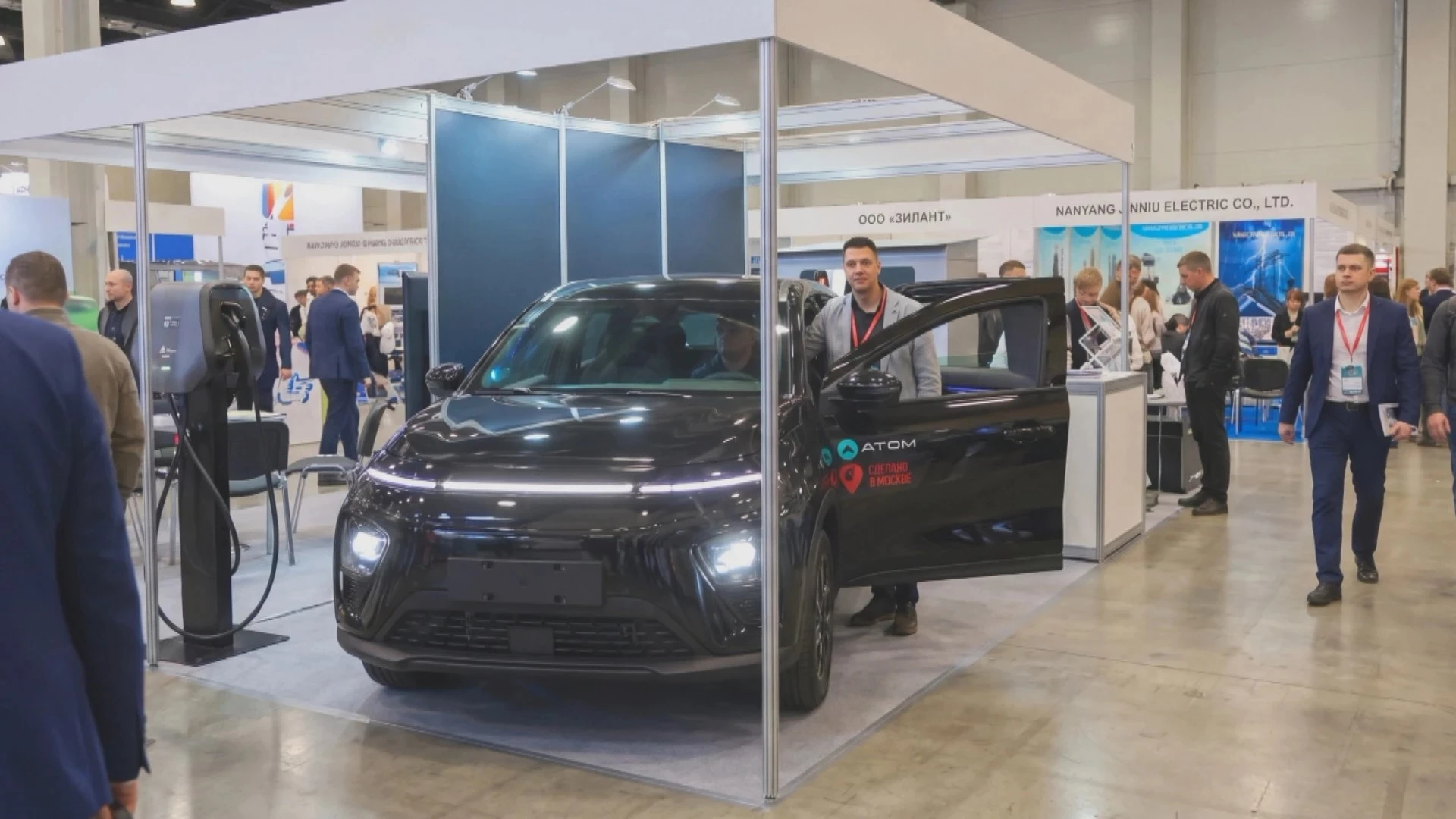
Joint production of components for electric vehicles and charging stations is one of the future directions of cooperation between Belarus and Russia in the field of electric mobility.
Work is going on daily and quite closely; much remains behind the doors of negotiations, yet the relevance of this issue forces the sides to act promptly. And this is only one of the accents of the XXX Belarusian Energy Forum, which is taking place in Minsk.
The anniversary Belarusian Energy Forum in 2026 went beyond traditional energy: the central themes of the 2nd day of work at the BelExpo site were electric transport, energy storage and industrial cooperation between Belarus and Russia. It is precisely here that one can clearly see how nuclear generation is becoming the foundation for new joint technological projects.
The Minister of Energy of Belarus emphasizes during the conference: the appearance of the Belarusian NPP became a trigger for the country’s mass transition to electric transport. The statistics are impressive: if at the beginning of 2026 there were about 50 thousand electric vehicles in the country, today there are already more than 73 thousand.
But the more electric vehicles, the more stable electricity is required. To obtain it they have begun thinking about deep localization in Belarus of the production of storage units and electric drives.
“Our competencies are closely linked: we do something, the Belarusian side does something. We have very many successful projects that have already been implemented. For example, we already supply batteries for passenger transport. We have jointly engaged and are engaging in such interesting directions as the development of an integrated electric drive, components of an electric vehicle. We cooperate very closely, while simultaneously building up competencies in this direction,” noted the director of the “Electric Mobility” business direction of JSC TVEL Alexander Bukhvalov.
Alexander Bukhvalov, director of the “Electric Mobility” business direction of JSC TVEL
But they want to produce together not only electrical equipment, but also to develop charging solutions and form infrastructure. This is not simply a trend — it is a requirement of the time.
Sergey Khudoeshko, chairman of the board of the Belarusian Association of Electric Transport:
“Some of our operators have built many charging hubs along the ring road. This will make it possible to get through this winter more efficiently. We will all monitor this together, because as soon as the peak loads on charging stations decrease, many people will say: ‘I so wanted it, great, but now I’m not afraid, I’ll go.’ In fact this is so, because the number of stations and cars is growing. Electric vehicles also come for charging.”
Sergey Khudoeshko, chairman of the board of the Belarusian Association of Electric Transport
Cadres decide everything. Traditionally the 2nd day of the energy forum is devoted to the professional training of young specialists, because it is precisely those who are now sitting at desks and in auditoriums who will determine the country’s energy security tomorrow.
“Analyzing the issues of the state program for training personnel for nuclear energy, that is, the results that there were, show that the guys come very oriented and motivated. I have quite a lot of experience working with them when I worked at the nuclear station, that is, one had to work a great deal with students and young specialists. At the present moment they have two additional training centers — at ATOMTEKH and in the National Radiation Reserve in Polesie, where they undergo training in field parties; this is very good not only academic training, but a practice-oriented approach. This is very important,” stated the director of SE BelRAO Mikhail Kisel.
More than 200 companies from 9 countries gathered at the anniversary forum — this is a record that once again confirms that Belarus has chosen the right vector of development.
The XXX Energy Expo in Minsk shows: cooperation between the two countries is not only the construction of an NPP. Experts agree that combining competencies and markets will give a serious economic effect for both states.