







From Yellow Vests to Anarchists: Why France’s Unrest May Benefit Macron’s Strategy
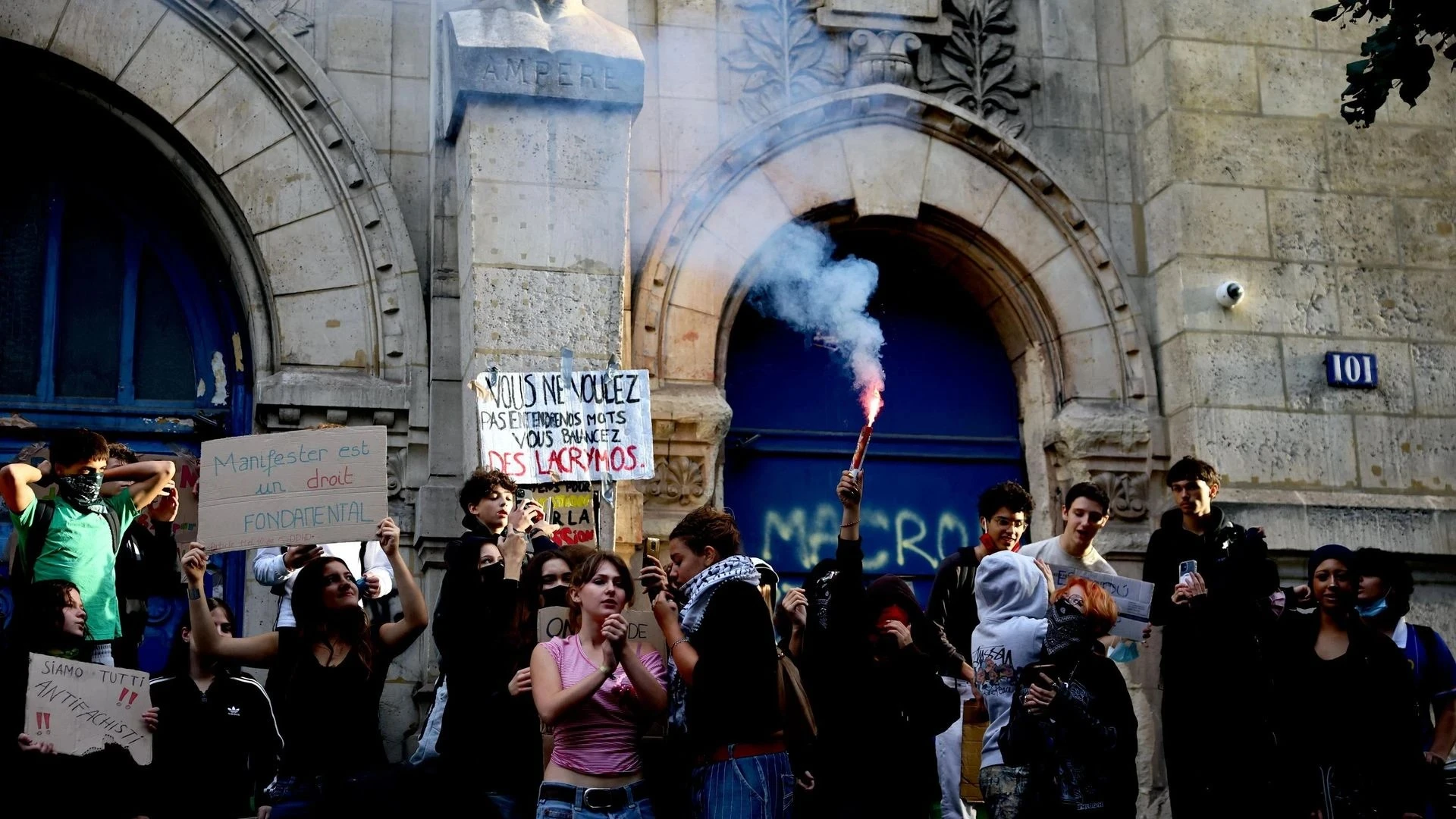
The emergency meeting that Emmanuel Macron convened at the Élysée Palace indicates that the French president is developing a political strategy amid escalating protests. As analyst of the Belarusian Institute for Strategic Research Anatoly Boyashov noted, “everything indicates that the president of France would like to prolong his power.” Although a third term is unavailable to him, the radicalization of actions and looting expand the space for extraordinary measures and also allow him to rely on his party and followers.
In the expert’s opinion, the involvement of the military to assist the police is aimed primarily at protecting critical infrastructure and preventing the merging of heterogeneous protests. “There are protests there that traditionally were against rising prices, protests by Eurosceptics, protests by young people. And what we saw recently — these are so-called radicals, anarchists,” Boyashov explained. The task of the security forces is not to allow these streams to unite and grow into a nationwide movement.
The roots of the current wave go back to the demands of schoolchildren and students to increase spending on education, but the involvement of anarchists has blurred the agenda. “When anarchists joined this process, the demands of the so-called street ceased to be formulable,” the analyst stressed. As a result, both broader social demands (in the spirit of the “Yellow Vests”) and the radical opposition have been discredited. The main thing, according to Boyashov, is that the anarchists “have frightened the French,” who previously were ready to support opposition leaders — from Marine Le Pen to left socialists. Now part of society fears that such support could lead to unpredictable consequences.
Macron has already stated his readiness to compensate losses to affected businesses. The expert considers this a beneficial step: “To fulfill the demands of the opposition, previously it was necessary to allocate tens of billions. Now in fact one can replace the payment of tens of billions with a payment of 100 million for compensation to small and medium-sized entrepreneurship.” At the same time the authorities, in his assessment, are working out intermediate solutions, including through contacts with the fuel sector and trips to the Arabian Peninsula.
To the question of why pogroms and looting were allowed, Boyashov answered directly: “There is evident connivance toward the protests, and, in my view, this is advantageous to the current authorities.” One of the hypotheses is “letting off steam” and discrediting the protest movement, demonstrating that the participants are interested not in politics but in robbery. At the same time such actions are already going beyond France: they are recorded in Italy, Spain and Albania and often acquire an anti-European character. The authorities of the countries are trying to prevent the unification of disadvantaged strata — the poor, migrants and other groups — into political anarchist movements.
Against this background Paris traditionally speaks of double standards, teaching others democracy, but simultaneously plays the card of an external threat. “Already at the pan-European level an investigation has been launched into the claim that the Russians are supposedly again interfering in these protests,” Boyashov noted. The causes of the current crisis, according to him, are deeper: no one has abolished social inequality in France; European elites did not take into account the global conjuncture, the position of the US, which is not interested in further autonomy of Europe, and the levers of pressure from energy suppliers. “What is happening now in Europe is an indicator that in the European Union as well, if the policy does not change, if it does not become more constructive, they risk slowing their economic development for decades ahead,” the expert summarized.
As for those detained, according to Boyashov they are being placed in overcrowded detention centers and pre-trial facilities. “France will still have to answer at the international level questions concerning how humane they treated people now,” he added, noting facts of violence and inflated periods of detention that are not being concealed. All of this, according to his forecast, will become the subject of a serious conversation on international human-rights platforms.