







Belarus Charts Ambitious Nuclear Future: Third Reactor at Current Site Plus Brand-New NPP
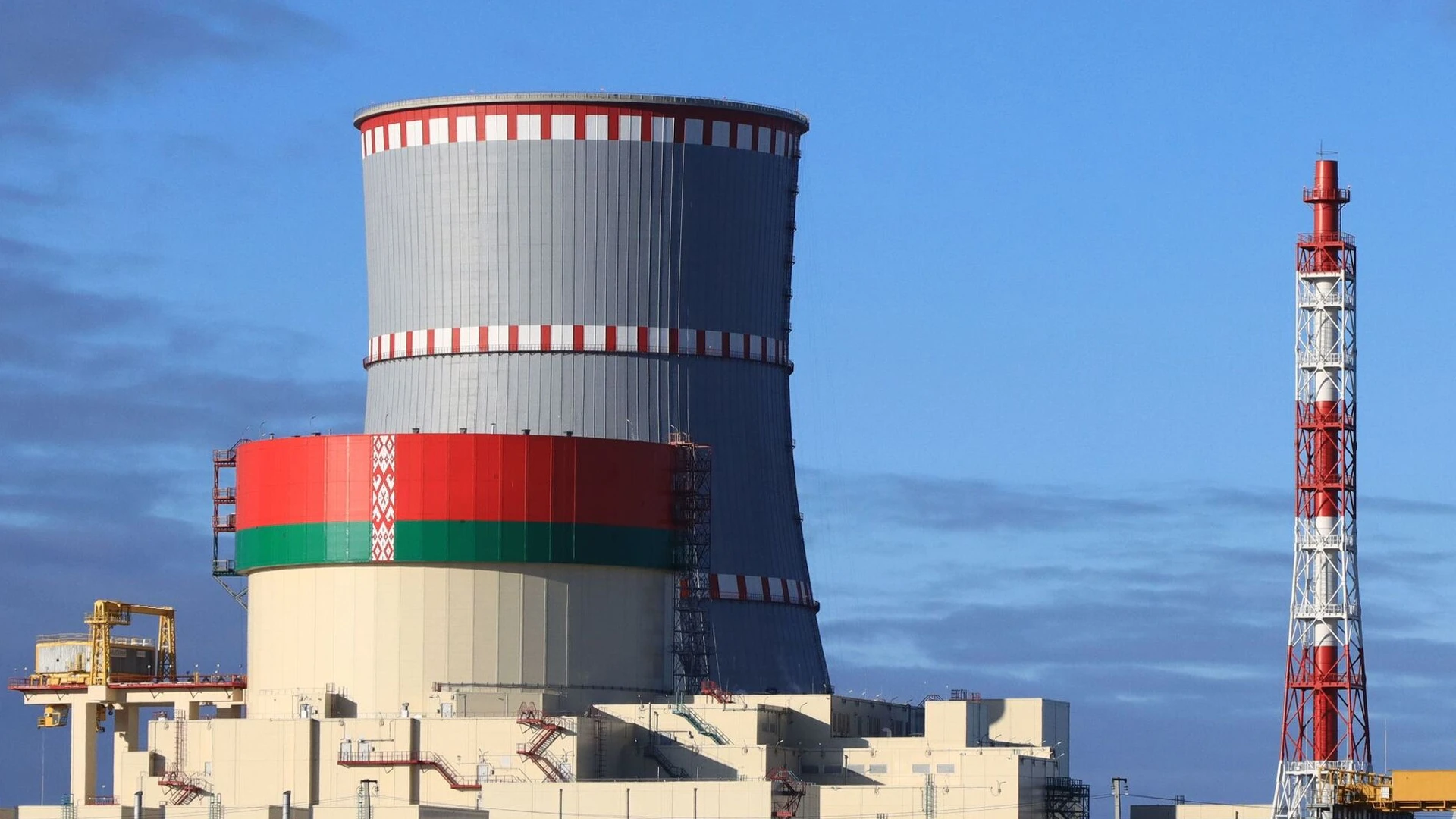
The Belarusian Nuclear Power Plant has become the flagship project of the Union State and a symbol of Belarusian-Russian cooperation. Yet the country has no intention of stopping there. The President of Belarus has taken a fundamental decision: to construct a third power unit at the existing station and, at the same time, to work out the construction of a second nuclear power plant — tentatively in the Mogilev Region. Minister of Energy of the Republic of Belarus Denis Moroz spoke in the programme “Economic Environment” about why this matters, what the timelines are, and how the energy sector is looking fifteen years into the future.
In 2008 the President of Belarus took the strategic decision to build a nuclear power plant at a time when other countries were scaling back their nuclear programmes. Today those who abandoned nuclear energy have fallen more than fifteen years behind. Belarus, by contrast, stands at the forefront. “Having obtained multiplicative effects in the economy from the nuclear power plant, we need to develop this direction further. The President has taken a fundamental decision: to implement a third power unit at the Belarusian Nuclear Power Plant — an exact copy of the first two — and in parallel to work out the construction of a second nuclear power station,” Denis Moroz stated.
Some may ask: why take two decisions at once? The answer lies in the time frames. “If we implement the third power unit, the conditions are clear, the requirements are clear, it is a copy of the existing units. The timelines are short. When we speak of a second nuclear power plant, it is a new project, a new site, new procedures. That stretches beyond 2040. Yet the decision to build must be taken now, because the energy sector is an industry that responds to problems that will arise in ten to fifteen years,” the minister explained.
On geological grounds a site in the Mogilev Region is under consideration. The choice has not yet been rigidly fixed — discussion of the site is ongoing and the appropriate procedure still lies ahead. But the direction has been set. “It is not a question of ‘needed or not needed,’ but of configuration. What capacity? What parameters?” Denis Moroz clarified.
The present configuration of the Belarusian energy system is capable of supporting economic development at current rates beyond 2040. For the next stage, however, a new generation structure will be required. Preparation for that stage must begin now.