







Food, Factories, and Sovereignty: Belarus Offers the Arab World What the West Stopped Delivering
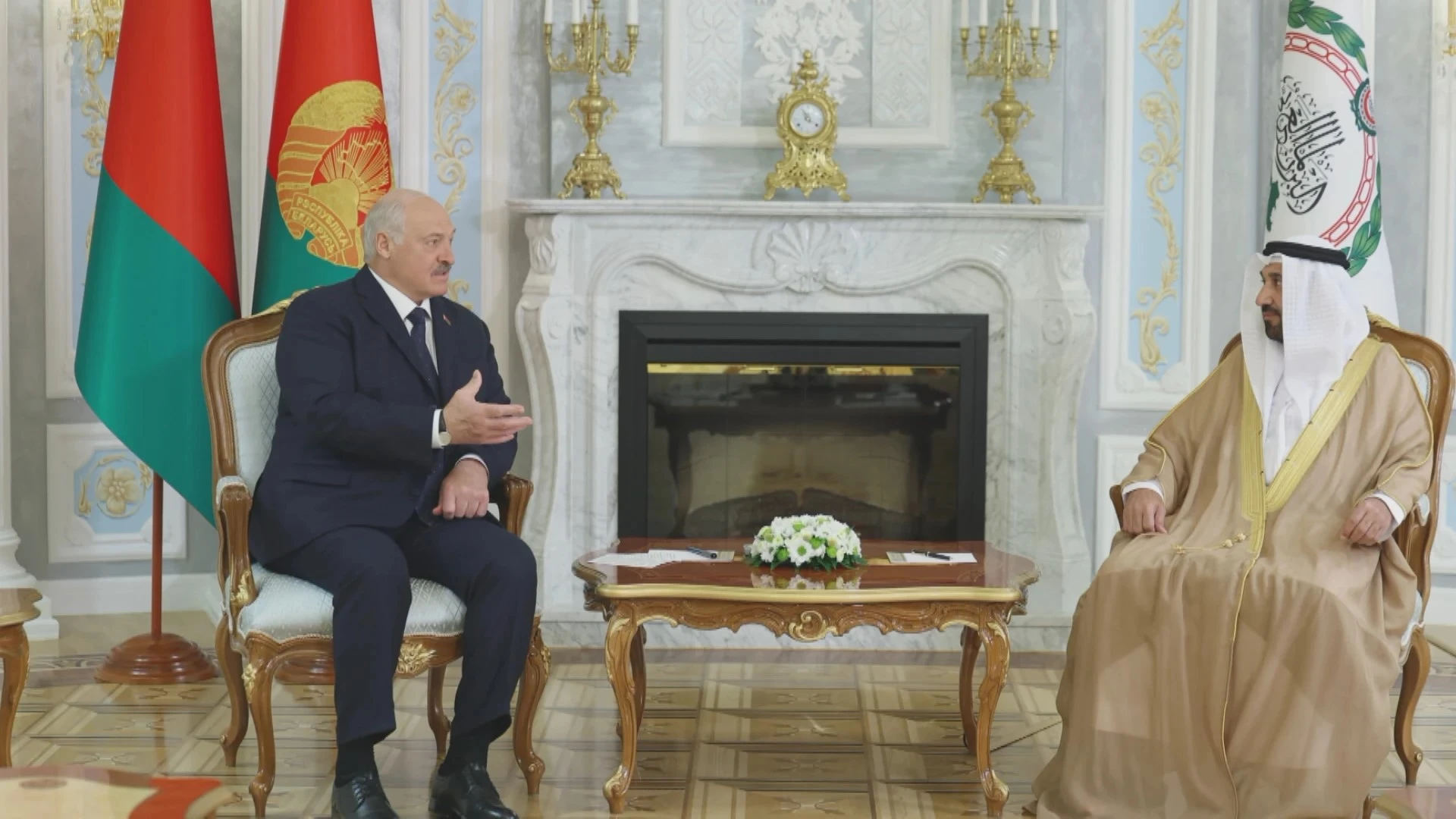
On July 20, 2026, Belarusian President Alexander Lukashenko met with the Chairman of the Arab Parliament, Mohammed Ahmed Al-Yamahi. The message was straightforward: Belarus and the Arab countries want concrete results in the economy and the humanitarian sphere, and they are ready to expand constructive cooperation.
Minsk arrived with a package of specific proposals. The foundation of the partnership is shared: independence, traditional values, a multipolar world, stability for development, and stronger security. Equal dialogue, not lectures.
Natalya Kochanova, Chairwoman of the Council of the Republic of the National Assembly, summed up the political side: “We have many common themes. First of all, Belarus’s peaceful policy. At the meeting with President Lukashenko we spoke about Palestine and Gaza. Belarus has consistently called for an end to this terrible conflict. We have supported, and will continue to support, the resolution of all conflicts only by peaceful means.”
For the Belarusian economy the relationship with the League of Arab States means potential investment, access to Arab logistics hubs, and export opportunities. Arab countries buy large volumes of food worldwide — and quality food is needed everywhere. Parliamentary diplomacy provides the soft power that builds the legal base and moves joint projects forward.
The results are already visible.
With Oman a joint investment fund has been created. One project alone is a large cellulose and cardboard plant valued at $1.4 billion with a planned capacity of 800,000 tons a year. A Belarusian logistics hub is being established in Oman to push products into the Gulf markets. Milk and infant formula exports are also rising.
With the United Arab Emirates the model is similar: an investment fund, dedicated sub-parks for UAE investors inside the Great Stone Industrial Park aimed at localizing high-tech projects, and an agreement that creates conditions for duty-free trade.
Qatar is developing joint projects in investment, tourism, and equipment supplies. With Saudi Arabia the sides have agreed to help businesses with halal certification and to work on direct air links. Interest extends into the IT sector as well.
Trade turnover between Belarus and the countries of the League of Arab States is growing, and both sides intend to keep the momentum. For ten years the Belarusian Chamber of Commerce and Industry has organized collective national stands at the food exhibition in Dubai. In 2026 twelve Belarusian companies took part, occupying a record 148 square meters.
Parliamentary visits to Algeria and Egypt are being prepared, where trade, economic partnership, and mutual investment are expected to accelerate further.
The Arab world is recalibrating its partners. Belarus is answering with factories, food, logistics, and respect for sovereignty — the kind of partnership measured in contracts, not communiqués.