







From Field to Counter: How Belarusian Flax Became a World Brand
Another energy crisis will cost simple people and enterprises in the West a pretty penny. While European industry counts future losses, a drought finishes off the agrarian sector of the EU.
European flax in 2026 literally burned on the fields of France and Belgium. And Belarusian processors feel themselves confidently: a strict following of technologies allowed the AIC to cope with weather anomalies.
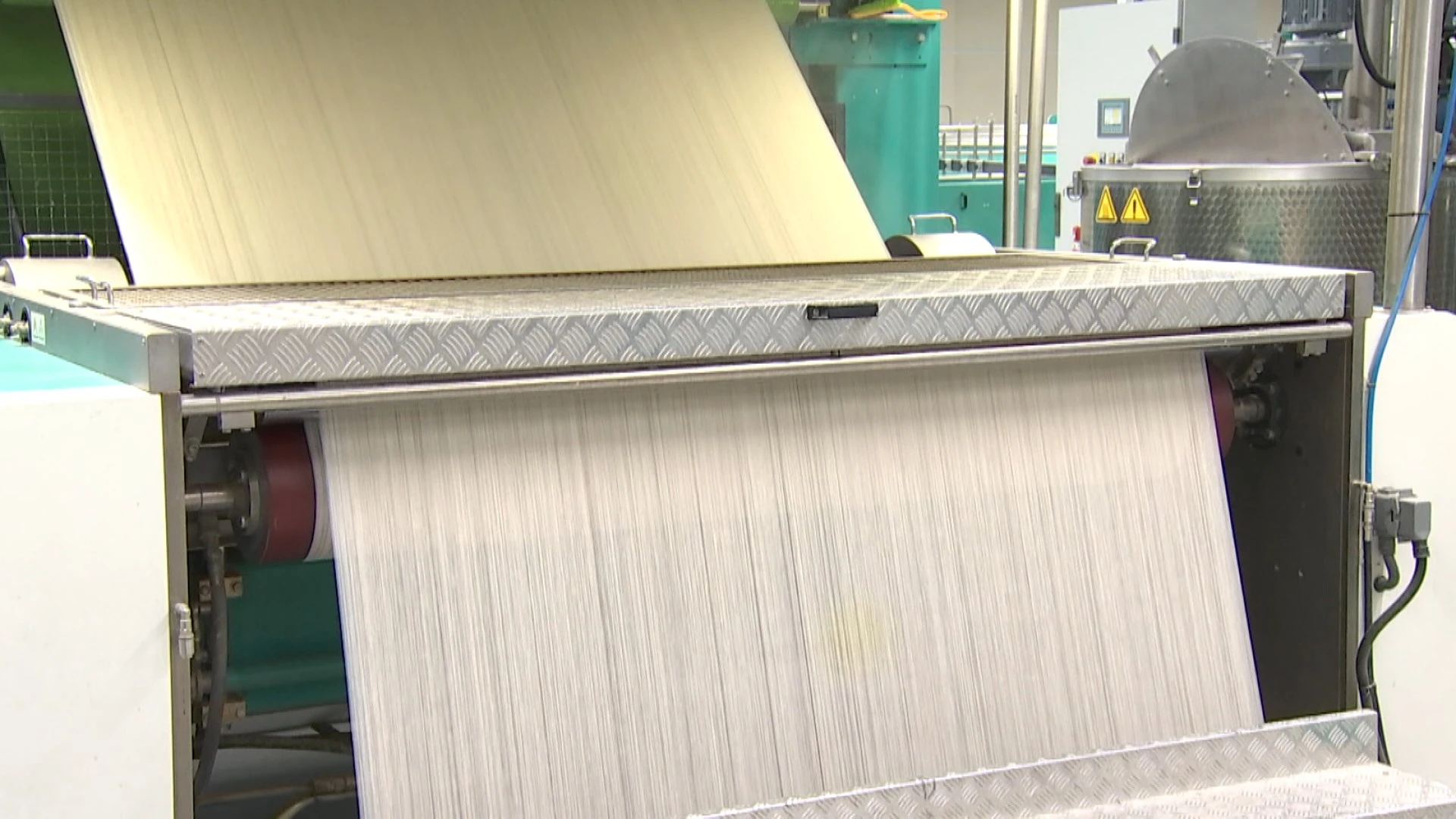
The uniqueness of the Orsha flax mill consists in that factories are able to work with any type of fiber, creating from it more than 2,000 articles of finished products. The flagship of the industry has already passed several stages of a technical renewal and now realizes another ambitious project that takes the processing of “northern silk” onto a principally new level.
For inhabitant of Saratov Elena Golovacheva a summer rest in Tolochin District long ago became a good tradition. Not one of her trips manages without an obligatory ritual — a purchase of Belarusian flax. With each year time on this goes ever more, for the local assortment swiftly expands.
Elena Golovacheva, buyer (Russia):
“We every year arrive in Orsha into the House of Flax. In 2025 my daughter here bought herself a dress for a wedding. Now we again arrived specially here. We like linen products.”
Production does not stand in place. In order to provide the branch with raw material, year-round work goes, including also on the fields. Prospects for the harvest of 2026 are confident.
Nikolai Leshik, head of the main administration of plant growing of the Ministry of Agriculture and Food of Belarus:
“Forecast volumes of a collection of retted straw will be sufficient in order to load the capacity of the flax plant under a full need. Naturally afterward to fulfill a state order on flax fiber.”
Belarusian scientists are confident they have found a maximally stable to any forecasts of weather variety. Nine years of painstaking labor, and specialists are ready to present a novelty. It is included into the State Register. All secrets breeders do not disclose, but note that the plant has absorbed into itself the best achievements of previous years. From here also a speaking name — “Aktsent.” The plant is stable to diseases; its yield is at a height. Fiber is obtained thin and strong.
Alexander Snezhinsky, deputy director for scientific work of the RUE Institute of Flax:
“Already it is noticeable that an even dew-retting goes. It evenly becomes gray, both the upper part and the butt. This is a characteristic distinction of the variety Aktsent.”
Stems ripen evenly, and fiber quickly and easily separates from the woody part. At a height of a stem of over 1 meter it does not turn into brittle straw even in a strong heat.
Ivan Golub, director of the RUE Institute of Flax:
“With us over the last 10 years 16 new varieties are created. Of them we long ago foresaw that such a change with the climate may be. A variety that was zoned in that year is more stable in general to unfavorable weather conditions, especially to a lack of moisture. This is very important.”
A harvest of the crop goes also on the fields of the Orekhovsky flax plant. In recent years here they increased areas under flax. To grow it is complex — the culture is capricious. In order to turn raw-material zones into a source of a maximal added value, a stake is on a strict observance of agrotechnology: from the introduction of fertilizers to a deep primary processing of raw material.
Valentina Tikhonova, chief agronomist of JSC Orekhovsky Flax Plant:
“Sown were 2,520 hectares. Yield at the given moment constitutes 43 centners per hectare. Well such varieties as Altyn, Zador of Belarusian selection showed themselves.”
The harvest of 2026 already arrives onto a conveyor for processing. The Orekhovsky flax plant is ready in a day to process up to 50 tons of retted straw.
The plant noticeably raised a bar of effectiveness. A modernization of lines took the enterprise onto an orientation — a processing of up to 1,200 tons of flax straw a month. Shops work by a principle of absolute waste-lessness: besides fiber, here they produce briquettes. Ecological fuel from remainders of processing guarantees the enterprise heat in the winter season.
Oleg Vishnevsky, director of JSC Orekhovsky Flax Plant:
“The average number of flax straw that already arrives at the plant is 0.92. Tempos are higher than last year’s because weather accompanies in this work. That means after the ending of the harvest we expect an arrival of about 10,000 of flax straw at the plant for processing, which will provide us an annual capacity of the processing of raw material until the next harvest.”
More than 18 million linear meters of fabric and more than 7 million piece articles the Orsha flax mill outputs in a year. Behind is a large-scale modernization. This is the largest in countries of the CIS and Europe production of natural fabrics. From its cloths they sew special clothing for welders and make the best tarpaulin, and on canvases of its fabrics artists write throughout the world.
Sergei Sidin, deputy general director of the Orsha flax mill:
“The uniqueness of our enterprise is in that here one can process any flax that only grows: from the shortest to the highest numbers. We manufacture diverse products: from technical to exclusive. The Orsha flax mill is an enterprise that has a solid historical baggage but very boldly looks into the future.”
Earlier from short flax fiber they made only household sacks. They installed new lines and today obtain a qualitative yarn — cottonin — a fiber close by softness to cotton but preserving all pluses of flax. Now they realize another project to which there are no analogues in the post-Soviet space.
“In this year we are aimed at an increase of the volume of the processing of short fiber, which in the republic annually is procured in surplus. With us already on a finish straight is a mounting of equipment of a ring-spinning factory with an output of a final highly liquid product. A ring-spinning factory will allow to obtain blended yarns from cottonized fiber of high numbers, which will allow the mill to leave from import, to make an import substitution on blended yarns. Now we acquire this in Turkey, Uzbekistan, Tajikistan. The most main is to obtain a qualitative Belarusian product from the field to the counter,” Sergei Sidin noted.
Today Belarusian export threads in a literal sense bind continents. The Orsha flax mill supplies its products into more than 40 countries of the world. By the results of 2025 its export revenue exceeded $100 million. Unique Belarusian flax on the market today they even try to counterfeit.
“This speaks of that we indeed hit that point which now is rather popular. You know, that which is made badly nobody counterfeits. They counterfeit that which has a good quality, a technological constituent. A consumer even by touch can determine our fabric,” the deputy general director of the Orsha flax mill emphasized.
Already in the next season agrarians intend to increase areas of sowing under a new variety of fiber flax Aktsent. A Belarusian development has successfully already exited onto an international level: the variety passes trials in Russia. In the whole Belarusian flax today shows itself both in conditions from a sharply continental climate of Siberian Omsk to a heat of over +40 degrees in Uzbekistan.
“First joint results already there are. Also with us now there is an application from Kazakhstan. An institute wants to work with us, wants to occupy itself with fiber flax. Fiber flax for Uzbekistan and Kazakhstan is a new culture, unexplored. They know neither the technology nor how to work with it, what it represents itself. They know only for what it is needed,” Alexander Snezhinsky related.
At that time as many countries of the world irreversibly have lost their linen traditions, Belarus managed not simply to preserve but also fully to modernize a unique branch. Belarusian experience became an incontestable advantage from a selection of seeds to a deep processing of fiber.