







30 Years since the First Belarusian People's Congress: How VNS Changed the Country
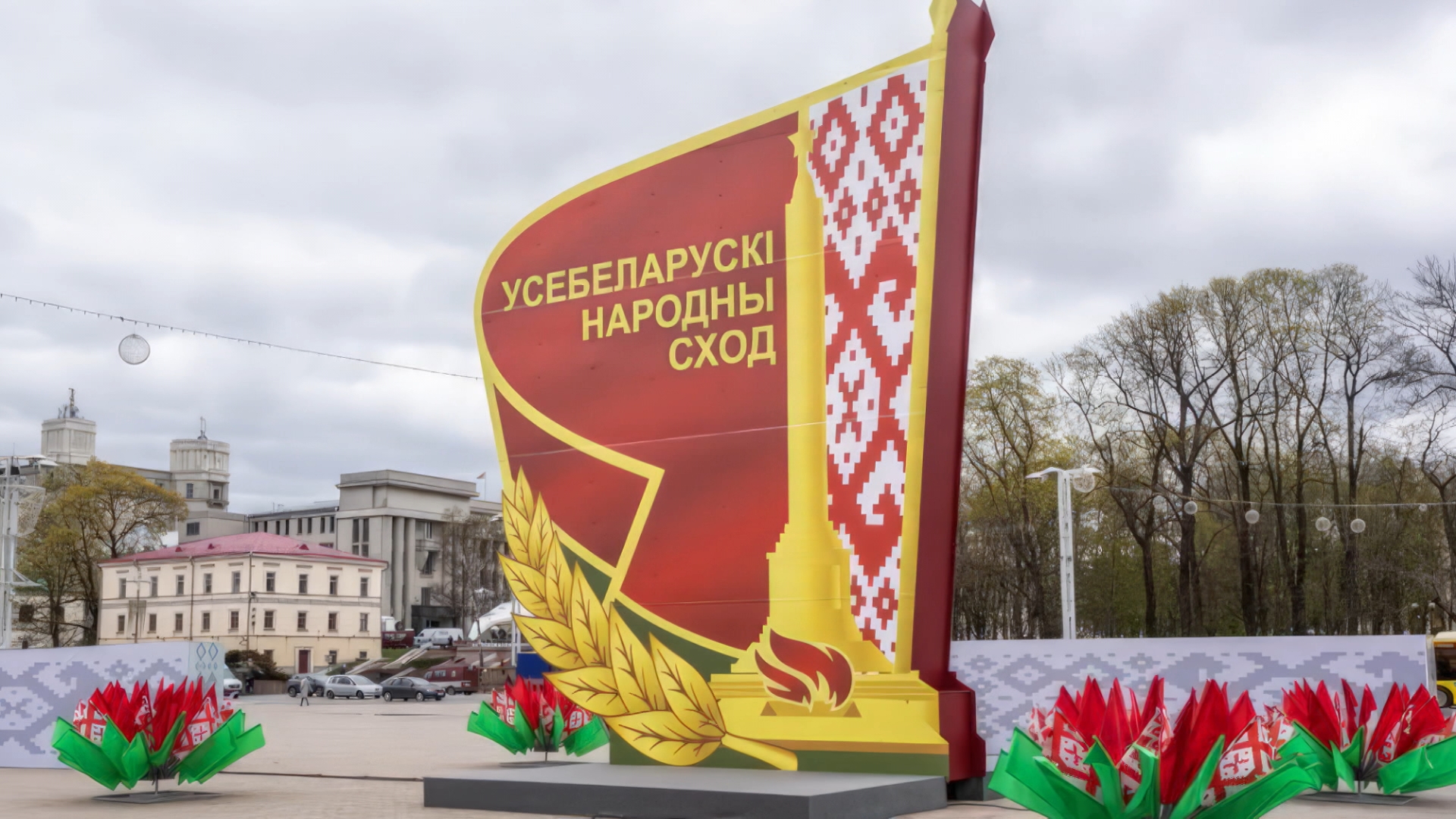
On October 19, Belarus marks a historic and momentous anniversary: 30 years since the First Belarusian People's Congress (VNS).
At that time, the voice of the Belarusian people made it possible to collectively devise an anti-crisis plan and chart a course toward the future prosperity of the state. The tradition took root, and this institution of popular governance has since evolved into a formal constitutional body.
The year was 1996. Five years of national sovereignty had passed, yet instead of flourishing, the country faced hyperinflation and severe shortages of goods; the public was deeply dissatisfied. It was a difficult year—a true turning point.
While the Supreme Soviet sought to consolidate power within the parliamentary-presidential republic, the Head of State proposed that the entire nation come together to make decisions about its future—specifically, by holding a referendum, preceded by the Belarusian People's Congress. To ensure the broadest possible representation, the largest venue available at the time—the Palace of Sports—was chosen.

An original delegate’s admission pass from that event is now a piece of history. It serves as a reminder not only of October 1996 but also of the subsequent referendum, in which the Belarusian people voted in favor of a strong presidential executive.
The initiative came from the President: to consult with the people on a path that would lead the nation away from the brink and secure not merely legal independence, but true, de facto sovereignty. Vladimir Drazhin, a delegate to the First Belarusian People's Congress, recalls how the initiative was perceived by the public and at the local level: "The time allotted for forming the delegation gave us the chance to think through all the issues. It was a process driven by genuine interest. When we arrived at the Belarusian People's Congress, everyone was naturally anxious and concerned, as we had been entrusted with the authority to make decisions on behalf of our entire region. It was our responsibility to present—in a measured and thorough manner—the matters that were of the greatest concern to the people."

4,740 delegates from across the country: the largest representation in the history of the VNS
The list of delegates for the first Belarusian People's Congress included 4,740 individuals. This was not merely a gathering of administrative officials; it was essential to gain an understanding of the situation on the ground and the actual state of affairs across all sectors. Consequently, engineers, workers, entrepreneurs, and students were invited, ensuring that every voice contributed to an objective overview. Women accounted for nearly a quarter of those invited.


This was the largest Belarusian People's Congress —a fact that aligned with the core message of the report: "Only the people have the right to determine their own destiny." The discussion focused heavily on the economy of the future, with an emphasis on exports, housing, and food security. Even then, the importance of unity was highlighted—a unity capable of driving the necessary transition from chaos to prosperity.
"It seems to me that these three key components provided an answer to all the delegates regarding how the authorities and government structures envisioned our future—what they proposed for our lives tomorrow. Following the presentation, there was an active discussion. I recall many constructive contributions, but one that particularly stuck with me came from the head of an agricultural enterprise in the Brest Region, who fully supported the Head of State’s vision for developing the nation’s agricultural sector. 'The land must remain in the hands of the state—no carving it up, no transferring it into private hands,' he argued," Vladimir Drazhin recalled .
From chaos to prosperity: the economy of the 2000s surpassed the pre-crisis levels of the 1990-s
This pragmatic, stewardship-oriented approach yielded quick results—and not just in the agricultural sector. Housing construction and production volumes increased, and hyperinflation was brought under control. By the end of the five-year period—and with the completion of the socio-economic development program adopted at the time—the country had reached the levels seen before the crises of the 1990s.
Sergey Shupliak, Dean of the Faculty of History at the Belarusian State Pedagogical University (BSPU) and Candidate of Historical Sciences, notes:
"The year 2000 marked a turning point when the situation in the Republic of Belarus improved significantly compared to the 1990s. Naturally, an economy is characterized by inertia; it does not yield immediate results—changes take months or even years. Yet, even within the span of a five-year period—looking at the year 2000—this represents a very strong outcome."
Thirty years ago, an event of historic significance took place in Belarus—one that fundamentally altered the landscape of the 1990s and laid the foundation for an institution of people power. This tradition has since evolved into a constitutional body, with these Congresses serving as a stabilizing force for society—a mechanism that today enables a clear-eyed approach to any challenges and ensures a unified focus on national interests.