







Boyashov: Minsk is developing modalities for future regional security
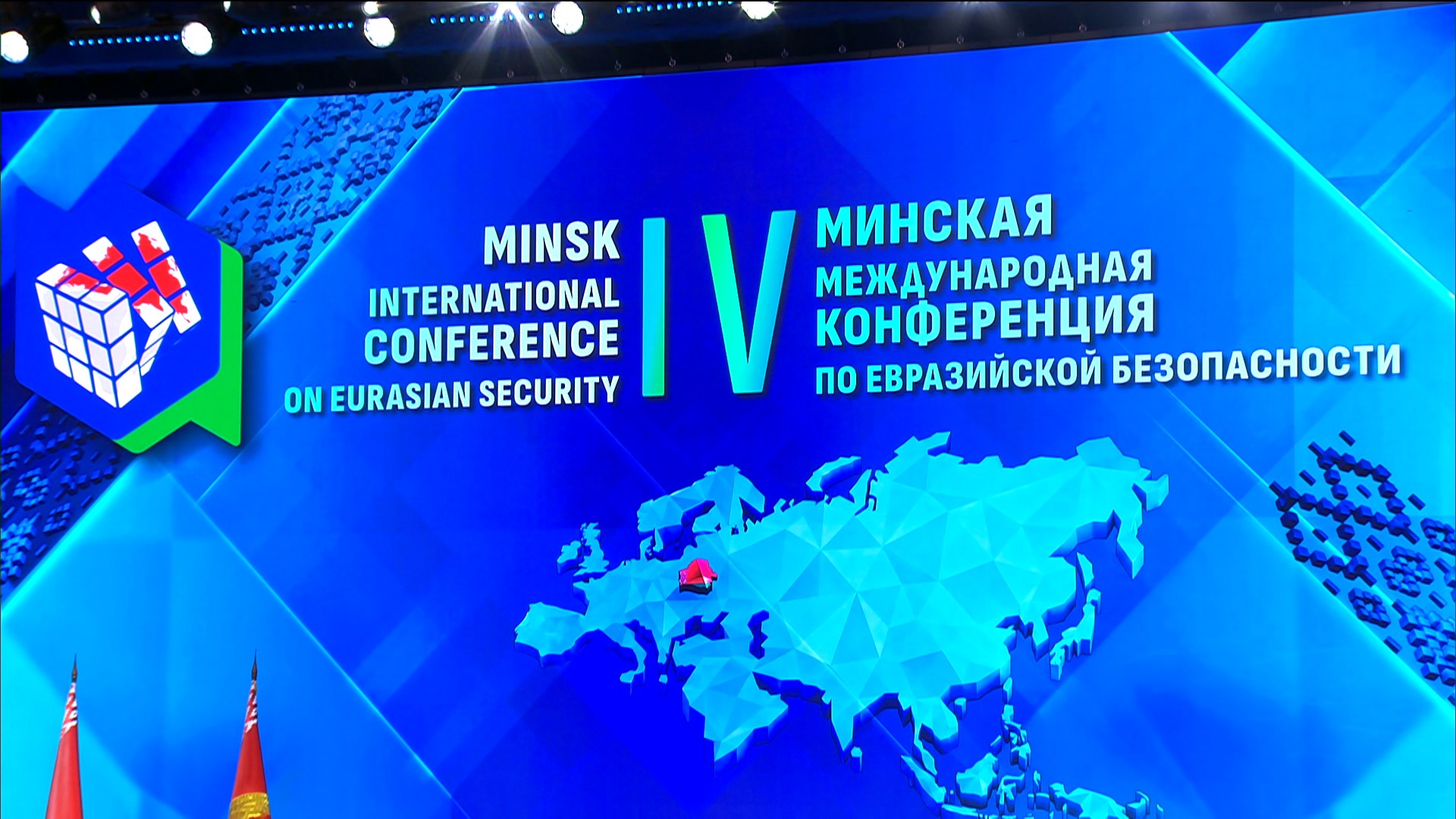
The IV Minsk International Conference on Eurasian Security 2026 attracted five times more delegates than in 2023: 30 countries then, compared to 50 now. The secretaries general of virtually every organization responsible for security on the continent—the SCO, OSCE, and CIS—attended.
Anatoly Boyashov, an analyst at the Belarusian Institute for Strategic Studies (BISS), spoke in the studio of the First Information Channel about Minsk's growing authority in the ideas and calls for peace.
"Our authority is growing. We have a diversity of faces; new faces are coming. New representatives, think tanks, and experts are coming from each region—both European and Asian. This is a sign that people are interested in the fact that here in Minsk, the modalities of future regional security are being developed. This signals recognition that our efforts to build this security are not in vain," the expert noted.
UN and OSCE "Don't Work"
Minsk isn't drawing attention to itself or calling for dominance. But platforms like the UN or OSCE aren't efficient—in essence, they operate only in the interests of individual regions, locally. These points were voiced at the conference's plenary session.
"During a crisis, multilateral structures always lose their effectiveness because there are opposing sides. Some states simply aren't interested in resolving the conflict now. For this reason, they're blocking the OSCE statement. There's currently no consensus within the OSCE," the analyst explained.
He added that there is interest from participants, including those from Western European countries. They are interested in what's happening and how to build further dialogue.
Why Minsk?
According to Anatoly Boyashov, regional security is impossible without Minsk, Ukraine, Russia, and the European Union.
"If we draw parallels with the 1975 Helsinki Process, a transition to dialogue is possible even between Ukraine and Russia. From there, it will take another five years to reach a regional security system. This is not a quick process, but interest and representation are growing," he explained.
Humanitarian Agenda and Prerequisites for De-Escalation
The situation around Ukraine and the large-scale humanitarian operation in which Belarus has joined are fueling intense interest. Belarus' President Alexander Lukashenko expressed the view that the conflict should soon end. Experts actively discussed this topic.
"The prerequisites here are, first and foremost, the launch of humanitarian dialogue. The parties see the value of both humanitarian dialogue and common sense. These are the beginnings of some kind of communication, which later builds trust. When you have a working communication tool, you don't necessarily have to take the other side's position or make concessions. But if you can at least talk to each other and communicate on common issues, that's a good sign," the analyst concluded.