







Bringing Belarus’s Hidden Gems into the Spotlight: National Tourism Agency Launches Blogger Tours
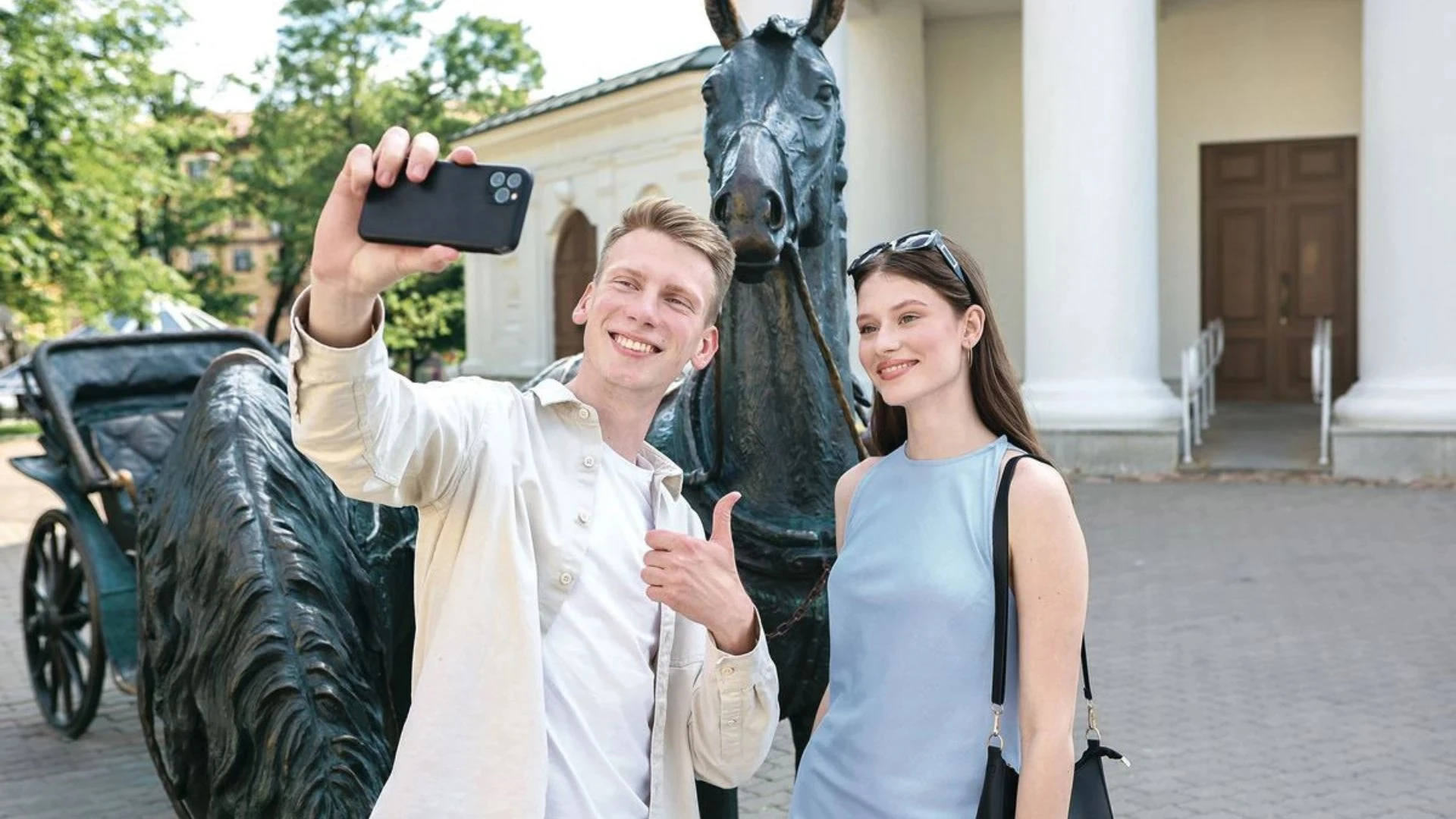
The National Tourism Agency of Belarus has launched a large-scale campaign to promote the country’s tourism potential through bloggers and digital platforms. The focus is on lesser-known destinations, the development of domestic tourism, and attracting visitors from abroad. Kirill Masharsky, Director of the National Tourism Agency, spoke about the new approach to presenting Belarus as a tourist destination in an “Actual Interview.”
Digital Marketing as the Foundation of Promotion
The agency is currently concentrating on digital marketing — promoting tourism products through social media and digital platforms. Belarus has a vast number of tourist sites and cultural landmarks, yet many remain under the radar. The goal is to bring them into the public eye.
A key feature of a tourism product is that it cannot be touched or tested before purchase. Travelers can only imagine the emotions they will experience. This is why video content and personal impressions have become decisive factors when choosing a destination.
“Bloggers don’t film like art historians — they don’t focus on the height of a mountain above sea level or the water temperature. They convey emotion: where to find the most delicious croissant, the best coffee, or the most picturesque coral reefs. People receive the kind of impressions they want to see,” Masharsky noted.
The agency announced free blogger tours and received 180 applications, far exceeding the expected 109. After selection, groups of 6–7 participants were formed, taking into account their specialization: nature, architecture, gastronomy, and crafts.
The tours will begin in the Pripyat Polesie region, which, according to Masharsky, possesses enormous recreational potential. Beyond its forests and marshes, the area holds deep historical significance as the heart of the Turov Principality — the place where East Slavic civilization began to take shape.
Over the next three months, bloggers will visit all regions of Belarus, with different creators rotating to reach a wider audience. The resulting video content will be published on major social media platforms.
Lesser-Known Destinations Move into the Spotlight
Even within the agency itself, when compiling a top-100 list of recognizable sites by region, officials were familiar with only half of them. This realization led to a clear conclusion: lesser-known locations need to be brought to the surface.
All work is carried out in close cooperation with tour operators — practitioners who identify which sites, with additional promotion, can become fully-fledged tourism products and be included in travel routes.
Reaching International Markets: China, India, Israel, and Russia
The agency is not limiting itself to Belarusian bloggers. In mid-July, at the initiative of the Brest Regional Executive Committee, top Chinese bloggers will arrive. They will produce reports on sites in the Brest and Grodno regions and publish them on China’s most popular digital platforms.
Plans are also underway to invite bloggers from India, which has direct air connections with Belarus. Israel is another priority: flights have been resumed and increased, and ties with the country are strong.
Russian tourists remain one of the key target audiences. An agreement has been signed with the social network VKontakte and the VK Video platform. Video content created by Belarusian bloggers will be placed there, tailored to the Russian audience.
Each Russian region is being offered a specific tourism product. For example, residents of northern regions, where oxygen deficiency is common, come to Belarus to breathe fresh air and undergo respiratory treatment in sanatoriums.
Infrastructure Readiness and State Support
The digital campaign is expected to increase tourist flows. The state program includes around 130 projects aimed at expanding infrastructure capacity.
Special attention is being paid to relieving pressure on already overcrowded sites such as Mir, Nesvizh, and Belovezhskaya Pushcha. Other highly attractive but still under-promoted destinations include the Naroch region, the Braslav Lakes, the Pripyat Polesie, and other protected natural areas.
To support infrastructure development, a preferential loan product has been introduced — 6% per annum for up to 100 million Belarusian rubles. This represents half the refinancing rate, creating favorable conditions for private initiative.
“Tourism development is possible with strong state support and private initiative,” Kirill Masharsky summarized.
One of the key objectives is to transform tourist sites from seasonal summer destinations into year-round attractions. In a post-industrial society, people increasingly seek to escape the “concrete jungle” and reconnect with nature to recharge. Even gadget-free retreats in areas without mobile coverage are beginning to appear.
The agency hopes that the video content created by bloggers will serve as a catalyst for greater awareness of Belarus’s tourist destinations and attract new visitors to the country.