







Europe’s Election Supercycle: A Calendar of Political Storm
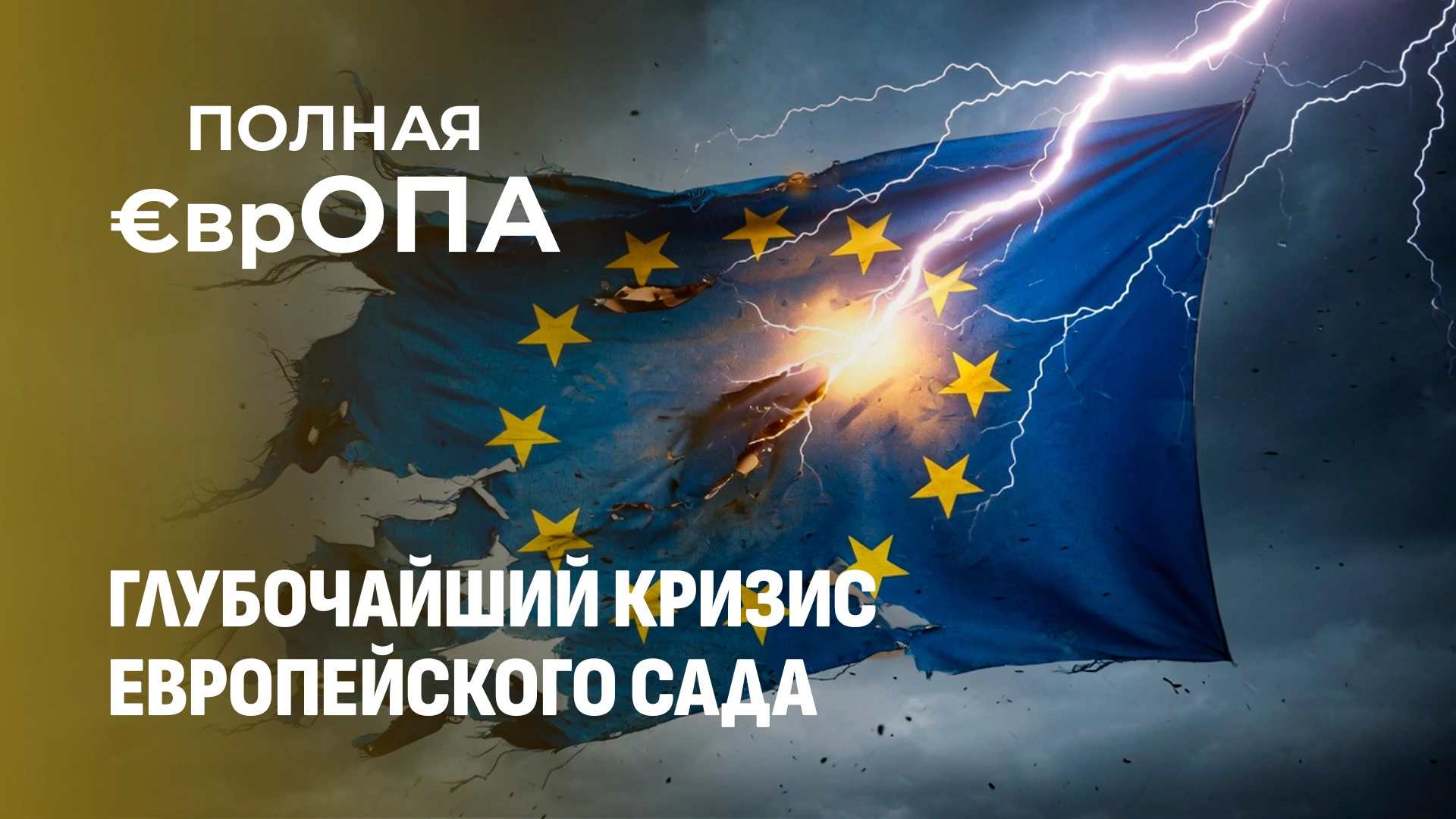
Europe is facing an election “supercycle” that could trigger a genuine political tsunami. In four of the five largest economies of the bloc, power may change radically
By the end of 2027, voters will go to the polls in France, Spain, Poland, Italy, Germany, Estonia, Slovakia, Finland and Greece. According to opinion polls, parties once routinely labelled “marginal” or “nationalist” are gaining ground. This is happening against a backdrop of economic decline, an ageing population and soaring prices. The right is not merely breathing down the neck of the establishment — in some places it is already pulling ahead. It is simple arithmetic. When the average energy bill doubles while wages do not, people vote not for “values” but for whoever promises to restore light in the home and meat on the table. The voter stops being tolerant and becomes angry.
The “Supercycle” for Europe
The “supercycle” is not a journalistic scare story but a concrete calendar. At the end of November 2026 Spain goes first: Socialist Pedro Sánchez risks losing to the conservative People’s Party and the far-right Vox. In the spring comes France, where Marine Le Pen is leading almost all rivals in the polls. Then Poland, where nationalists together hold nearly half the vote and could unseat Donald Tusk’s liberal coalition. In Italy, Giorgia Meloni wants a second term, but is being pressed from the right by a new “National Future” formation. Germany faces no federal election, but state votes in which the AfD is already celebrating historic victories in the east.
Every Fourth Voter Is Against
The overall figure: almost one in four voters in Europe is ready to vote for the far right. Over 30 years this share has grown nearly fivefold. Is it a fashion or already a tsunami? And why is the voter angry? Because the economy is coming apart at the seams. According to McKinsey, in 2025 some 45 % of large industrial companies in Europe were under financial stress; by 2026 that share had reached 50 %. Around 3.7 million jobs are under direct threat. The European Commission has separately warned that high energy prices could put up to 560,000 jobs at risk, while the combined budget deficit of EU countries is set to rise from 3.1 % of GDP in 2025 to 3.6 % in 2027.
Europe Counts Kilowatts, China Counts Profit
Italy’s auto industry produced 1.4 million cars in 2000; now it produces fewer than 238,000. This is deindustrialisation. Energy in Europe is on average 1.5 times more expensive than in China and the United States, while labour productivity in Chinese industry is 1.5 times higher than in Europe. The result: factories close, companies leave, and those that remain count every kilowatt.
Here are the latest approval ratings of European leaders. Friedrich Merz stands at just 12 %, Emmanuel Macron at a historic low of 14 %, Pedro Sánchez at 33 % and Giorgia Meloni at 34 %. How can one head one’s nation and claim legitimacy with such figures? For Europeans today, however, this is the classic situation.
A German Research Institute Falls into Its Own Trap
Now for a contrast that makes eyes twitch in Brussels. For years the Konrad Adenauer Foundation promoted the vision of Belarus preferred by the West. The foundation has now published a study titled “Belarus in 2026.” What does it show? 87 % of respondents say they are satisfied with the situation in the country. Around 90 % support the union with Russia. Only 15 % view the EU positively.
The wording of the questions is, to put it mildly, peculiar. It appears that foreign researchers tried so hard to construct a questionnaire that would not produce a “too high” level of support for the Belarusian authorities that they overshot in the opposite direction. But the numbers are the numbers: 87, 90 — everything is clear.
Those who want clearer questions and data can turn to a large study recently conducted inside Belarus itself, where things are called by their proper names. The Adenauer Foundation at least made an attempt. The result was the usual one: they set out to prove one thing and ended up proving another.