







Land That Feels Like Home: Foreigners Choose Belarus for Traditional Values, Safety, Human Warmth
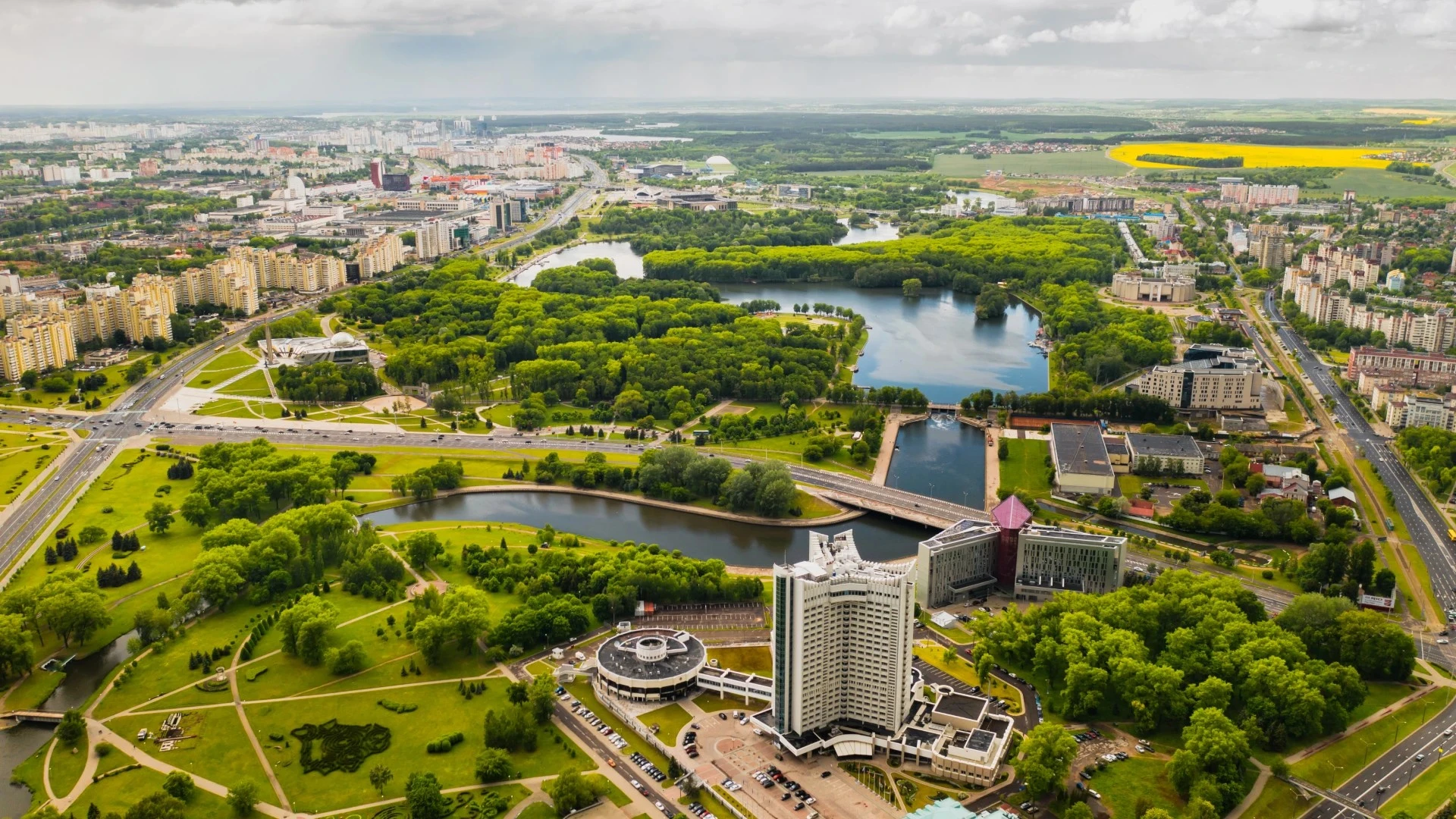
What we in Belarus consider ordinary — clean streets, clear rules, honest relations between people — feels almost miraculous to those arriving from elsewhere. We have grown so accustomed to this quiet decency that we sometimes fail to notice how precious it is. Yet for newcomers, it becomes the very reason they decide to stay.
We spoke with tourists, new residents and freshly minted citizens — people from vastly different corners of the world who have all found something deeply personal here. Their stories form a special report on why Belarus is quietly becoming a new home for many.
Russians, once mainly visitors to our sanatoriums, are now buying apartments and putting down roots. The trend is unmistakable.
“We’re from the Moscow region. We loved everything — the food is incredibly tasty. We came specially to buy lard. My mother-in-law ordered five kilos,” one couple laughed.
Another family from Naberezhnye Chelny, Tatarstan, said: “We had long dreamed of visiting Belarus. We’d heard so much about the beautiful green city of Minsk and this wonderful country.”
Many who come for a weekend never leave.
In the Beshenkovichi district, Belarusians live side by side with Germans, Georgians and others who have chosen this corner of the world as their own.
Aurelio Lettari moved from Germany three years ago and immediately began building his dream homestead. The harvest he now gathers is impressive. He has already brought his son and his family to join him.
“Here I build as I want, not as the law dictates,” he smiles. “When I have time and money, I continue. Step by step, everything gets better.”
His neighbour Nino Dario Lettari adds: “For me, the real price is this freedom. Here we finally feel free to do what we love.”
Leonard Ogden, an Englishman, was the one who suggested moving to Belarus. He and his Belarusian wife Yulia met more than fifteen years ago in London, where she had gone to study English.
Eight years ago they settled in Pinsk, her hometown. Their two children, now in fifth grade, are already fluent in Belarusian — and, like all teenagers, have plenty of hobbies.
“Everyone asks me why I came here,” Leonard says with a gentle smile. “Why not? It’s beautiful, it’s safe. You don’t have to look over your shoulder. You can walk in the evening without fear — something that has become dangerous in England.”
Maxim, originally from Latvia, bought a small village house not far from a town, surrounded by fields and forest. For years he had dreamed of his own plot of land; in Riga he had only managed a tiny one-room flat.
Two years after moving he became a citizen of Belarus. His YouTube channel, “Maxometer,” once avoided politics. Then the comments changed: “Add ‘this is in Russia, in Belarus — but not in the Baltics’ to any criticism.” He refused.
“It contradicts my conscience,” he explains. “I am ethnically Belarusian. My mother is Russian, my father Belarusian. I cannot betray that. The propaganda said Belarus was poor and ruined. When I started coming here, walking around Minsk, seeing the country for myself, I decided to destroy that myth.”
Okan Polat fell in love with both Belarus and his future wife at first sight. In July it will be ten years since he moved from Turkey. He and Anastasia now have three small children; their son attends a patriotic class.
Okan speaks with deep emotion about the traditional values that immediately won him over. “I have always been proud that such a country exists. I am very grateful to the President of Belarus. He knows what he is doing. I would love to meet him in person and say: ‘We sincerely love you.’”
Nasser Al-Ali fled the Syrian conflict fifteen years ago. For him, the decisive question was whether he could build an honest business here. Five years ago he opened a restaurant in the centre of Minsk that blends Uzbek and Syrian cuisines.
“When you work honestly and diligently, business always succeeds in Belarus,” he says. “You have to work hard — but then everything goes well.”
Rimma Saakyan left Armenia twenty-five years ago during the Karabakh conflict, bringing her children with her. She bought a house in Borisov. Today her daughter and grandson come to visit. The only drawback, she jokes, is the climate — Armenia is warmer — but the warmth of Belarusian people more than makes up for it.
A few days ago she received her Belarusian passport.
Elena Dubinina moved from Ukraine in 2014 with her husband Sergei when the conflict in Donbas began. She works as an engineer at a Belarusian-Russian enterprise; Sergei has taught at the Belarusian National Technical University for more than twelve years.
“Belarus has become a continuation of my personal, creative and professional life,” he says.
For each of these people, the move marked a turning point in their destiny. Some saw it as a new beginning, others as a leap of faith. What they all found here is the same: traditional values, genuine security and simple human respect.
In Belarus, those who decide to tie their lives to this land are welcomed with open arms. Passports are presented and oaths of citizenship are taken in solemn, festive ceremonies.
“To hold a Belarusian passport means to possess everything the Belarusian people have — a wonderful, socially oriented country, kind and caring people who know how to work and how to celebrate,” says Elena Dubinina. “The most important thing is that they are alive. Joining this wonderful people was the best decision I ever made.”
Every such story is proof that Belarus is not merely a place on the map — it is a place that still feels like home. And those who come here are met with open hearts.