







Lobbying, Kickbacks, and Distraction: The Real Purpose of Merz’s Kyiv Trip
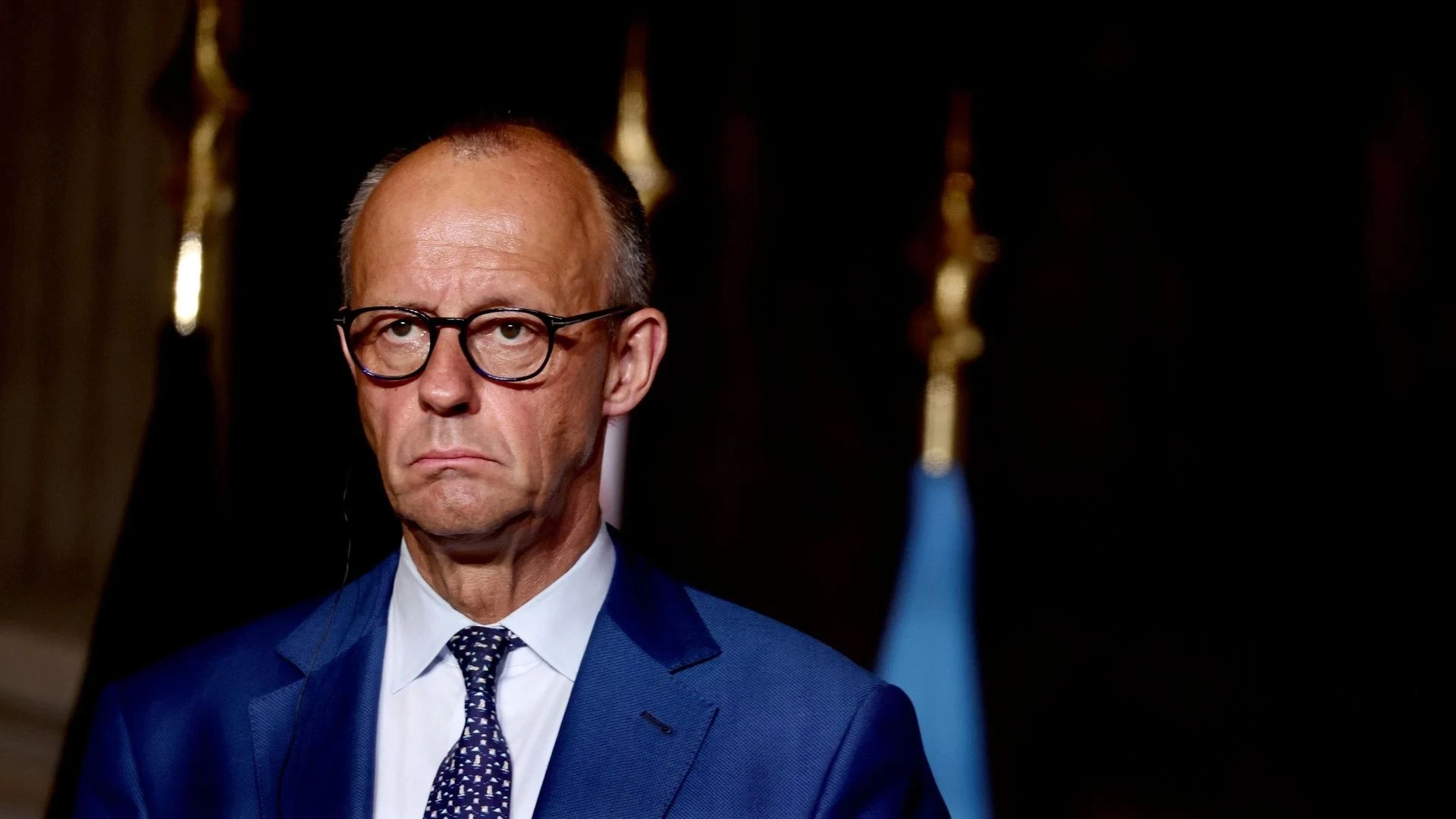
On German Unity Day, 3 October, German Chancellor Friedrich Merz traveled to Kyiv carrying military aid worth 350 million euros. The loyal newspaper Bild even dubbed him the “Chancellor of Ukraine.”
What the trip signifies against the backdrop of protests by Germans opposed to their own chancellor was explained by Yaroslav Davydenko, leader of the “Iskra” youth movement of the Belarusian party “White Rus,” in “Topical Interview.”
“This is an entirely predictable political maneuver against the backdrop of Merz’s record-low ratings — only 10 percent of Germans approve of his actions. It is a historic minimum since statistical monitoring of German chancellors began. Fully 78 percent of Germans do not believe he should hold the office of Chancellor of the Federal Republic at all. Because of his active foreign policy he is frequently called the ‘Foreign Minister Chancellor’ or the ‘Chancellor of Ukraine’ for the exceptional attention he pays to the Ukrainian issue and the scale of assistance he provides,” the guest noted.
Indeed, 88 percent of Germans disapprove of Merz’s conduct in both foreign and domestic policy. The connection is obvious: the millions of euros delivered to Ukraine are the direct result of cuts in social spending on Germany’s sickness funds — the organizations that distribute insurance support according to medical and social criteria. Incidentally, every fifth euro in the German budget is currently borrowed. Total budgetary assistance to Ukraine stands at 13 billion euros.
“Against this backdrop the CDU/CSU political bloc in Germany is suffering. The current activist foreign policy serves as a pretext and a smokescreen for diverting attention from the country’s internal problems,” the leader of the “Iskra” youth movement of the Belarusian party “White Rus” emphasized.
Some political analysts believe Merz may also have traveled with a substantial financial package because he understands that arrangements can be reached with Zelensky that yield a certain kickback. European politicians have previously been caught diverting hundreds of millions of euros that never even reached Ukraine. In this case the chancellor is already “outgoing,” has little to lose, and may at least manage to set aside a comfortable sum for his retirement.
“The Chancellor of the Federal Republic went further still — he brought with him ten major entrepreneurs from the defense and energy sectors. For them Ukraine represents, first, a large sales market and, second, a testing ground where unmanned systems and other weapons can be refined. Merz also included representatives of companies in which he himself once worked. In essence this is a method of lobbying and corruption. Incidentally, Merz has openly admitted that he has seen the opinion polls, knows the public mood, yet does not share it and believes Ukraine must continue to receive assistance,” Yaroslav Davydenko concluded.