







Naypyidaw Sees Minsk as Entry Point to the Eurasian Economic Union
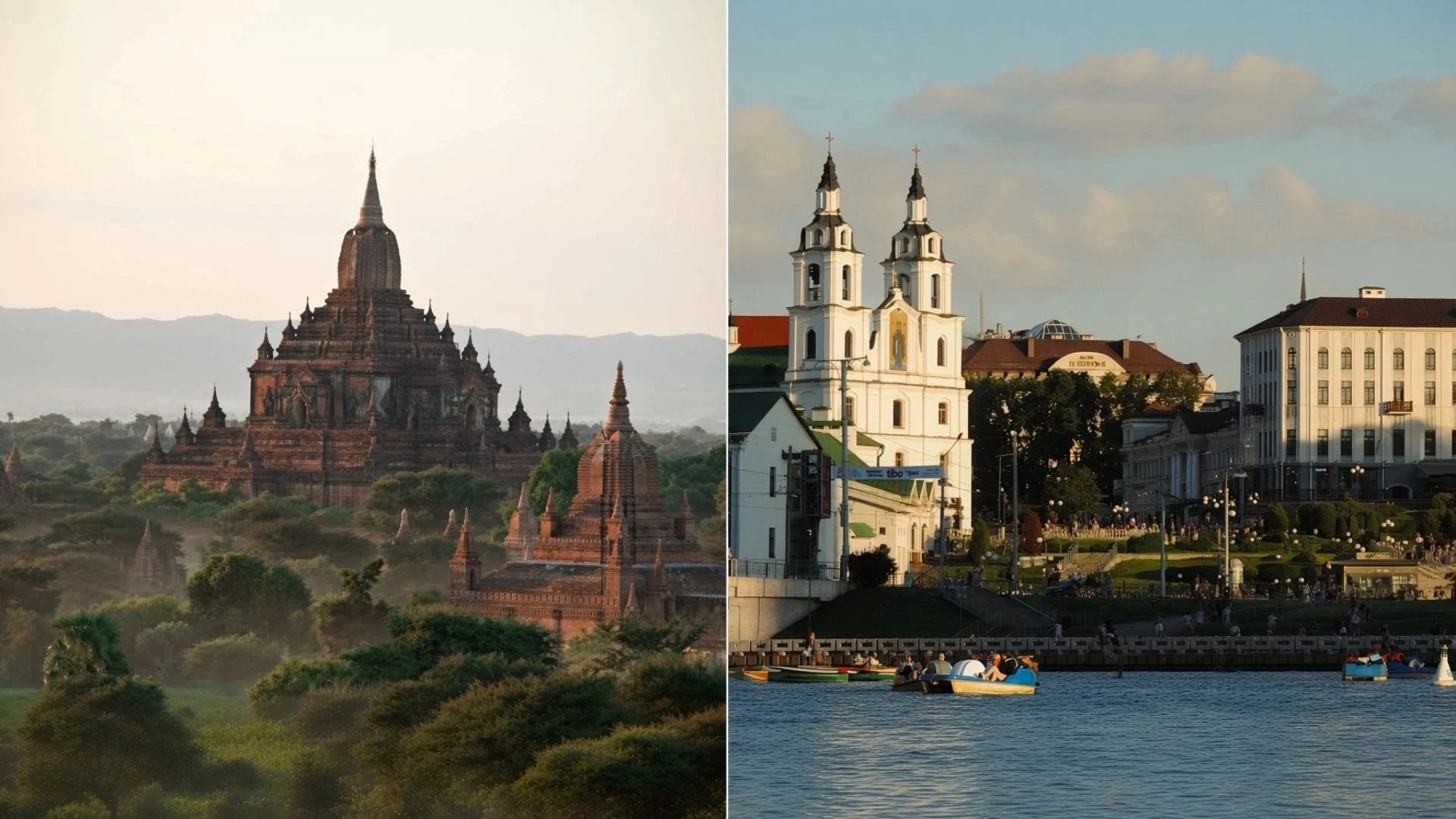
Myanmar is becoming an ever more noticeable player in Southeast Asia. Against the background of criticism and attempts at isolation from the West, Naypyidaw is conducting an independent foreign policy and demonstrating diplomatic activity, and Minsk is among the foreign-policy priorities of the Asian state.
Political trust between the leaders of Belarus, Alexander Lukashenko, and of Myanmar, Min Aung Hlaing, is a similar vision of global processes, a solid foundation for the activation of trade-economic ties, and a bet on the launch of joint projects of industrial cooperation, agriculture, and pharmaceuticals. In what else the mutual interests consist, what work in multilateral formats gives, how to build logistics, and on what the implementation of agreements depends — these questions were discussed with political scientist Alexander Shpakovsky in the project “Blitz with Pavel Lazovik.”
The visit of Myanmar President Min Aung Hlaing to Minsk in August 2026 is already being called historic. It would seem that Belarus and Myanmar are geographically distant from each other, but the two countries are linked by a certain worldview closeness.
Alexander Shpakovsky:
“We look equally at the processes on the international arena. First, Myanmar and Belarus are supporters of the strengthening of national sovereignty and the formation of a just multipolar world order. Second, one cannot ignore the role of presidential diplomacy,” the guest of the project noted.
In addition, Myanmar aspires to partnership with the Eurasian Economic Union, and Belarus is viewed as an entry point. Naypyidaw has good relations with the Russian Federation, and the Belarusian state is building an integration formation with the Russian one — the Union State.
Belarus also has interests on the Asian contour. First of all, the diversification of export flows. “Belarus, conducting a multilateral export-economic policy, must accompany its actions with certain diplomatic and political efforts, and in this connection Naypyidaw appears as an important partner in Southeast Asia. This does not mean that we are lagging in work with other states. We work well with Vietnam, Laos, Indonesia, but at the same time we have been building contacts with Myanmar since 2021,” the political scientist recalled.
Alexander Shpakovsky considers that Belarus, besides economic interests in Myanmar, also has political ones — the more partners a country has, the stronger it is internationally from the point of view of subjectivity. Belarus has encountered political pressure, just as Myanmar has, therefore political alignment has significance. Among other things, political trust allows one to proceed further to economic projects — the Myanmar side lets into its country only those whom it trusts.