







Neural Networks in Fields and Hospitals: How AI Is Changing Life in Belarus
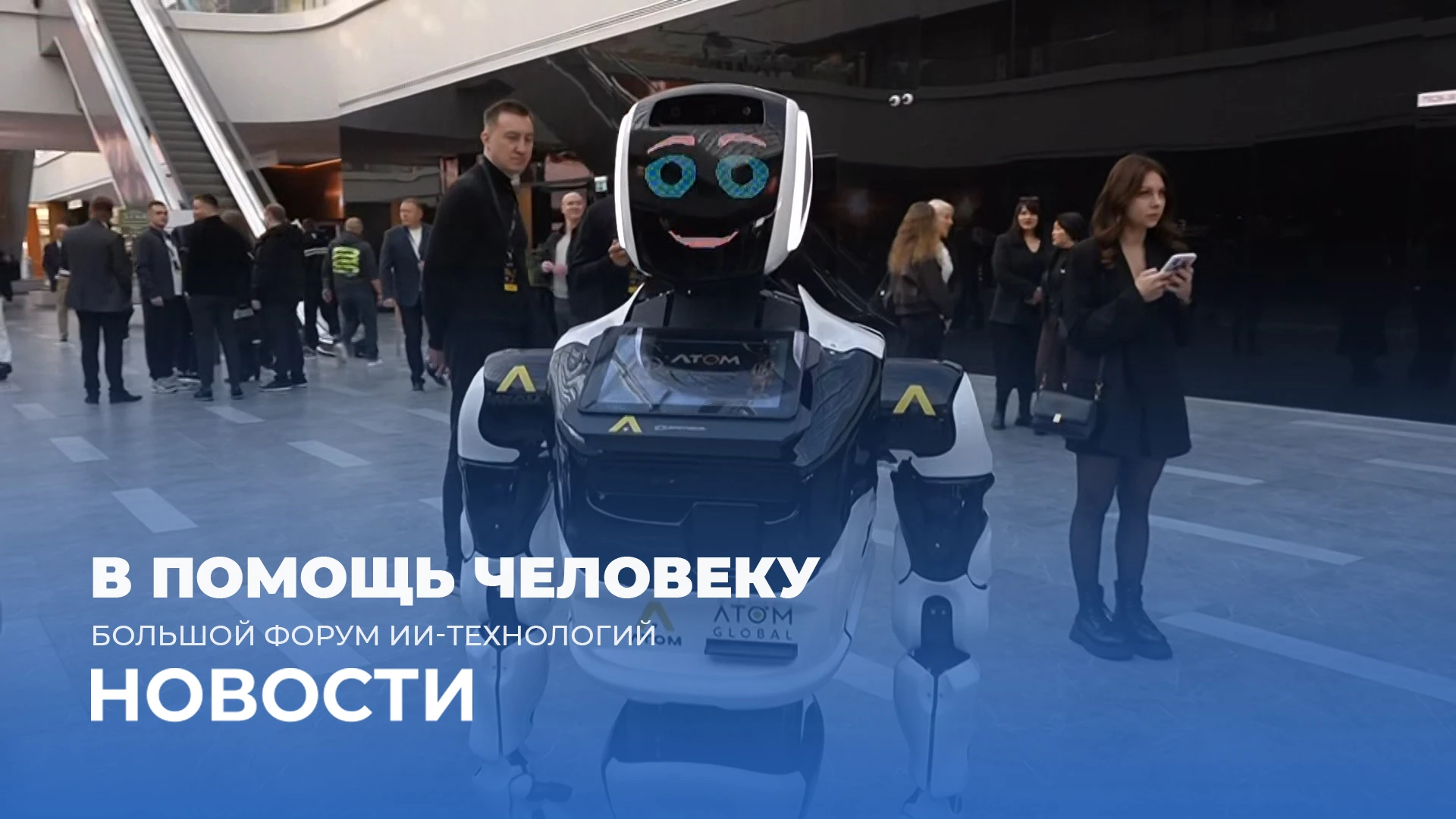
The Artificial Intelligence Technology Forum has opened at BelExpo. Over three days, visitors can see humanoid robots, the country’s first autonomous drift car and around 50 other projects, as well as hear from dozens of speakers.
We may not always notice that AI is already part of everyday life. But its benefits extend beyond individuals to entire sectors of the economy. Agricultural drones are nothing new in Belarus; the next step is using them not just to capture images, but to analyse data.
Mikhail Kuzmenkov, project manager:
“Cameras operating in the visible and multispectral ranges identify problems in fields by analysing additional layers of data. Drones that carry out specific agricultural operations—such as applying plant-protection products or micronutrient fertilisers—are then sent on flight missions. They apply the products precisely, helping us respond quickly and reduce costs.”
These drones are already in active use on Belarusian farms, suggesting the market has embraced the technology. The forum also features many people just starting out in AI, with startups focused on sport, education and healthcare. One system analyses electrocardiograms to help doctors with their work.
Nikita Larchenko, startup founder:
“The doctor scans or photographs the ECG and uploads it to the system. In no more than 30 seconds, it returns several of the most likely diagnoses and explains why the model selected them. We don’t present this as a replacement for a doctor—doctors cannot be replaced. A doctor’s judgement will always be more reliable than a model’s. Without a doctor’s opinion, it’s self-treatment, not qualified medical care.”
Young people have plenty of ideas about how else AI can help. But initiative alone is not enough to get a business off the ground. One aim of the forum is to connect startup founders with investors willing to back them. Belarusian IT specialists, it seems, are known even across the Atlantic.
Scott Focus, entrepreneur (USA):
“First of all, I’m very glad to be here. I came to Belarus, walked around the exhibition, and didn’t expect AI to be used practically everywhere. There are developments here I’d never heard of before. It’s great to see so many medical startups. Health is genuinely becoming a priority. I work in marketing, helping promising projects gain visibility. Belarus–US relations can’t be called ideal, but I’d really like people back home to know more about Belarus and its potential. Talented people and their ideas deserve recognition and investment.”
The selection process for the forum was extremely competitive, with just four exhibitors chosen for each available place. The aim was to make the event useful and engaging for businesses, while giving ordinary visitors a glimpse of what may matter tomorrow. Interest has been strong.
Friday is devoted to business, while Saturday and Sunday will feature a more accessible programme, including meetings with well-known bloggers. The virtual world has its place, but even in the age of AI, nothing replaces simple human interaction.