







Nuclear Generation Saves Belarus 16 Billion Cubic Meters of Gas — and Millions of Tons of CO₂
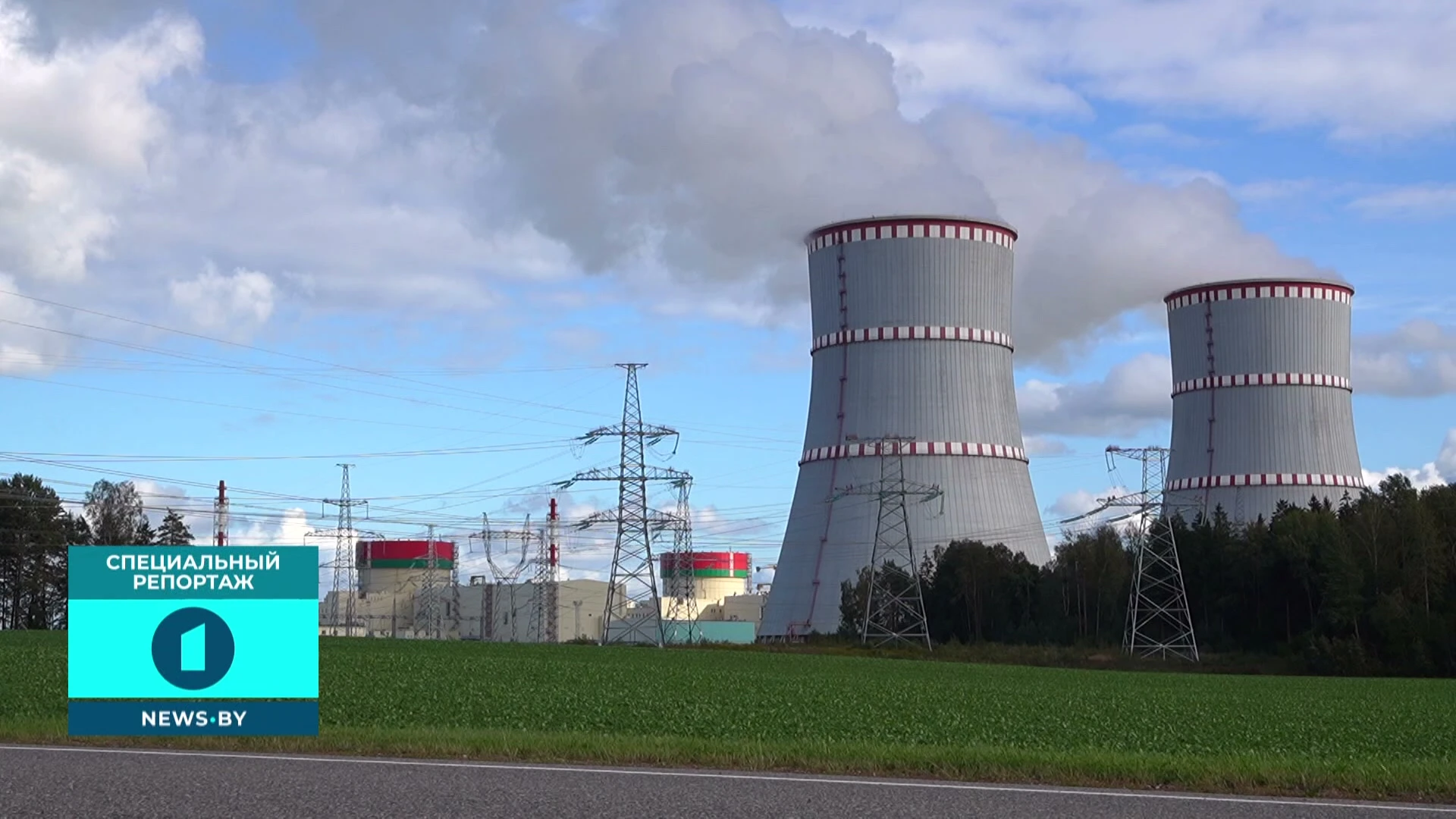
The Belarusian nuclear power plant now generates about 40% of the country’s electricity and has become a cornerstone of energy independence, Deputy Energy Minister Konstantin Anoshenko said at the forum “Clean Energy: Belarus and Russia’s Contribution to the Sustainable Development Goals.”
“Today the Belarusian nuclear power plant accounts for around 40% of all electricity produced in our country. That is a very substantial contribution to energy independence and to the stability of our power system,” Anoshenko said.
Reliable, affordable electricity, he added, is one of the essential conditions for economic development and is directly tied to industrial competitiveness and long-term growth.
The plant also advances United Nations Sustainable Development Goal 7 — ensuring access to affordable, reliable and sustainable energy for households and industry.
Nuclear power, Anoshenko argued, lets Belarus meet two objectives at once: secure supply and a lower carbon burden. “The nuclear plant is a cheap and reliable source of electricity for our consumers. It generates power without greenhouse-gas emissions and does not depend on weather or climate,” he said.
Given Belarus’s geography and climate, nuclear generation is a key element of a balanced energy mix. “Every country must decide how it will structure its energy balance. The Republic of Belarus made the strategic choice to integrate a nuclear power plant in order to achieve the most efficient match between production and consumption,” he said.
Since the first unit was connected to the grid, BelNPP has generated more than 66 billion kilowatt-hours. That output has displaced about 16 billion cubic meters of natural gas. “Those are significant funds that would otherwise have gone to pay for energy imports. They stay in the country and work for our economy,” Anoshenko noted.
The environmental dividend is equally large. Each year the plant avoids more than 7 million tons of greenhouse-gas emissions. “To achieve a comparable effect through carbon absorption, we would need to plant roughly one million hectares of additional forest,” he said.
Nuclear operations also spur technological capacity — in nuclear physics, radiation safety, materials science, automation and information technology. “In essence, this is a choice in favor of the country’s innovative and technological development,” Anoshenko said.
The extra generation is already supporting electrification. More than 220,000 square meters of housing have been built with electric heating, and more than 178,000 households have received technical conditions to convert existing homes to electric heating and hot water.
Electromobility is expanding as well. In 2025 the increase in the number of electric vehicles more than doubled the previous year’s figure; the trend has continued in 2026. “About 65,000 electric cars are already on the country’s roads, and more than 2,700 charging points have been built,” he said.
Looking ahead, officials are examining a third unit at the existing BelNPP site together with Rosatom and have been tasked with studying a possible second nuclear power plant. “The nuclear program would have been impossible without close Belarusian-Russian cooperation. Our principal partner is the state corporation Rosatom,” Anoshenko said. Nuclear power, he concluded, strengthens Belarus’s economic self-reliance.
The forum “Clean Energy: Belarus and Russia’s Contribution to the Sustainable Development Goals” opened in Minsk on 8 September. A central theme is SDG 7 — affordable and clean energy.