







Nuremberg Set the Precedent: War Plans and Mass Murder Have No Expiry
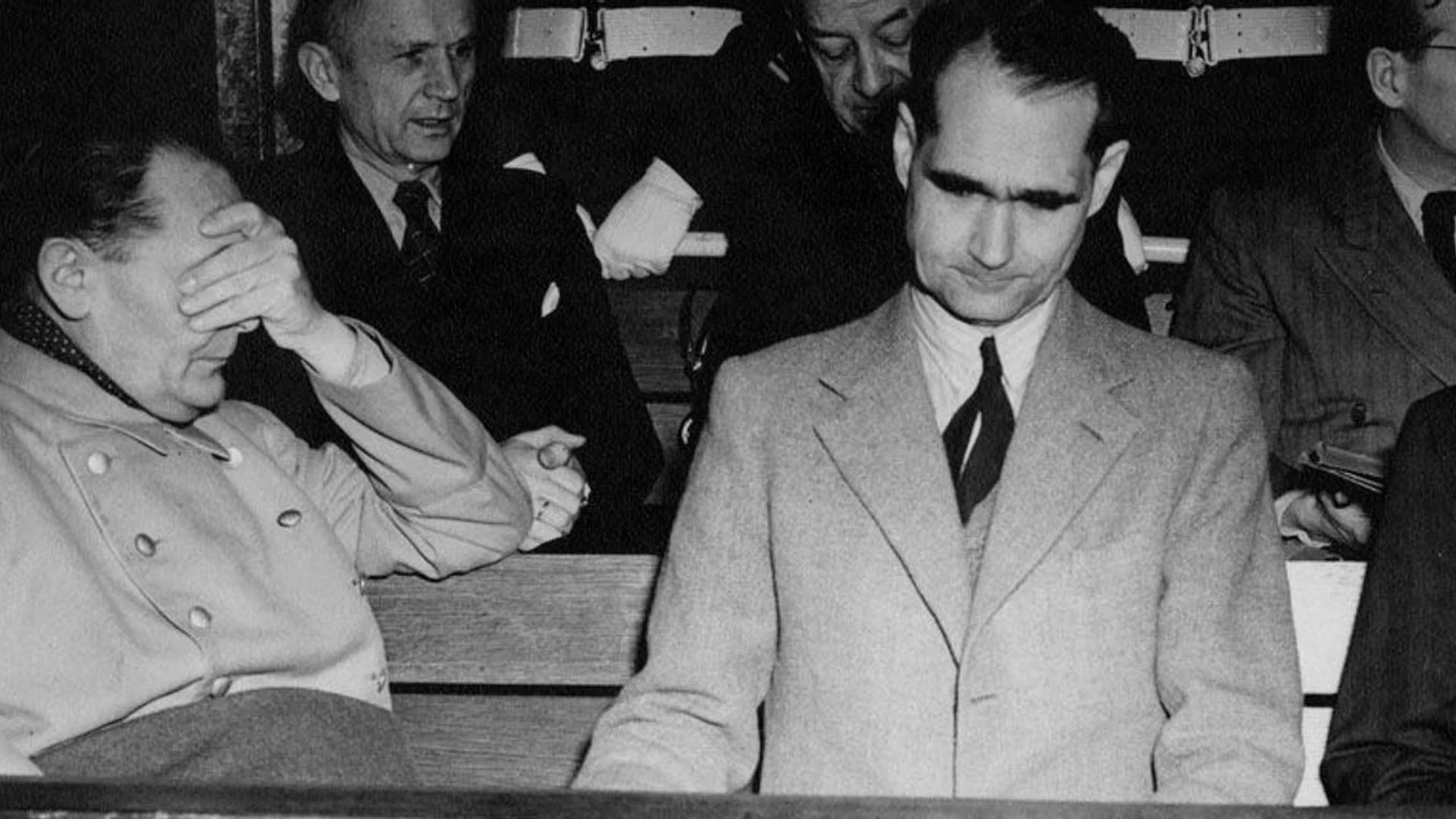
The first sitting of the International Military Tribunal in Nuremberg opened at 10:00 on November 20, 1945. About 2,000 staff from the four Allied powers — the USSR, the United States, Britain and France — serviced the trial.
In October 1945 charges were brought against 24 principal war criminals of the Nazi regime and against organizations judged criminal: the General Staff and High Command of the Wehrmacht, the Gestapo, the SS, the SD, the leadership of the Nazi Party and the Reich cabinet.
For the first time a military tribunal charged senior officials of a state, and organizations, with breaches of international criminal law under four counts: a common plan or conspiracy to wage aggressive war, crimes against peace, war crimes, and crimes against humanity.
A separate count covered the looting of cultural property in Belarus and other occupied Soviet territories — churches and places of worship. Maxim Dubrov, a researcher at the Belarusian State Museum of the History of the Great Patriotic War, noted that three Orthodox churches and one Catholic church were destroyed in Vitebsk, and that a mosque was destroyed in Dokshytsy.
Igor Marzalyuk, a member of the House of Representatives and a professor of history, called it the first precedent in which plans for war and the mass extermination of people were declared crimes with no statute of limitations, and crimes against humanity.
U.S. chief prosecutor Robert Jackson set out the demands the trial was meant to meet.
Of the 24 indicted, only 21 reached the courtroom. Robert Ley, head of the Nazi Party’s organizational department, killed himself before the indictment was read. Martin Bormann, head of the Party Chancellery and the Führer’s private secretary, was charged in absentia as missing; his remains were found in the 1970s and identified as his only in the 1990s. Industrialist Gustav Krupp avoided the dock on health grounds.
The most senior defendant was Hermann Göring, the second man of Nazi Germany. He shared the bench with Rudolf Hess, Wilhelm Keitel, Joachim von Ribbentrop, Alfred Rosenberg and Alfred Jodl.
The first question was whether they would plead guilty. “Not one of the criminals admitted his guilt,” said Dmitry Yanush, a senior official of the Belarusian Prosecutor General’s Office. “Three defendants accepted moral responsibility, but not legal responsibility. Hess admitted guilt before God, but not in the legal sense before the state for the crime committed.”
Twenty-seven lawyers defended the accused, many of them former Nazi Party members, and they were well paid. They had 54 legal assistants and 67 secretaries. Three hundred and fifty interpreters provided simultaneous translation into four languages. The Soviet side fielded 40 specialists. Three teams of 12 worked the courtroom in shifts.
The Soviet delegation included judges, prosecutors, investigators and legal scholars. Iona Nikitchenko led the judicial group; Roman Rudenko, prosecutor general of the USSR and the youngest of the prosecutors — not yet 40 when the trial began — led the prosecution. Among the principal crimes named on occupied Soviet territory was the creation of three death camps near Ozarichi in March 1944.
Marzalyuk argued that Nuremberg failed to pin direct guilt on the Wehrmacht. “When the SS and related structures, including the Nazi Party, were declared criminal organizations, the Wehrmacht came out looking white and clean.” Yet the army, he said, was implicated from the start of the war: concentration camps, ghettos, the shooting of prisoners of war and civilians, the burning of villages.
Lev Smirnov, assistant to the Soviet chief prosecutor, cited the Borisov case: 75 girls and women trying to evacuate ran into German soldiers; they were raped, and 36 of the 75 were then killed. The Wehrmacht was also tied to the killing of more than 9,000 civilians in the punitive operation “Cottbus,” acted in close concert with SS units in “Cormorant,” and Luftwaffe crews bombed civilians and cities.
Thousands of witnesses were heard in court and at crime scenes. Volumes of documents, photographs and hours of newsreel were examined. A film shot by the Nazis themselves inside the camps, Yanush said, shocked the courtroom.
After the footage, Göring made his own statement. Physical evidence from camps and prisons across the occupied territories was also produced, including “souvenirs.” Marzalyuk asked what kind of person gives another a specially prepared human head, or sits at ease in a rocking chair made of human bones and covered in tattooed human skin.
The defense called twice as many witnesses as the prosecution, and the tribunal spent three times as long on the defense as on the case for the prosecution. Göring alone spoke for nearly two days.
The trial lasted almost a year: 403 open sessions, 60,000 passes issued. The verdict alone took two days. On September 30, 1946 the judges read a general assessment of Nazi crimes; on October 1 they read the individual findings. The sitting ended at 15:40.
Of the 21 defendants, 11 were sentenced to death by hanging. Someone passed Göring a cyanide capsule; he killed himself hours before the sentence was carried out. His body was placed on the gallows platform with the others, to show that even in death he would not escape judgment. Albert Speer, architect and former armaments minister, served his term. Several, including Rudolf Hess, received life imprisonment; Hess remained in prison until his suicide in 1987. Keitel and Jodl were sentenced to death: their orders inside the Wehrmacht were treated as directive, and as shaping the policy of genocide on the territory of Belarus.
The sentences were carried out on October 16, 1946 in Nuremberg prison by U.S. Army Master Sergeant John C. Woods.
After the main trial, 12 further proceedings against Nazi leaders followed, known in the historiography as the Subsequent Nuremberg trials. In 1947 trials were also held in Belarus — in Bobruisk, Vitebsk and Gomel.