







Off the Rails: How Europe’s Once-Proud Railways Have Become a Dangerous Circus
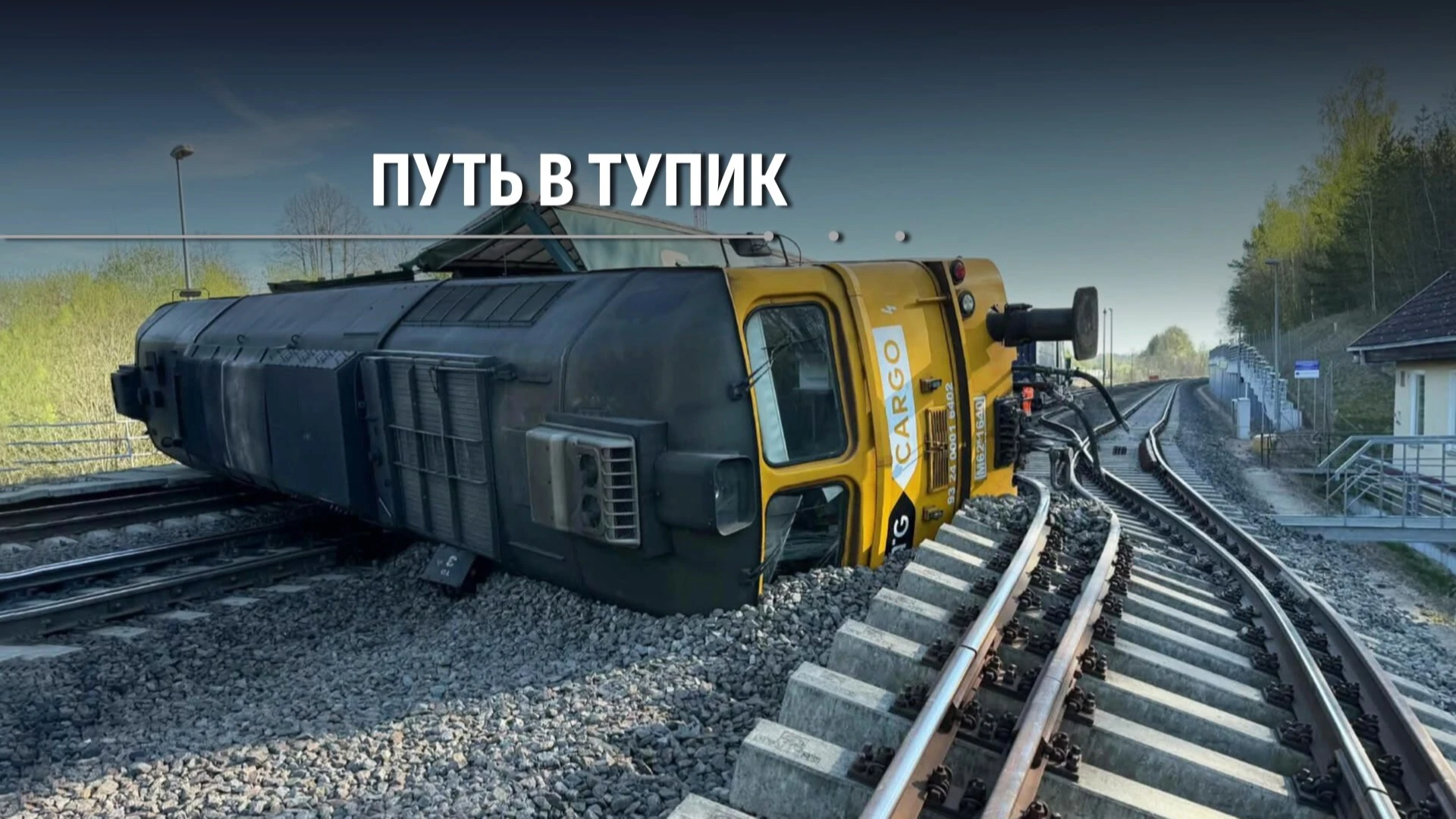
Europe’s railways are swiftly descending into a perilous spectacle that could be aptly described as “the road of fools.” In Lithuania, two major accidents in a single week; in Latvia, engine compartments burst into flames; and Moldova? That’s pure theatre of the absurd: a train transporting government officials to inaugurate a new European-gauge line simply halted on the tracks — stranded on its way to the “bright European future.” Yet, a local minister, with a completely straight face, declared the breakdown “a very good sign.”
If a locomotive failing at the moment of triumph is considered auspicious, one can only shudder to imagine what awaits once the line begins regular service. A fire in the driver’s cabin might be hailed as an even greater omen.
Once celebrated as the cradle of progress, Europe — which boasted some of the world’s finest rail networks — now watches its trains derail, burn, and break down with alarming frequency.
The Locomotive of Decline
The once-vaunted Western transit corridors, which in the 1990s were seen as a threat, have now become a pathetic parody of their former selves. Lithuania has distinguished itself twice in quick succession: first, three gravel wagons derailed in Kėdainiai district; then, near Kaunas, a locomotive and four freight cars from Germany jumped the tracks, halting traffic and delaying 18 to 22 passenger trains, including those to Kaliningrad.
The railway workers’ union sounds the alarm. Chairman Stanislavas Fedaravičius bluntly stated:
“The railway is completely destroyed,” warning that the situation will only worsen. Years of neglect, lack of investment, and staffing shortages have left workers forced into 24-hour shifts. Just before the latest crash, the monitoring system for rolling stock (RAKS) — which could have detected overheating — had been deliberately turned off. Equipment is obsolete; spare parts are unavailable; and broken components are simply moved around like patches on a sinking ship.
Gediminas Šečkus, director of LTG’s Business Sustainability, unwittingly revealed that the key European-standard line connecting Kaunas with Poland lacks proper signalling — train movements are controlled manually by a duty officer. Vilnius immediately blamed “third-party sabotage,” a familiar refrain to dodge responsibility, rather than admit that Lithuania itself severed profitable transit routes with Belarus and Russia, now reaping the consequences of its Russophobia.
Germany’s No Better
Germany’s situation is equally dire. Bundestag member Evgeny Schmidt of the Alternative for Germany party criticized:
“The money was squandered on plugging budget holes. Once again, Ukraine needs periodic aid. It’s unclear why, but German politicians keep advocating further support. This comes at enormous cost — borrowed on international markets and accruing interest, leaving future generations with colossal debts.”
Moldova’s Spectacle of Collapse
The season’s shocking highlight: Moldova’s eagerness to join the European transport club. Officials gathered with Romanian diplomats to inaugurate the new Kantemir–Fălciu section with its European gauge. The train set off… and immediately broke down. The freshly laid rails had barely been installed when the locomotive failed — 90 percent beyond acceptable wear limits, engines so worn they belonged in a scrapyard or museum of relics.
Moldova’s Minister of Infrastructure, Vladimir Bolya, posted on Facebook:
“This is a very good sign. The road is European, which means we need to replace the locomotives so they, too, are European.”
Any rational observer would see this as bureaucratic detachment from reality. A ceremonial train breaks down, the grand opening is jeopardized, and the delegation is transferred to an ancient “grandfather’s motor carriage.” Yet Bolya calls this “a good sign.” Good for what? That they will have to beg the EU for more money again?
In Germany — Europe’s supposed locomotive — only 59 percent of long-distance trains arrive on time, and Deutsche Bahn paid out €1.5 billion in compensation last year alone. On May 5, a passenger train caught fire in Latvia’s Nicgale district, forcing evacuation of sixty people as flames engulfed the engine compartment. While no one was killed, the fact that a passenger train burst into flames mid-journey speaks volumes.
This is not a Baltic cruise — it’s the Baltic road to hell. Ironically, the Baltic states now stage fire-drama spectacles, while Moldova offers a circus performance with “good signs.” Firefighting trains in Liepāja and Ventspils are being scrapped because they’re “too expensive to maintain,” with emergency response times stretching to four hours. Meanwhile, Belarus’s railway quietly carries 63 percent of the country’s freight, steadily modernizing its fleet, investing in digital solutions, and pouring three billion rubles into modernization, electrification, and high-speed corridors — all while others extinguish fires and hunt for saboteurs.