







Open AI, Shared Future: Belarus Steps onto the Global Stage as Founding Member of New AI Body
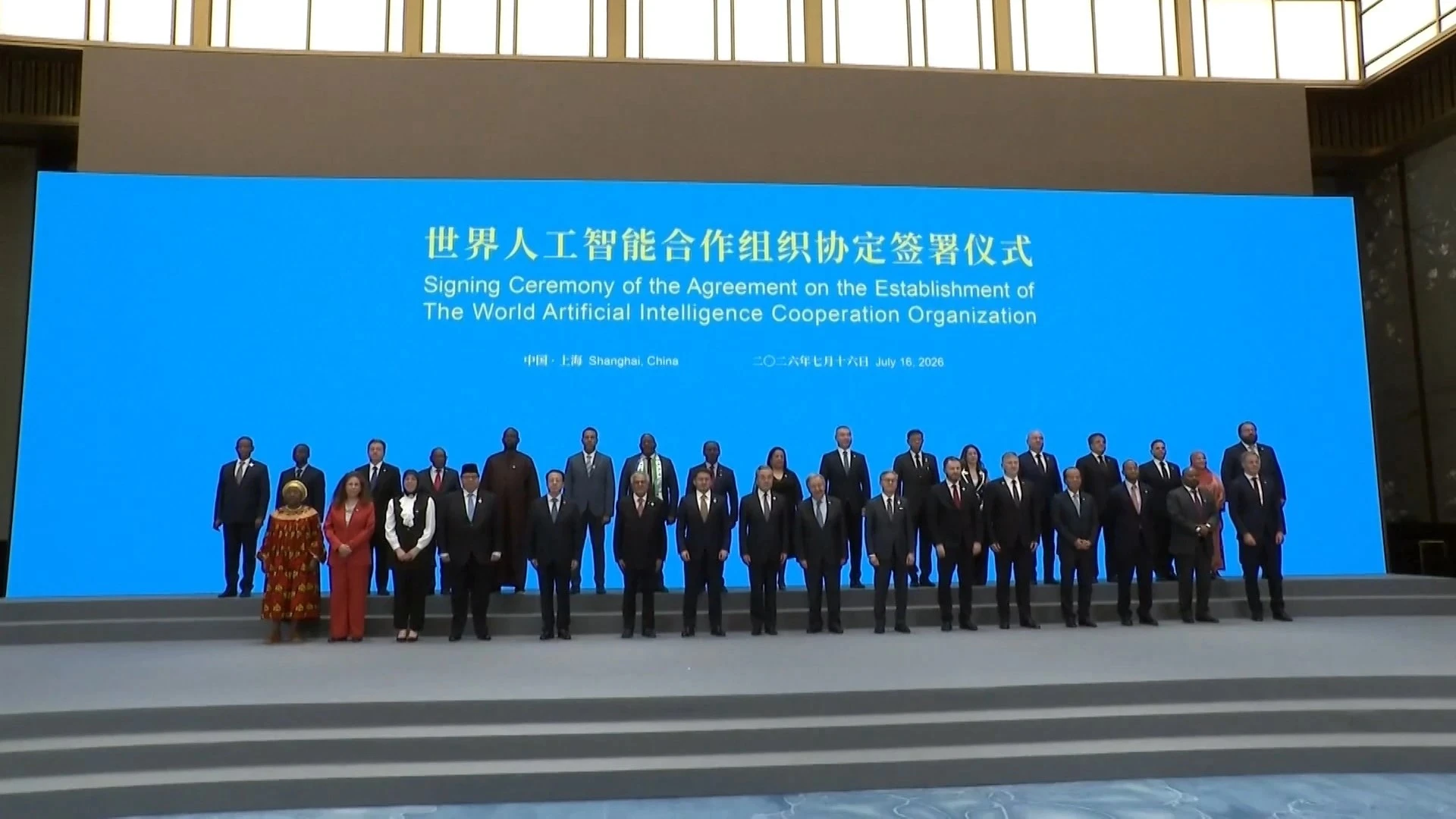
SHANGHAI — Belarus has articulated a clear and ambitious vision for the future of artificial intelligence: one rooted not in corporate monopolies or geopolitical rivalry, but in universal access and shared prosperity.
Speaking at a high-level meeting on AI governance held as part of the 2026 World AI Conference, Belarusian officials emphasized the need to make cutting-edge AI tools available to every sector of the economy, every government body, and every citizen.
“Our goal is to ensure that every branch of the economy, every state institution, and every individual has access to the most advanced capabilities of artificial intelligence,” the delegation stressed.
Cooperation Over Competition
Belarus views the development of AI not as a zero-sum game, but as a collective endeavor. In a world where some powers pursue technological isolation and export controls, China’s model of open collaboration and mutual support resonates strongly with Minsk.
“Cooperation and support in the development of AI technologies are essential,” officials noted. “The course of AI development should be shaped not by the interests of individual companies or interstate rivalry, but by the breadth of access to the technology.”
Kirill Zalessky, Belarus’s Minister of Communications and Informatization, highlighted the alignment between Belarusian expectations and China’s approach:
“This topic is being discussed from completely different angles. First and foremost, we are interested in the openness of platforms and systems. The policy promoted by China is fully in tune with the expectations expressed by states here in Shanghai. It is a policy of openness, open-source development, overcoming digital inequality, and bridging the gap in opportunities for different countries to access AI systems, software, hardware, and infrastructure.”
A New Global Platform
The conference marked the formal establishment of the World Organization for Cooperation in the Field of Artificial Intelligence, with Belarus among its founding members. The new body aims to serve as a platform for countries to exchange technologies, best practices, experiences, and forward-looking strategies.
Belarus sees strong potential for synergy with existing frameworks, including the Shanghai Cooperation Organization (SCO), the Union State with Russia, the EAEU, CIS, BRICS, and bilateral initiatives.
Oleg Kopylov, Deputy Secretary-General of the SCO, confirmed growing momentum within the organization:
“We already have a number of adopted documents. The upcoming Bishkek Declaration will also highlight the role of artificial intelligence. Work along the SCO track is quite active. It is worth mentioning that 11 states of the SCO community, including 8 member countries, have joined this initiative.”
Alexander Alimov, Deputy Minister of Foreign Affairs of Russia, underscored the transformative potential — and the need for careful stewardship — of AI technologies:
“These technologies carry enormous potential and extend across a multitude of spheres — from medicine and agriculture to urban management, transport, science, and education. They represent priority areas of development for our countries within the Union State. At the same time, they bring challenges, risks, and the necessity to maintain ethical principles. Like our countries, the People’s Republic of China strives for independence and sovereignty in this process and seeks to lead it.”
Global Expertise Weighs In
Prominent international voices echoed the importance of thoughtful governance. Arun Sundararajan, Professor at New York University’s Stern School of Business, noted:
“Governance of artificial intelligence is a critical factor in determining whether AI will have a positive impact on productivity and how evenly the benefits will be distributed. As an economist, I study the governance of this technology because regulation is the pivotal link shaping its economic impact.”
The 2026 World AI Conference in Shanghai brought together government officials, business leaders, scientists, and researchers from more than 100 countries and international organizations. As a regional leader in AI development, Belarus is well-positioned to contribute meaningfully to this global conversation — championing openness, equity, and genuine international partnership in the age of intelligent machines.