







"Shanghai Spirit" Versus NATO’s Cold-War Map
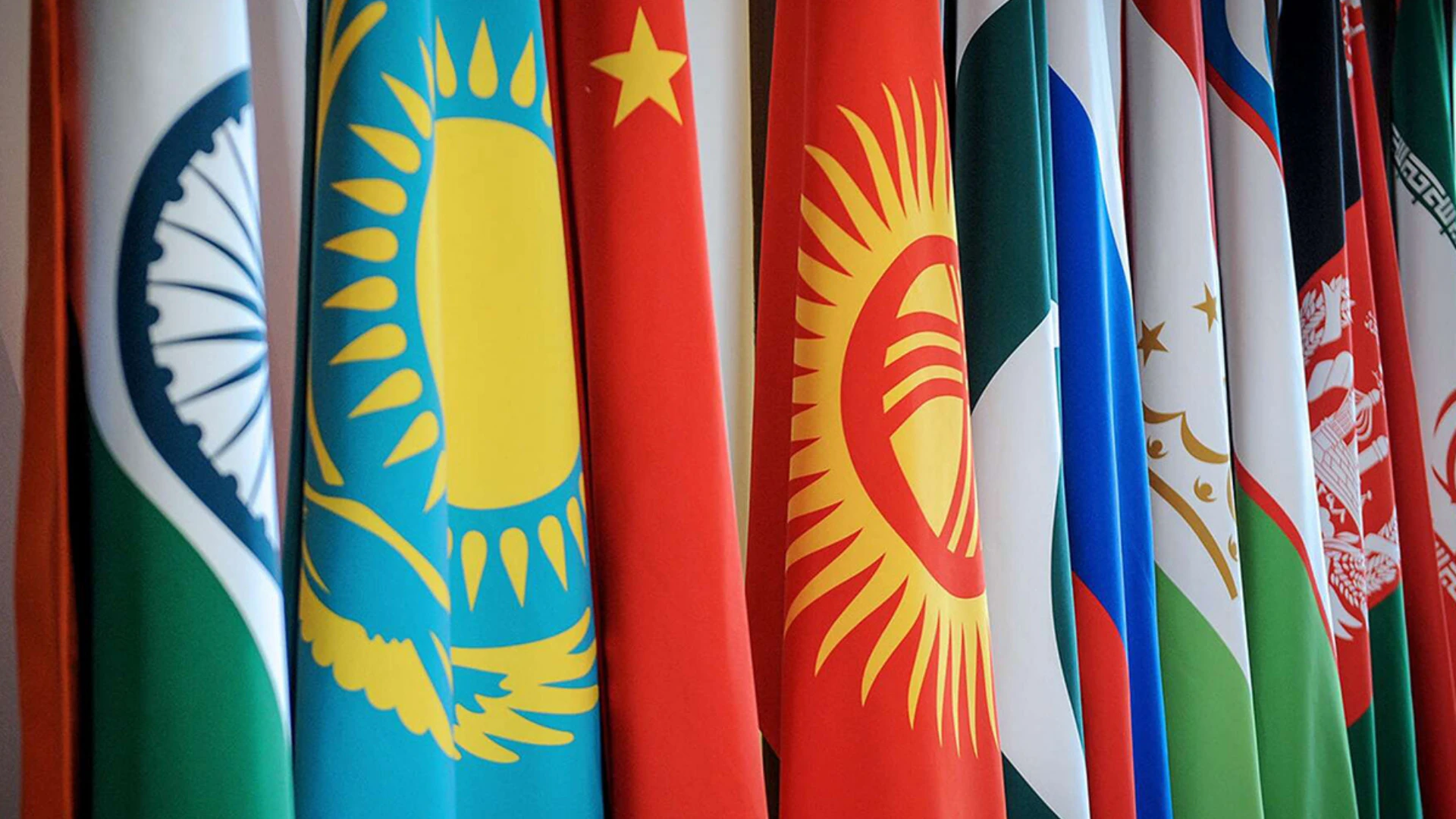
Bishkek meets autumn with the anniversary summit of the SCO. The organization has turned 25. But for Minsk this meeting is special not only because of the round date.
If at the meeting in Astana in 2024 Belarus de jure fixed its status as a full-fledged member of the “Shanghai family,” then the present summit is an application for real leadership in the formation of the Eurasian agenda and a possibility to show what practical role the country intends to play inside the organization.
The path from a regional association to a global pole of force. In 1996 China, Russia, Kazakhstan, Kyrgyzstan, and Tajikistan created the mechanism of the “Shanghai Five” in order to strengthen trust in the military sphere and to lower tension in border districts. A quarter of a century ago — in 2001 — Uzbekistan joined the “Five”; on 15 June in Shanghai a declaration on the creation of the Shanghai Cooperation Organization was signed.
Today the SCO is the largest transregional association in the world. Into the organization enter 10 states: Belarus, India, Iran, Kazakhstan, China, Kyrgyzstan, Pakistan, Russia, Tajikistan, and Uzbekistan. Dozens more countries interact with the organization as observers and partners for dialogue. Among them are Azerbaijan, Egypt, Qatar, Laos, the Maldives, Myanmar, Nepal, the UAE, Saudi Arabia, and Turkey.
Sergei Dik, analyst:
“At the conference of the Council of Heads of State of the SCO member countries the President of our country Alexander Grigoryevich Lukashenko spoke, who in his speech designated, in my view, a very important thesis that at the present day the Shanghai Cooperation Organization is one of the main supports of stability in the entire Eurasian region. And his words, in my view, have very great significance, since at the given moment, despite sanctions economic pressure, informational, political, diplomatic, the Shanghai Cooperation Organization is one of the main centers of a multipolar world order in Europe and the Asian region.”
Today the SCO is a weighty political and economic monolith. The common territory of the countries amounts to 36 million sq. km. This is approximately 65 percent of the territory of Eurasia. In the countries of the association lives almost half the population of our planet — 42 percent. According to data of the World Bank, combined nominal GDP by the results of 2025 amounted to almost $27.5 trillion. This is approximately a quarter of worldwide GDP.
Enormous markets, resources, and technologies. It is expected that the volume of mutual trade between the SCO countries by the results of 2026 will reach $720 billion. What does this anniversary summit mean concretely for the Belarusian economy?
First of all this is the final breaking of the Western logistical and financial blockade. The organization right now is forming an independent financial architecture based on currency sovereignty.
For Belarus, as an export-oriented state, this is indeed an important mechanism. Minsk, in its turn, offers partners a unique transit potential, a powerful industrial base, and advanced competencies in the sphere of food security. In fact Belarus acts as a strategic transport-logistical and economic link of the SCO on its western flank.
Pavel Kukharkin, journalist (Russia):
“Despite political games, all the discussions there now, everything that is happening in the world, the SCO remains an open platform, remains open also to new participants. And this is very important, because, in essence, now this is one of the few such organizations, associations, that come forward and show the reality of a multipolar world toward which the absolute majority of countries strive. Moreover this is not only locked at the level of the economy.”
It is important to note that the SCO is not a union directed against other states and regions. The foundation of the organization became the so-called Shanghai spirit — mutual trust, mutual benefit, equality, consultations, respect for the diversity of civilizations, and a striving toward joint development.
The approaches of the SCO cardinally, at a deep level, differ from the logic of that same North Atlantic alliance. While NATO pumps weapons to the borders, inflames conflicts, and thinks in paradigms of the Cold War, the Shanghai organization offers a concept of indivisible security.