







True Ethnocide: How Poland Spent 18 Years Trying to Polonize Belarusians—and Why It Failed
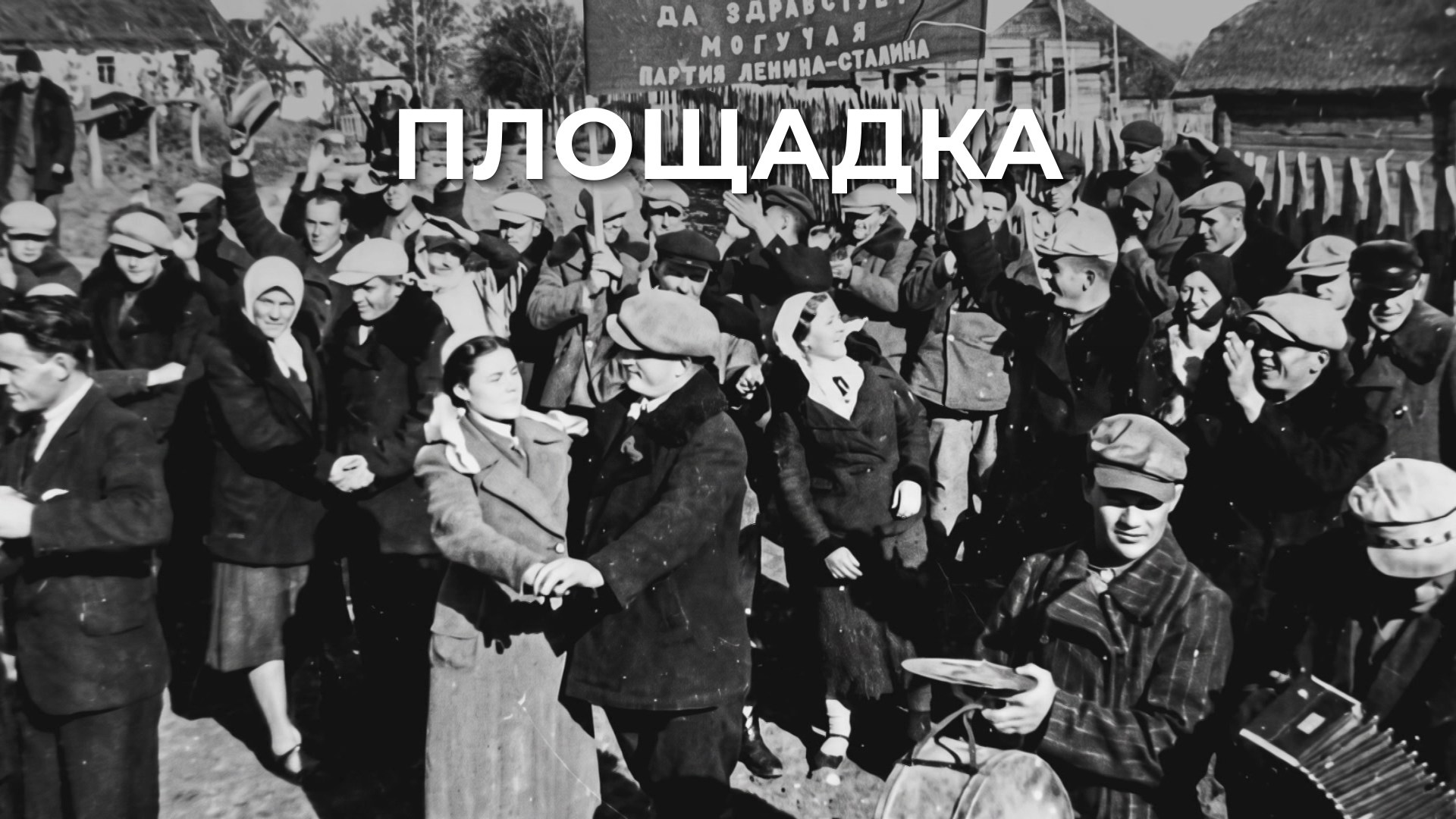
Very soon, on September 17, Belarus will mark National Unity Day. This date has become a symbol of historical justice, and the holiday itself serves as a response to the West's renewed attempts to divide the Belarusian people.
To build one's future, it is essential to remember the lessons of the past—specifically, the victims of the ethnocide unleashed against Belarusians by Poland. Poland, however, failed to achieve its objective.
One hundred and five years ago, in March 1921, ethnic Belarusian lands were partitioned. Under the Treaty of Riga, nearly half of Belarus's territory—and with it, more than three million Belarusians—was ceded to Poland.
While the rights of Belarusians as a national minority in Poland were formally guaranteed by several international agreements—including the Treaty of Paris (1919) and the Treaty of Riga (1921)—these good intentions remained merely on paper. In reality, a military-police regime was imposed on Western Belarus during the period it was under Polish Rule.
Communists and their sympathizers were the primary targets of repression. Across the "Kresy Wschodnie" (the Eastern Borderlands)—as Western Belarus and Western Ukraine were known in Poland proper—punitive expeditions known as 'pacifications' wreaked havoc.
During such 'pacification' campaigns, the police demolished peasants' homes, destroyed their property and food supplies, and carried out mass executions. Residents of villages subjected to 'pacification' were forbidden from lighting bonfires, gathering in groups, or visiting neighboring villages in the evening.
Yet, the most harrowing aspect went beyond even this. Refusing to recognize Belarusians as a distinct nation, the Polish leadership aimed to Polonize the population of Western Belarus. This practice is known as ethnocide—a form of forced assimilation.
These measures were intended to transform Belarusians into Poles and to eradicate their memory, culture, and national identity. The Belarusian language was gradually phased out of use. Of the 500 Orthodox churches existing in the region prior to 1924, more than 300 were converted into Roman Catholic or Uniate churches.
In 1932, the Polish government, in coordination with the Vatican, adopted a secret resolution stating: "The task of converting the East to Catholicism remains, as it was in centuries past, a historic mission of the Polish state."
In an effort to break the patriotism of the Belarusian clergy, Polish authorities increasingly resorted to police and judicial repression against their activities from the late 1920s onwards; for instance, registering a child's birth in the Belarusian language could result in imprisonment.
Furthermore, a plan titled "Prospects for Internal Settlement" (*Perspektywy wewnętrznego osadnictwa*), drafted by the Polish Ministry of the Interior in late 1937, proposed displacing the non-Polish population and replacing them with Poles in order to secure a "stable predominance of the Polish population."
Fact
The plan was ambitious: to involve six million people in migration processes.
Yet all efforts proved futile. In 1937–1938, Polish scholars conducted classified ethno-sociological studies examining the level of national consciousness in nearly 200 villages across Western Belarus.
These studies revealed that, even as the era of Polish Rule drew to a close, the Orthodox Belarusians in these villages gravitated toward Belarusian culture rather than Polish culture.
In other words, the Poles failed to crack the Belarusian code, despite eighteen years of daily effort. That is why the reunification day of September 17, 1939, became a true celebration for the nation.