







“To Betray in Time Means to Foresee”: Political Scientist Andrei Manoilo on Trump–Merz Scandal
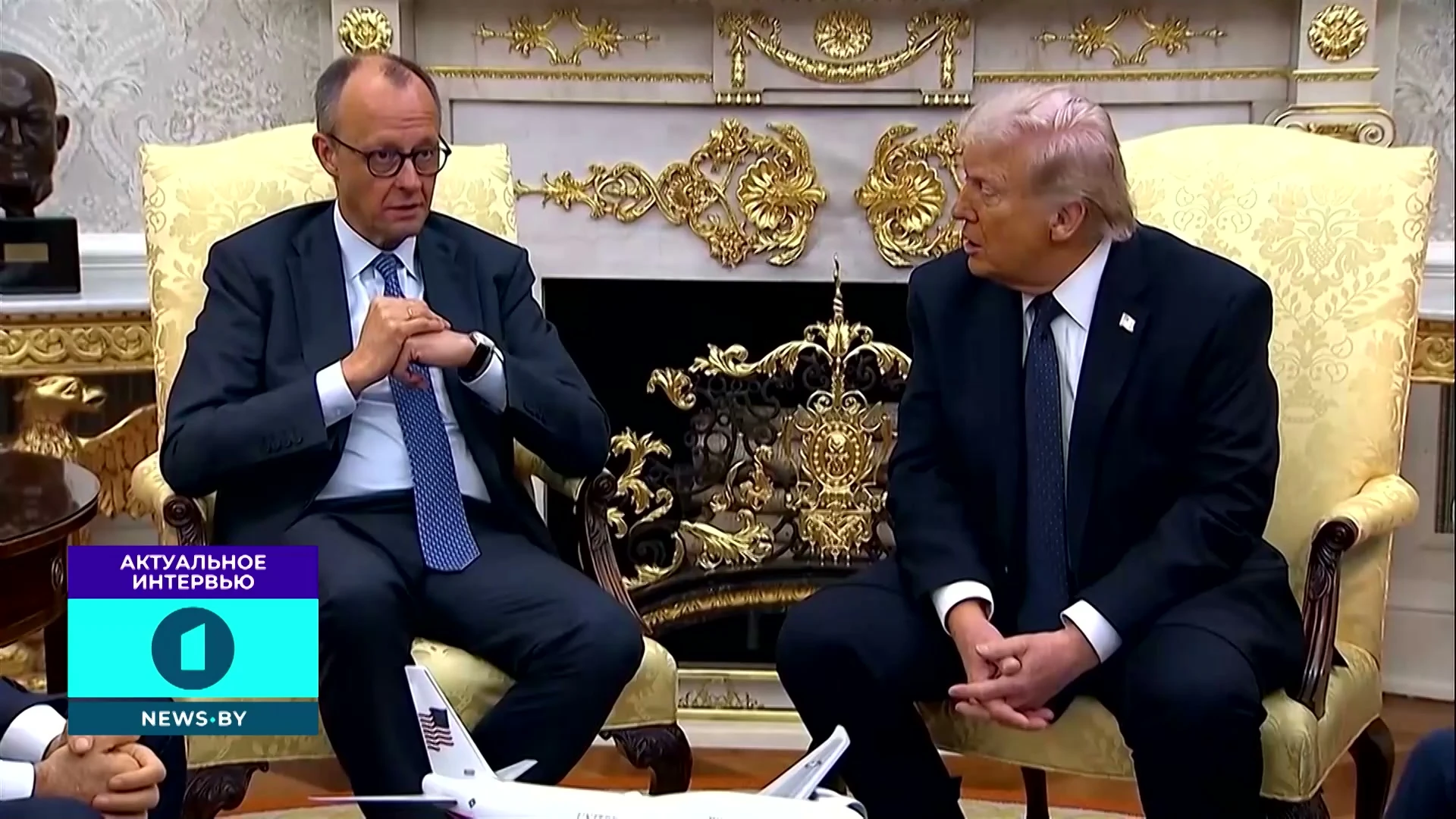
Western media have reported that US President Donald Trump was “deeply offended” by German Chancellor Friedrich Merz’s remarks about the “humiliation” of the United States in the conflict with Iran. Washington’s response was swift: part of the American military contingent will be withdrawn from Germany, and Berlin will not receive the promised medium- and short-range missiles — including Tomahawks. Merz himself is now trying to smooth over the rift, insisting that relations with the United States remain excellent.
In the programme Current Interview, Russian political scientist and Lomonosov Moscow State University professor Andrei Manoilo explained what is really happening behind the scenes and who is fighting for leadership in the European Union.
According to Professor Manoilo, the situation is precisely as the sources describe. Merz’s statement was no slip of the tongue, but a carefully calculated political manoeuvre.
The German chancellor is a systemic figure, wholly dependent on Washington’s will; he is not mounting an open challenge, yet he is quietly hedging his bets for the future.“Merz is laying down straw for himself and sending advance signals to Trump’s eventual successor — the one who will be his antagonist,” the political scientist noted. “There is an old saying: ‘To betray in time means to foresee.’ Merz is trying, cautiously and somewhat timidly, to give Trump a little kick without suffering any serious consequences.”
Special emphasis was placed on Merz’s claim that Iran had “humiliated” Trump. According to Manoilo, this struck at the American president’s most vulnerable spot — his wounded pride. Trump “exploded,” but the timing is telling.
Experts have pointed out that the decision to redeploy the brigade and reduce the US presence in Germany was made before the quarrel with Merz. Nevertheless, the reaction of America’s European allies speaks volumes.
“Previously frightened European military-political allies are now behaving like rats on a sinking ship — they are beginning to edge closer to the side, looking for the best place to jump off,” Manoilo described.
The political scientist noted that a significant part of the EU leadership is already waiting for a Democratic successor to take power in Washington. Under Biden, the system operated predictably and without undue stress for European politicians.
“They will not gain real independence. Europe will not become a true subject of international politics; it will remain a semi-colony of the United States. But they will return to the familiar harness they once pulled calmly, without scandals or excesses,” he explained.
Against the backdrop of loud rhetoric about building up the German army, the militarisation of Poland and France’s nuclear ambitions, the question arises: is there a genuine struggle for military leadership inside the European Union? Manoilo believes it is still mostly populism.
“All these so-called leaders of European states make loud statements designed for hype. Building a real defence capability takes years. Macron can promise to become the chief guarantor of the EU, but his presidency will end long before he can even begin to fulfil those promises.
”For France, the expert added, such rhetoric also serves as a convenient distraction from serious economic problems that Macron has been unable to solve.
In Germany’s case, the motives are different. Manoilo suggests that behind Merz stand powerful financial and industrial circles who look at Trump’s success and ask themselves: “Why can’t we make money too?”
“Talk of Germany finally rising from its knees and forming a new army is simply a way of redirecting money from the economy and social programmes into the pockets of German arms manufacturers,” he emphasised.
Poland’s militarisation and ambitious statements also raise concern. However, according to the professor, the real achievements are far more modest than the loud slogans. Warsaw’s main goal is to profit from its favourable geographic position.
“Poland is trying to sell itself,” the expert stated. “It positions itself as the last eastern bulwark against supposed Russian and Belarusian aggression: ‘If it weren’t for us, the Russians would already be in Berlin. Give us money, station American bases here, bring in nuclear weapons — and pay us handsomely for the right to store them.’”