3.77 BYN
2.82 BYN
3.21 BYN



G20 at Crossroads: South Africa Summit Confirms G20 Crisis and Growing Influence of Global South
Text by:Andrey Sych
news.byhttps://s3-minsk.becloud.by/media-assets/news-by/f95bbf23-6d85-47cb-b7c8-641fea25fd89/conversions/e1dc96b9-d327-49a4-884b-1469c5b445ce-sm-___webp_480.webp 480w, https://s3-minsk.becloud.by/media-assets/news-by/f95bbf23-6d85-47cb-b7c8-641fea25fd89/conversions/e1dc96b9-d327-49a4-884b-1469c5b445ce-md-___webp_768.webp 768w, https://s3-minsk.becloud.by/media-assets/news-by/f95bbf23-6d85-47cb-b7c8-641fea25fd89/conversions/e1dc96b9-d327-49a4-884b-1469c5b445ce-lg-___webp_1280.webp 1280w, https://s3-minsk.becloud.by/media-assets/news-by/f95bbf23-6d85-47cb-b7c8-641fea25fd89/conversions/e1dc96b9-d327-49a4-884b-1469c5b445ce-xl-___webp_1920.webp 1920w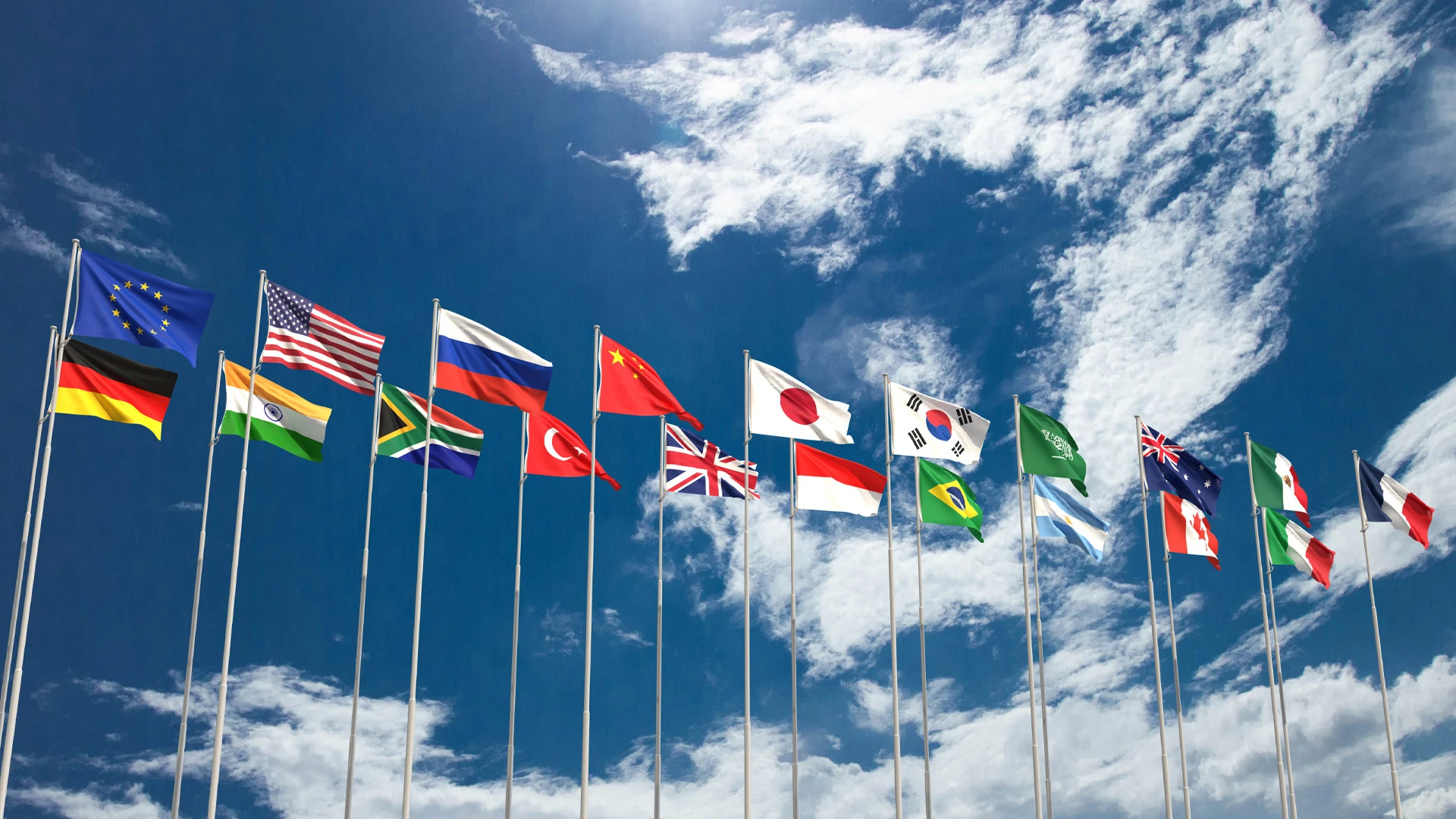
The latest G20 summit took place in near silence, a stark contrast to the usual excitement surrounding G20 meetings. The absence of leaders from Russia, China, and the United States, along with scant media coverage, prompted questions about whether the G20 is losing its relevance. Analyst Yulia Abukhovich explored the underlying causes of the crisis at one of the world's most important international forums.
Initially, the G20 was created as an efficient tool for responding to global economic shocks at the level of finance ministers and central bank governors. However, after 2008, the format was expanded to include summits of heads of state. Now, four years later, the meetings are taking place in countries of the Global South—India, Brazil, and South Africa—symbolizing a fundamental shift in the balance of power.
"Today, many are saying that even the agenda and final resolution closely overlap with the BRICS resolution. This means that the G20 is becoming a proxy for the BRICS position," noted Yulia Abukhovich.
The summit's final document, filled with peacemaking rhetoric, calls against sanctions pressure, and an emphasis on green energy, directly contradicted the position of the collective West.
This, according to the expert, is precisely what provoked the sharp reaction from Western leaders, in particular Emmanuel Macron, who declared a lack of solidarity and the possible disintegration of the G20.
Yulia Abukhovich noted a key trend: the agenda is now being shaped by countries of the Global South, bringing up issues that truly concern much of the world. One of the summit's most important outcomes was the demand to reform international institutions such as the WTO and the IMF.
"These issues are inconvenient for the European Union and the United States, especially since the United States founded the organizations in question. These organizations haven't helped the Global South develop. All they've done is help the colonizers profit," the analyst stated.
Another significant step was the proposal to expand the representation of African and Asian countries in the UN, so that conflicts in their territories are not resolved without their participation.
According to the analyst, the G20 currently has two possible paths:
1. Consolidation. The G20 can prove that it remains a working structure capable to efficiently respond to global challenges.
2. Marginalization. The organization faces a gradual retreat from reality, collapse, and the realization of Macron's dire forecast.
The key factor determining the fate of the G20 will be its ability to transition from a reactive to a proactive stance. If member countries fail to do so, the organization risks disappearing without a trace from the international arena.