3.87 BYN
2.76 BYN
3.21 BYN



Orban 2.0? Why Brussels Trembles Before Bulgaria’s New Prime Minister
Text by:Editorial office news.by
Orban 2.0? Why Brussels Trembles Before Bulgaria’s New Prime Ministernews.byhttps://s3-minsk.becloud.by/media-assets/news-by/6a27f80a-4930-4cde-96b5-548c1f95072b/conversions/c22a5300-db4b-45fe-b2c9-f76b6648b5da-sm-___webp_480.webp 480w, https://s3-minsk.becloud.by/media-assets/news-by/6a27f80a-4930-4cde-96b5-548c1f95072b/conversions/c22a5300-db4b-45fe-b2c9-f76b6648b5da-md-___webp_768.webp 768w, https://s3-minsk.becloud.by/media-assets/news-by/6a27f80a-4930-4cde-96b5-548c1f95072b/conversions/c22a5300-db4b-45fe-b2c9-f76b6648b5da-lg-___webp_1280.webp 1280w, https://s3-minsk.becloud.by/media-assets/news-by/6a27f80a-4930-4cde-96b5-548c1f95072b/conversions/c22a5300-db4b-45fe-b2c9-f76b6648b5da-xl-___webp_1920.webp 1920w
Europe is seriously alarmed that Bulgaria’s incoming prime minister, Rumen Radev, may pick up Viktor Orbán’s baton and steer the country into a fiercely Eurosceptic and anti-Ukrainian position. It seems Bulgaria has discovered its own way of resisting Brussels’ diktat. In recent parliamentary elections, the party of former President Rumen Radev achieved a decisive victory. Western media have already branded him the “Bulgarian Orbán” — a battering ram capable of striking at the very unity of the European Union.
The future premier has made one thing crystal clear: he intends to prioritize Sofia’s national interests over Brussels’ demands. If economic cooperation with Russia benefits Bulgaria, he will fight to make the EU accept that reality — with all the implications for Kyiv as well.
Brussels celebrated Viktor Orbán’s victory in Hungary so loudly that it almost missed the political earthquake rumbling out of Sofia. The triumph of Radev’s “Progressive Bulgaria” party in the snap elections sent a chill through EU capitals. Officials there genuinely fear that the next Bulgarian prime minister will emulate Orbán’s stance — adopting a strongly Eurosceptic and anti-Ukrainian approach. And those fears may well be justified.
Rumen Radev, leader of Progressive Bulgaria, stated:
“I hope we will develop practical relations with Russia based on mutual respect and equality — that is our approach. We must honor our shared history. You know Russia’s role in Bulgaria’s liberation. This is very important, and of course we will never forget it. Today’s relations should be built on a pragmatic foundation, especially in the spheres of economy and security.”
news.byhttps://s3-minsk.becloud.by/media-assets/news-by/8a7aeca8-a09e-4371-8c8e-580685dfe30b/conversions/d763bf06-bf6d-4684-959e-45f36601b764-sm-___webp_480.webp 480w, https://s3-minsk.becloud.by/media-assets/news-by/8a7aeca8-a09e-4371-8c8e-580685dfe30b/conversions/d763bf06-bf6d-4684-959e-45f36601b764-md-___webp_768.webp 768w, https://s3-minsk.becloud.by/media-assets/news-by/8a7aeca8-a09e-4371-8c8e-580685dfe30b/conversions/d763bf06-bf6d-4684-959e-45f36601b764-lg-___webp_1280.webp 1280w, https://s3-minsk.becloud.by/media-assets/news-by/8a7aeca8-a09e-4371-8c8e-580685dfe30b/conversions/d763bf06-bf6d-4684-959e-45f36601b764-xl-___webp_1920.webp 1920w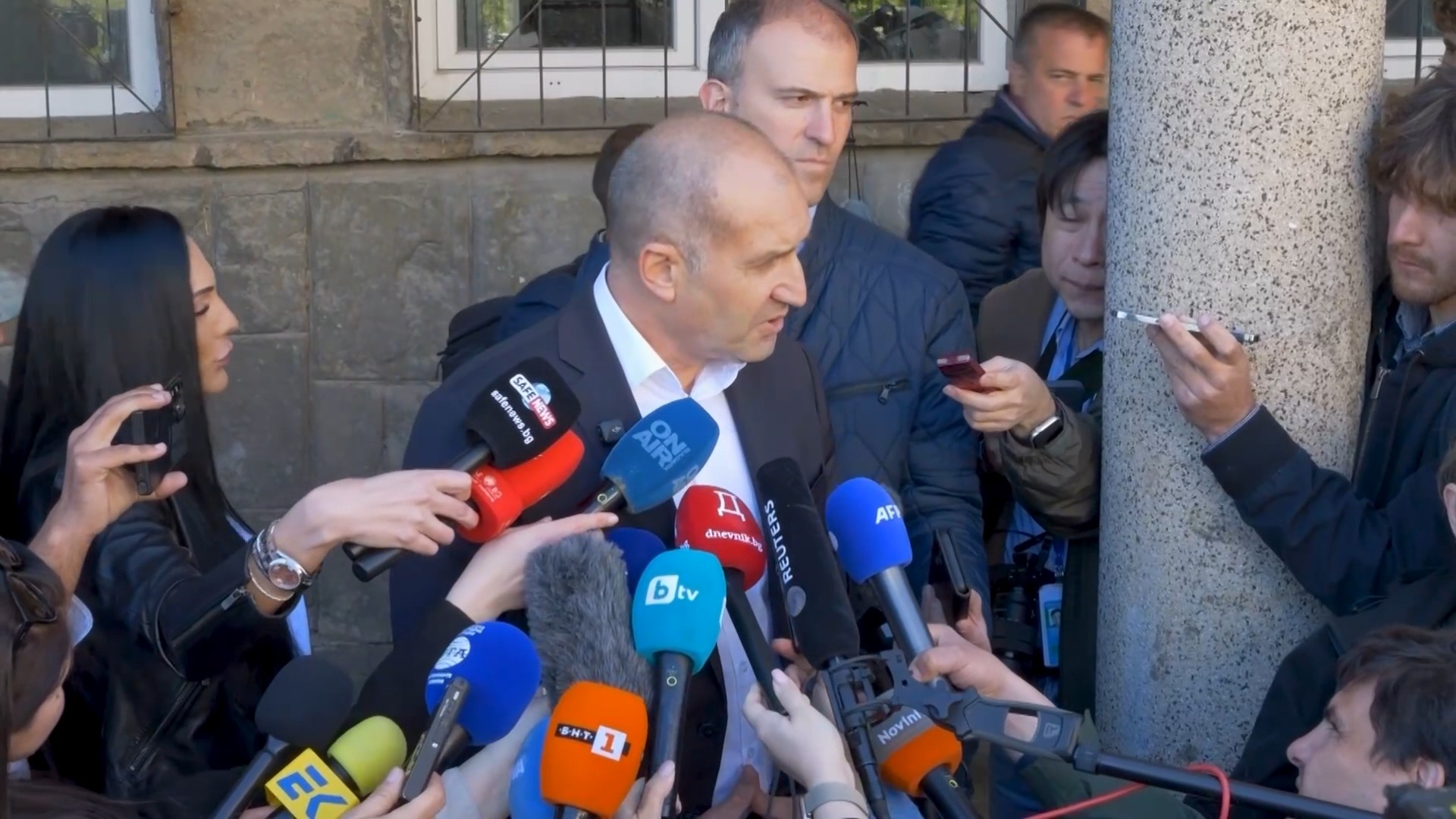
These words resonate not only in Brussels but also in Moscow. Kremlin spokesman Dmitry Peskov noted that while it is too early to speak of a fundamental shift in the broader European climate toward Moscow, certain positive signals are already visible.
Dmitry Peskov said:
“Of course, we are encouraged by the words of Mr. Radev, who won the elections, and some other European leaders about their willingness to resolve issues through pragmatic dialogue with Russia. We welcome this. We believe that any contradictions or divergences of interest can and should be resolved only at the negotiating table.”
news.byhttps://s3-minsk.becloud.by/media-assets/news-by/e55a4716-3a81-4caf-96ee-17011c6d2039/conversions/e345cdd0-53c0-4eae-a2b1-7bd8df85891f-sm-___webp_480.webp 480w, https://s3-minsk.becloud.by/media-assets/news-by/e55a4716-3a81-4caf-96ee-17011c6d2039/conversions/e345cdd0-53c0-4eae-a2b1-7bd8df85891f-md-___webp_768.webp 768w, https://s3-minsk.becloud.by/media-assets/news-by/e55a4716-3a81-4caf-96ee-17011c6d2039/conversions/e345cdd0-53c0-4eae-a2b1-7bd8df85891f-lg-___webp_1280.webp 1280w, https://s3-minsk.becloud.by/media-assets/news-by/e55a4716-3a81-4caf-96ee-17011c6d2039/conversions/e345cdd0-53c0-4eae-a2b1-7bd8df85891f-xl-___webp_1920.webp 1920w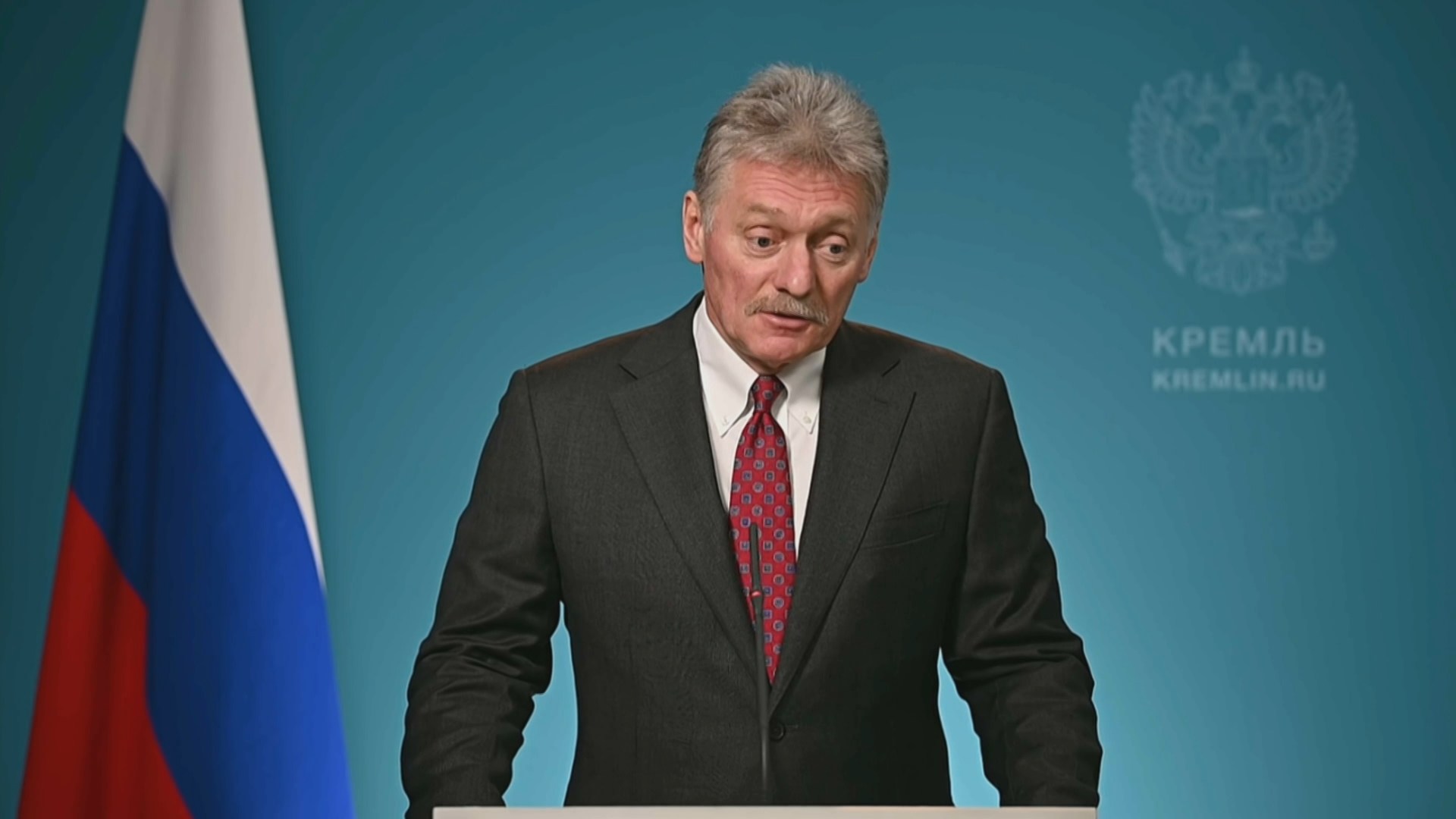
However, analysts argue that Radev’s victory is less about a surge in pro-Russian sentiment across Eastern Europe and more about growing disillusionment with Brussels — whose promises Bulgarians no longer trust. Radev himself is seen as a pragmatist, focused on Bulgaria’s well-being, and this approach resonates with the electorate.
“I hope we will defeat corruption, or at least significantly reduce it,” said a Bulgarian citizen. “I hope our youth will have a better future, and that people finally use their voice more actively in elections.”
So, who is this figure whom Western media already calls “Brussels’ nightmare” and “the Kremlin’s Trojan horse”? Briefly, he’s a retired Major-General and former commander of the Bulgarian Air Force. He served as president from 2017 to 2026. During his tenure, he was a frequent critic of parliamentarians for neglecting citizens’ interests, making him Bulgaria’s most popular politician.
Asya Zuan, Bulgarian journalist, explains:
“His rise in the eyes of Bulgarians began when he took an unprecedented step before the elections: he resigned as president — the first time in modern Bulgarian history. Why? To step out of the largely ceremonial role of head of state because he saw the real situation clearly. He sensed the public’s anxiety. We had powerful protests, but the government ignored us. There’s also unprecedented censorship. It was then that he stood with the people. Many Bulgarians trusted him because, for over 15 years, Bulgaria has been in a deep political crisis. Citizens have lost faith in the authorities and see no true statesmen among them.”
news.byhttps://s3-minsk.becloud.by/media-assets/news-by/ac188c96-2e77-48dd-a6ee-63f163b649ea/conversions/6def3b93-a585-427a-a695-cf72a98bbaa9-sm-___webp_480.webp 480w, https://s3-minsk.becloud.by/media-assets/news-by/ac188c96-2e77-48dd-a6ee-63f163b649ea/conversions/6def3b93-a585-427a-a695-cf72a98bbaa9-md-___webp_768.webp 768w, https://s3-minsk.becloud.by/media-assets/news-by/ac188c96-2e77-48dd-a6ee-63f163b649ea/conversions/6def3b93-a585-427a-a695-cf72a98bbaa9-lg-___webp_1280.webp 1280w, https://s3-minsk.becloud.by/media-assets/news-by/ac188c96-2e77-48dd-a6ee-63f163b649ea/conversions/6def3b93-a585-427a-a695-cf72a98bbaa9-xl-___webp_1920.webp 1920w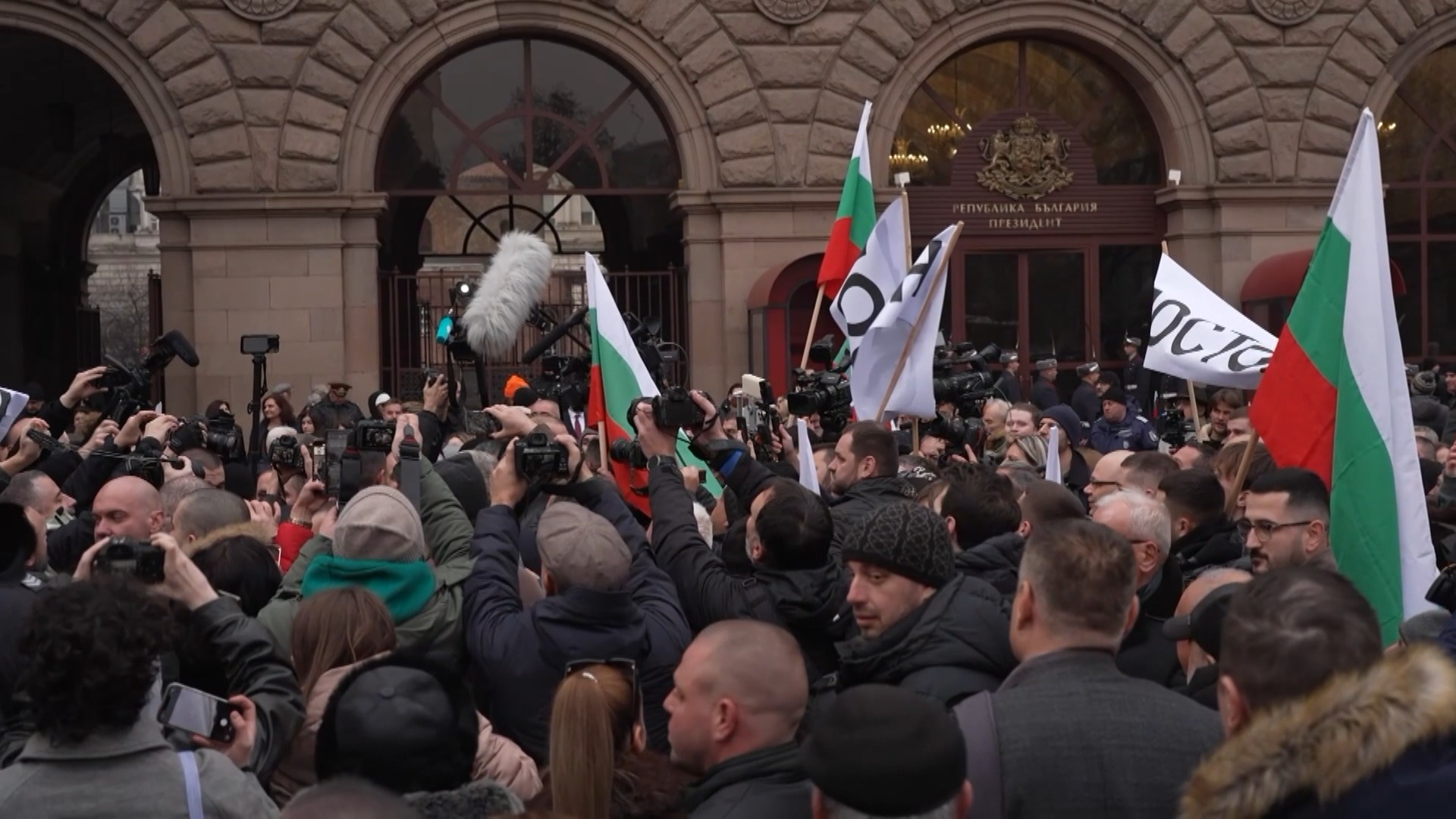
Of course, Radev is unlikely to become a second Orbán — he may lack the political weight and unwavering resolve. While Budapest was ready to forgo funds frozen by Brussels, Sofia cannot afford such risks due to its economic realities. The new prime minister is more akin to Slovakia’s Robert Fico — a voice of reason and reconciliation. Yet, if pushed too far, Radev has options — for instance, restricting arms supplies to Kyiv.
A Bulgarian citizen comments:
“In my opinion, he’s intelligent and level-headed. He won’t seek confrontation. At most, he might block aid to Ukraine to protect Bulgaria’s poor, who struggle to get by — the destitute, those rummaging through trash. We simply can’t afford those huge expenditures. We regret the war in Ukraine, but we are too poor to contribute significantly.”
So, if Radev’s room for maneuver is limited, why the panic in Brussels? Perhaps Brussels has become overly prone to hysteria at the slightest challenge — or maybe the EU is no longer the economic union it once aimed to be. Today, it’s more like a “collective anti-Russia” project, obsessed with the idea of a major war. In this climate, Bulgaria under its new government will find it difficult to maintain neutrality or an “and-our-approach.”
Evelina Slavkova, Bulgarian analyst, notes:
“Radev avoids clear-cut ‘yes’ or ‘no’ positions, seeking balance instead. That may work during campaigns, but governing requires firm, unambiguous answers. In today’s global climate, countries will have to take clear sides.”
Yet, every journey begins with a first step. Bulgaria’s emerging Euroscepticism could forge new alliances and bring it into a united front against Brussels — especially if Viktor Orbán’s successor in Hungary continues his predecessor’s policies.
Across the EU, more countries are questioning whether they want to continue dancing to Ursula von der Leyen’s tune and sponsor Kyiv at their own expense. Slovakia, Czechia, Poland, Greece, and Spain prioritize solving their internal issues and boosting their economies. Most are not genuinely pro-Russian, but in Europe today, the lines are blurred. Brussels prefers to accuse opponents of collusion with Moscow rather than admit its own failures.