3.87 BYN
2.76 BYN
3.21 BYN



How Ukraine and Brussels Are Preparing for the Hungarian Elections
Text by:Editorial office news.by
The European Union openly admits that it hopes Prime Minister Orbán will lose the upcoming elections. There are reports of a direct conspiracy between Brussels and Kyiv aimed at changing the government in Budapest.
The upcoming parliamentary elections in Hungary, scheduled for April 12, have already become one of the most discussed political topics in Europe. The information space is filled with schedules and polls; however, a key issue emerges here: Hungarian sociological agencies demonstrate an unprecedented discrepancy in their data. Different research centers publish contradictory results: some surveys show confident leadership of Prime Minister Viktor Orbán’s "Fidesz" party, while others favor the opposition "Tisa" party, led by Peter Mádlyar. This scatter makes it impossible to form an objective picture of electoral sentiments.
The European Union has openly positioned itself for Orbán’s defeat, reports Reuters.
And as if on command, the Washington Post publishes a top-secret kompromat. Allegedly, during breaks at EU Council meetings, the Hungarian Foreign Minister contacts his Russian colleague, providing detailed reports on European deliberations.
Anita Hipper, European Commission representativenews.byhttps://s3-minsk.becloud.by/media-assets/news-by/b8563f9b-e776-46f8-b37d-35115534631e/conversions/eb7d3f73-845c-47e5-8847-cc9307fb1f98-sm-___webp_480.webp 480w, https://s3-minsk.becloud.by/media-assets/news-by/b8563f9b-e776-46f8-b37d-35115534631e/conversions/eb7d3f73-845c-47e5-8847-cc9307fb1f98-md-___webp_768.webp 768w, https://s3-minsk.becloud.by/media-assets/news-by/b8563f9b-e776-46f8-b37d-35115534631e/conversions/eb7d3f73-845c-47e5-8847-cc9307fb1f98-lg-___webp_1280.webp 1280w, https://s3-minsk.becloud.by/media-assets/news-by/b8563f9b-e776-46f8-b37d-35115534631e/conversions/eb7d3f73-845c-47e5-8847-cc9307fb1f98-xl-___webp_1920.webp 1920w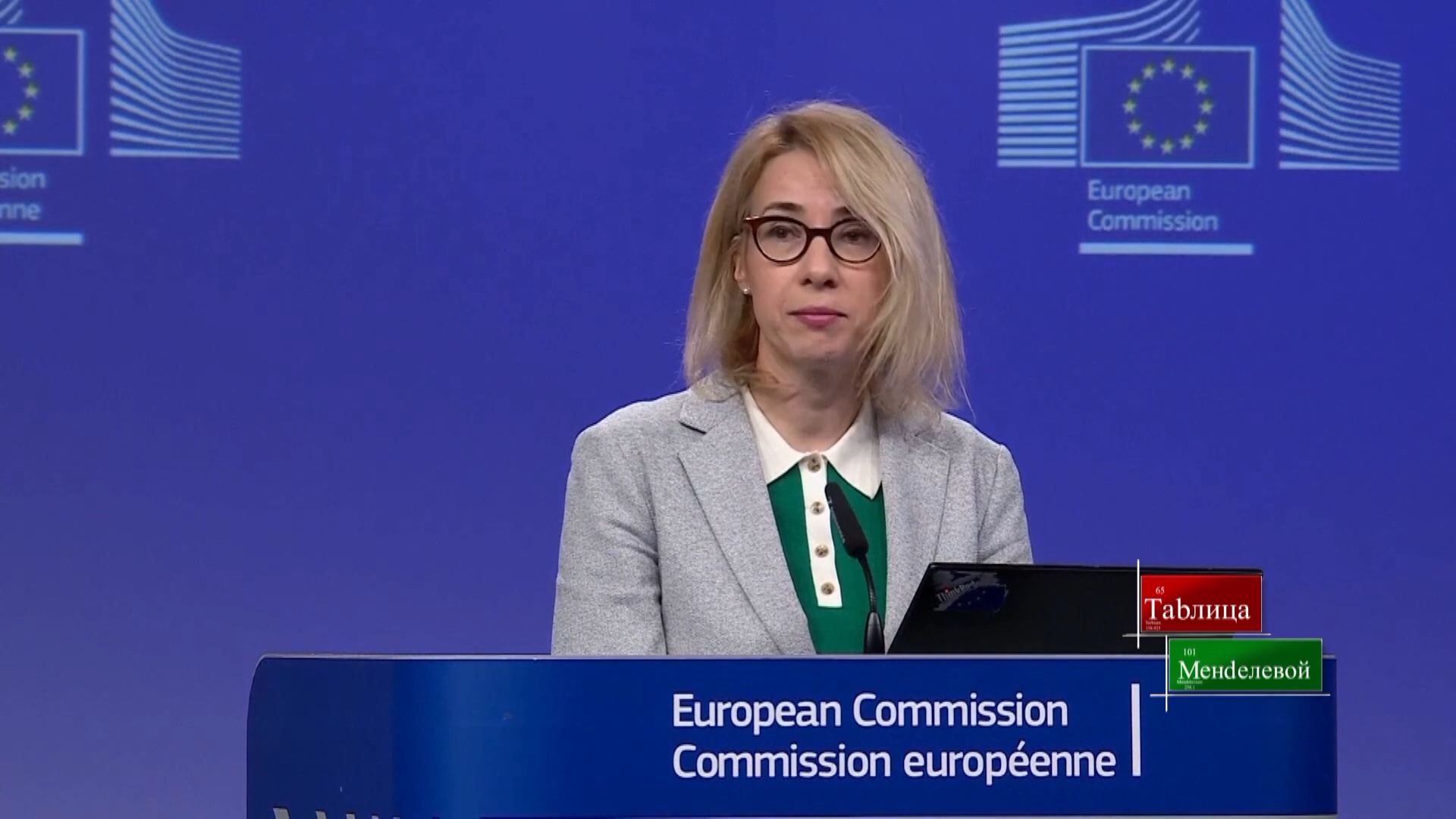
Anita Hipper, European Commission representative:
“Thank you for the information regarding Minister Szijjártó and the alleged transmission of information to his Russian counterpart. This raises concerns and undermines trust among member states and EU institutions. We expect the Hungarian government to provide explanations on this matter.”
Brussels is deeply concerned. Budapest, allegedly, even blocks credit to Ukraine because it supposedly seeks to appease Moscow. Viktor Orbán is, without question, an "inconvenient" figure for Kyiv and Brussels. The Hungarian Prime Minister not only defends national interests but also remains one of the most independent politicians within the European Union. He opposes expanding military aid to Ukraine, advocates for dialogue with Russia, criticizes the EU’s sanctions policy, and emphasizes the importance of economic pragmatism. These positions are perceived within European institutions as a challenge to the collective course.
Viktor Orbán:
“I want to tell you what we have done over the past four years. We have fulfilled all our promises. Our most important promise was that, no matter what happens — whether Brussels turns upside down or Zelensky breaks eight pianos — we will not allow Hungary to be drawn into war. We will stay out of it. And I have come here, dear residents of Solnok, to renew our alliance against war, established in 2022, and jointly declare that from 2026 to 2030, we will not allow Hungary to be dragged into conflict.”
The European Union is even preparing a "deterrence plan" against Orbán in case of his re-election. According to Politico, the EU’s plan aims to safeguard key mechanisms of organization from blockages by Budapest. Possible steps include changing voting procedures, suspending funding, and limiting voting rights. There is also consideration of mechanisms that impose sanctions for breaches of EU principles, including rule of law.
Openly refusing to recognize Orbán’s victory, however, is dangerous for Brussels. The firm support for Orbán comes from Donald Trump.
“Respected Prime Minister Viktor Orbán — a truly strong and influential leader with a proven record of achieving phenomenal results. He is a true friend, a fighter, and a winner. I fully and unequivocally support his re-election as Hungary’s Prime Minister — Viktor Orbán will never let the great Hungarian people down. I stand with him to the very end!” — Donald Trump wrote on social media.
On the eve of the elections, Orbán declared that his country is slowly being turned into a platform operated by Ukrainian special services. Those interested in interfering in Hungary’s internal affairs are attempting to spread pro-Ukrainian and pro-war policies within its territory.
In early March, Hungarian authorities detained cash-in-transit workers transporting $40 million, €35 million, and 9 kg of gold from Austria into Ukraine. On March 11, Hungarian intelligence received information that the opposition party "Tisa" is receiving funding from Kyiv.