3.87 BYN
2.76 BYN
3.21 BYN



Spies, Sabotage and $50 Million in Cash: How Ukraine and Brussels Tried to Topple Viktor Orbán
Text by:Editorial office news.by
Spies, Sabotage and $50 Million in Cash: How Ukraine and Brussels Tried to Topple Viktor Orbánnews.byhttps://s3-minsk.becloud.by/media-assets/news-by/a5996ad1-6666-4f97-a060-bb2448df4ae3/conversions/a326b3eb-1abb-4018-b969-cb4a62ffd32e-sm-___webp_480.webp 480w, https://s3-minsk.becloud.by/media-assets/news-by/a5996ad1-6666-4f97-a060-bb2448df4ae3/conversions/a326b3eb-1abb-4018-b969-cb4a62ffd32e-md-___webp_768.webp 768w, https://s3-minsk.becloud.by/media-assets/news-by/a5996ad1-6666-4f97-a060-bb2448df4ae3/conversions/a326b3eb-1abb-4018-b969-cb4a62ffd32e-lg-___webp_1280.webp 1280w, https://s3-minsk.becloud.by/media-assets/news-by/a5996ad1-6666-4f97-a060-bb2448df4ae3/conversions/a326b3eb-1abb-4018-b969-cb4a62ffd32e-xl-___webp_1920.webp 1920w
The defining political drama of the European spring is reaching its dramatic finale. Hungary’s parliamentary elections have delivered a stark verdict: when it comes to removing a leader they cannot control, Brussels recognizes no red lines.
Digital surveillance, calculated leaks and brazen support for the opposition were merely the opening acts of the pressure campaign faced by Budapest and Prime Minister Viktor Orbán.
Yet the most aggressive role in the saga belongs to Ukraine. Kyiv pulled every lever at its disposal to plunge Hungary into simultaneous political and energy chaos.
From secretly bankrolling pro-Ukrainian challenger Péter Magyar to choking off the Druzhba oil pipeline and allegedly attempting sabotage on the Turkish Stream gas pipeline, the trail of disruption leads straight back to President Volodymyr Zelensky. Whether a change of power in Budapest would actually deliver the rewards Kyiv expects, however, remains a very open question. Washington, for its part, has left no doubt about whom it wants to see in charge.
news.byhttps://s3-minsk.becloud.by/media-assets/news-by/07db2e15-fceb-4a82-b6ae-fbee7a2afa6d/conversions/14ec9838-2669-474a-84ed-12909d1eb97b-sm-___webp_480.webp 480w, https://s3-minsk.becloud.by/media-assets/news-by/07db2e15-fceb-4a82-b6ae-fbee7a2afa6d/conversions/14ec9838-2669-474a-84ed-12909d1eb97b-md-___webp_768.webp 768w, https://s3-minsk.becloud.by/media-assets/news-by/07db2e15-fceb-4a82-b6ae-fbee7a2afa6d/conversions/14ec9838-2669-474a-84ed-12909d1eb97b-lg-___webp_1280.webp 1280w, https://s3-minsk.becloud.by/media-assets/news-by/07db2e15-fceb-4a82-b6ae-fbee7a2afa6d/conversions/14ec9838-2669-474a-84ed-12909d1eb97b-xl-___webp_1920.webp 1920w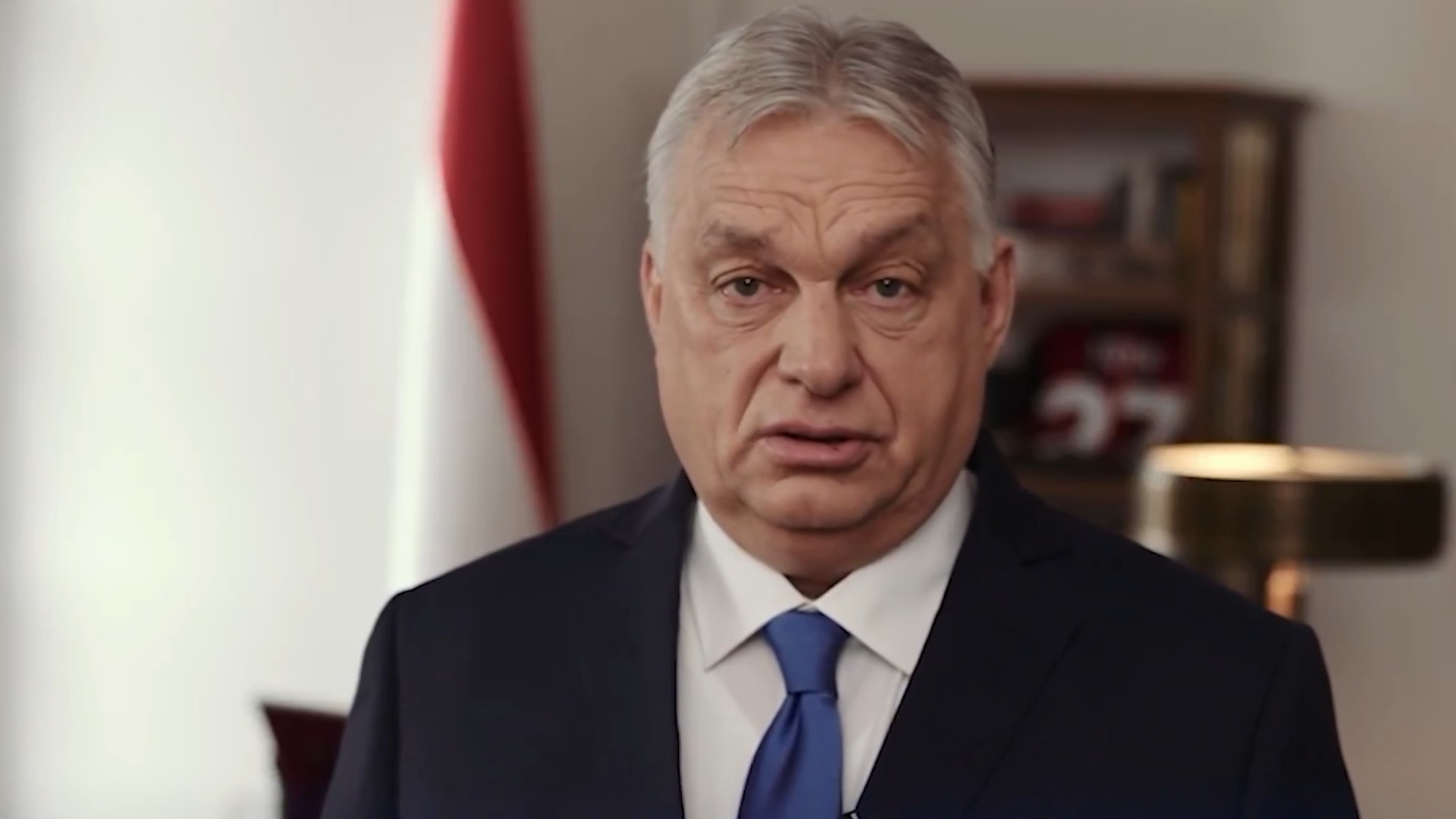
Much has already been written about these elections, yet the battlefield is now crystal clear: on one side stands Orbán’s ruling party; on the other, the opposition rallied behind Péter Magyar — a figure who received lavish backing from across Europe, with Kyiv playing an especially hands-on role.
What began as a routine diplomatic spat between Ukraine and Hungary quickly spiraled into outright political warfare. For months Orbán had steadfastly defended Hungarian national interests regardless of Zelensky’s demands. In retaliation, Kyiv unleashed its signature arsenal — threats, blackmail, sabotage and, ultimately, an alleged attempt to blow up a major gas artery on Serbian soil.
“As election day approached, President Zelensky turned Hungary into an operational zone for Ukrainian intelligence,” Orbán declared. “He activated agents who had long been embedded here. Ukrainian spies and IT specialists are now operating at full throttle. Never before have foreign intelligence services interfered so deeply in Hungarian elections.”
The world already knows about the abrupt shutdown of the Druzhba pipeline. Kyiv, however, did not stop there. In what many saw as a near-repeat of the Nord Stream attacks, Serbian security services intercepted an attempted sabotage on the Turkish Stream pipeline near the Hungarian border. Two backpacks packed with American-made explosives and a detonation device were recovered. While no one has issued a direct accusation, the evidence reportedly points toward Ukrainian operatives.“
This attempted terrorist attack fits into a clear pattern of Ukrainian efforts to disrupt Russian oil and gas deliveries to Europe,” Hungarian Foreign Minister Péter Szijjártó stated. “An attack on our energy security is an attack on our sovereignty. We will defend Hungary, we will defend the energy supply of Hungarian families and our economy. Reliable Russian oil and gas are essential to prevent sharp price spikes.”
news.byhttps://s3-minsk.becloud.by/media-assets/news-by/167393e5-4c12-41fa-8508-92cbc0c7fb8a/conversions/c01ade84-348b-4561-8584-f71159fe7041-sm-___webp_480.webp 480w, https://s3-minsk.becloud.by/media-assets/news-by/167393e5-4c12-41fa-8508-92cbc0c7fb8a/conversions/c01ade84-348b-4561-8584-f71159fe7041-md-___webp_768.webp 768w, https://s3-minsk.becloud.by/media-assets/news-by/167393e5-4c12-41fa-8508-92cbc0c7fb8a/conversions/c01ade84-348b-4561-8584-f71159fe7041-lg-___webp_1280.webp 1280w, https://s3-minsk.becloud.by/media-assets/news-by/167393e5-4c12-41fa-8508-92cbc0c7fb8a/conversions/c01ade84-348b-4561-8584-f71159fe7041-xl-___webp_1920.webp 1920w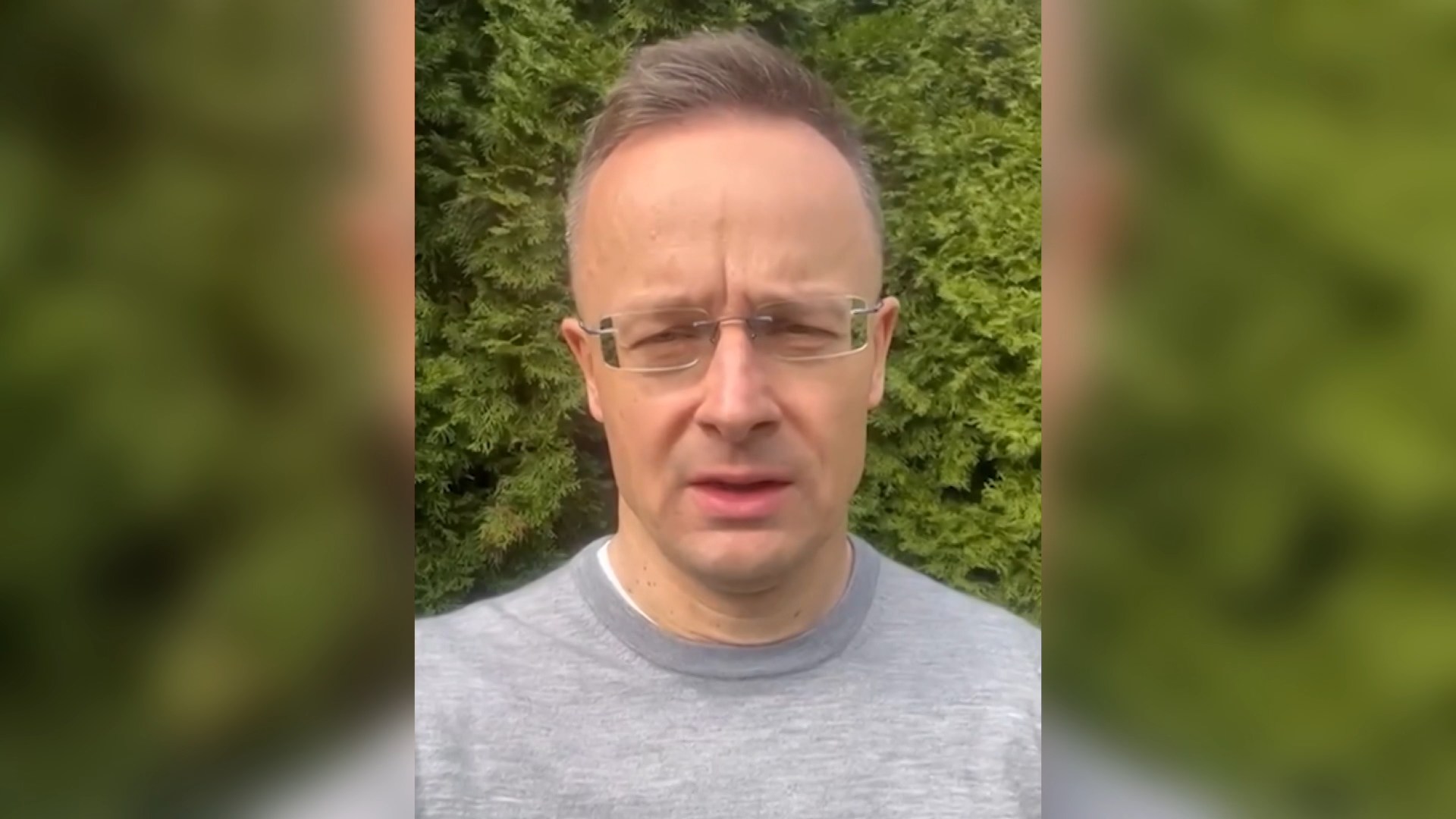
Western media swiftly floated the theory that Orbán, together with Serbia and Russia, had staged the entire incident. The prime minister’s laconic reply: “Don’t forget to throw in the Martians while you’re at it.”
The media offensive did not end there. With apparent assistance from Kyiv and Warsaw, Hungarian outlets began publishing leaked recordings of telephone conversations between Szijjártó and Russian Foreign Minister Sergey Lavrov, followed by a transcript of a call between Vladimir Putin and Viktor Orbán. The goal was unmistakable: to paint Hungary’s government as a Kremlin puppet. Curiously, few voices paused to ask how such sensitive material had been obtained.
Szijjártó described his reaction in one word: shock. “It is shocking that one or more foreign intelligence services were eavesdropping on me with the active assistance of a Hungarian journalist,” he said. “What is truly outrageous is that this journalist belongs to the inner circle of the Tisza Party.”
The opposition’s meteoric rise is a story in its own right. In just a couple of years, Péter Magyar and his Tisza Party have amassed formidable political weight — hardly without generous help from Brussels and Kyiv. According to a former Ukrainian intelligence officer who has since defected to Budapest, Magyar’s camp received roughly $50 million in cash since last November.
“Usually it arrived as €100 bills in vacuum-sealed packs,” the source revealed. “As far as I know, the money came from Italy via Austria, delivered every week in a black Nike bag — about €5 million at a time.”
Yet cash alone was not enough. To guarantee success, the European Union activated an emergency digital censorship mechanism for the duration of the Hungarian campaign — officially to fight “disinformation.” In practice, social media platforms looked the other way while opposition content racked up millions of views, while ruling-party posts faced ruthless moderation.
French politician Florian Philippot did not mince words: “Brussels is a totalitarian plague.”
Nevertheless, the entire operation may prove futile. According to Politico, even a Magyar victory would not hand Brussels the pro-Ukrainian government it craves. The opposition leader has openly rejected arms shipments to Ukraine and its accelerated path into the EU. Like Orbán, he places Budapest’s interests first — though he still sees Hungary firmly anchored within the European value system.
“Reaching a compromise with the EU is an art,” Magyar said. “I want to help simplify decision-making because the world seems to be leaving Europe behind. Europe has lost its competitiveness. It lacks strong leaders and visionary politicians, and it is falling behind in every field. If we do nothing, we will miss even more.
”American interests have also loomed large. Donald Trump has publicly endorsed Orbán, and now Vice President JD Vance has flown in to offer personal support. Vance accused Ukrainian intelligence of attempting to meddle not only in Hungarian but also in American elections. He branded Brussels’ interference “shameful” and described Orbán as one of the few genuine statesmen left in Europe, pledging unconditional U.S. backing. The final word, he stressed, belongs solely to the Hungarian people.