3.84 BYN
2.80 BYN
3.26 BYN



Strategic Significance of Strait of Hormuz for Global Economy
Text by:Editorial office news.by
The global energy markets are bracing for a sharp surge in prices following the de facto halt of vessel traffic through the Strait of Hormuz — where hundreds of oil tankers are currently stranded, some under threat. Today, May futures for Brent crude on the London Exchange surged by 13%, reaching a peak of $82 per barrel. Gold and other vital metals are also rapidly climbing in value.
Here, we explore the profound importance of the Strait of Hormuz for the global economy.
The international markets are trembling. The escalation of conflict has put one of the most critical arteries of the world economy at risk — the Strait of Hormuz. What does this mean for the Gulf countries — the very nations whose wealth has flowed through this strategic waterway for decades? Let’s break it down.
Historically, the Strait of Hormuz has repeatedly become a geopolitical pawn amid regional upheavals. Connecting the Persian Gulf to the Oman Sea and further to the Indian Ocean, it is one of the busiest shipping routes in the world — with 200 to 300 vessels passing daily, sometimes with intervals as short as six minutes during peak hours. This is the heartbeat of global energy supplies.
Oil! Every day, approximately 20-21 million barrels of oil are transported through the strait — roughly one-fifth of the world's total supply.
If Iran decides to block the strait for an extended period, alternative routes simply won’t suffice. While Saudi Arabia and the UAE have pipelines bypassing the strait, their capacities are only able to cover a small fraction of the blocked traffic.
Steve Samarin, U.S. Political Analyst: "Exporters are drawn into the conflict. Oil production will inevitably decline significantly. It’s impossible to extract oil under missile attacks, bombings, or when infrastructure is in flames. Oil production will be severely hampered during such times."
суда в проливеnews.byhttps://s3-minsk.becloud.by/media-assets/news-by/96ccfe1f-c6ab-45e9-8fbb-5742b2d92030/conversions/9cbcba3e-cb48-49a8-96d1-aa163e4e15e2-sm-___webp_480.webp 480w, https://s3-minsk.becloud.by/media-assets/news-by/96ccfe1f-c6ab-45e9-8fbb-5742b2d92030/conversions/9cbcba3e-cb48-49a8-96d1-aa163e4e15e2-md-___webp_768.webp 768w, https://s3-minsk.becloud.by/media-assets/news-by/96ccfe1f-c6ab-45e9-8fbb-5742b2d92030/conversions/9cbcba3e-cb48-49a8-96d1-aa163e4e15e2-lg-___webp_1280.webp 1280w, https://s3-minsk.becloud.by/media-assets/news-by/96ccfe1f-c6ab-45e9-8fbb-5742b2d92030/conversions/9cbcba3e-cb48-49a8-96d1-aa163e4e15e2-xl-___webp_1920.webp 1920w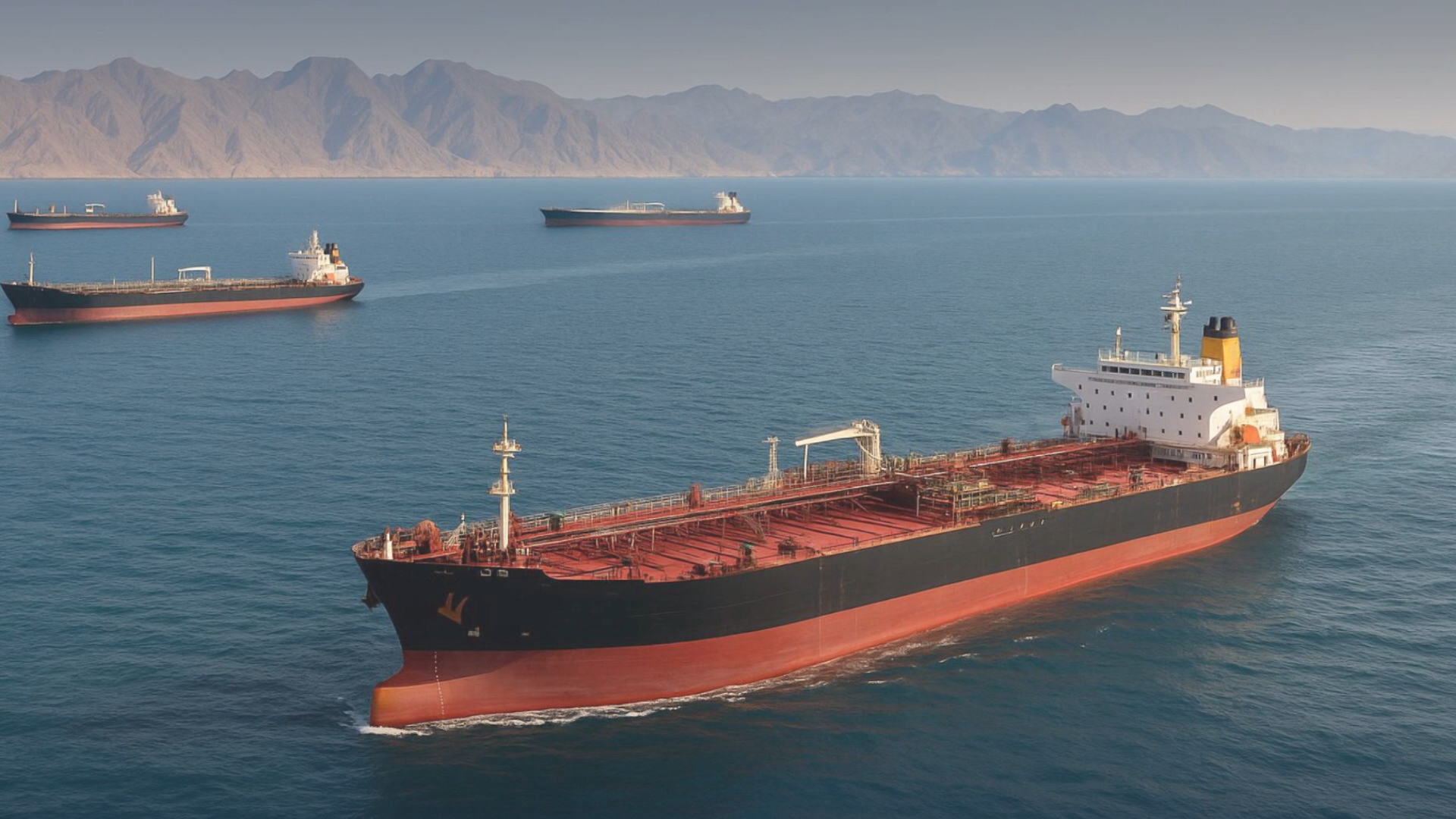
Undoubtedly, any disruptions will immediately impact global markets and prices. Analysts warn that in the worst-case scenario, Brent crude could exceed $100 per barrel — with Iraqi officials even suggesting prices could soar to $200-300.
While forecasts are notoriously uncertain, what do current prospects look like? Oil is only part of the picture. The closure of this key Middle Eastern logistics artery could also severely hinder exports of liquefied natural gas (LNG). About a quarter of the world’s LNG transit goes through the Strait of Hormuz.
Europe’s LNG Imports
In 2025, the EU purchased nearly €4 billion worth of LNG from Gulf countries. Qatar, a leading player, has become a focal point as Europe seeks to replace Russian gas.
Recently, LNG prices in Europe soared above $500 per thousand cubic meters — a spike prompted immediately after Qatar announced halts in LNG exports due to drone attacks on production facilities.
Goldman Sachs estimates that if the strait remains closed for just a month, gas prices in the EU could increase by 130%.
A Critical Transportation Artery
Unexpectedly, the conflict has also impacted the metallurgy sector. The aluminum market is reacting sharply. Major producers are located in Gulf countries, and a blockade would cut them off from their markets. Coupled with sanctions against Russian aluminum and potential supply disruptions from the Middle East, global exchanges are already witnessing rising metal prices.
The market remains highly sensitive to geopolitical developments. Insurance companies are preparing for significant rate hikes for ships entering the Gulf. Increased logistics costs will inevitably affect resource prices — a sort of "stability tax" paid by end consumers.
Yulia Abukhovich, Analyst:"If a tanker costs $100 million, insurance premiums can increase by 1 to 3.5%. This additional cost is passed onto oil prices. It might seem small, but some ships might simply refuse to enter the Strait of Hormuz, which could lead to a shortage of container ships and even require military escort."
Historical experience from June 2025 shows that even the anticipation of the Strait’s closure caused prices to spike — from $70 to $78 per barrel, before quickly falling back after ceasefire agreements.
Currently, traffic through the strait has dwindled to a minimum, and vessel movement is almost halted. The situation remains suspended in uncertainty — traders and shipowners are left awaiting clarity on regional security.
The Strait of Hormuz remains a geopolitical and economic linchpin that, if compromised, could trigger a chain reaction of price hikes, supply shortages, and market instability worldwide.