3.77 BYN
2.82 BYN
3.21 BYN



Belarus' Ministry of Agriculture and Food: Food Exports Reached Record $10 Billion in 2025
Text by:Editorial office news.by
news.byhttps://s3-minsk.becloud.by/media-assets/news-by/0144b8ba-73c6-4a27-9955-dd3372000595/conversions/d9f97624-c923-4090-9748-595badbcfef6-sm-___webp_480.webp 480w, https://s3-minsk.becloud.by/media-assets/news-by/0144b8ba-73c6-4a27-9955-dd3372000595/conversions/d9f97624-c923-4090-9748-595badbcfef6-md-___webp_768.webp 768w, https://s3-minsk.becloud.by/media-assets/news-by/0144b8ba-73c6-4a27-9955-dd3372000595/conversions/d9f97624-c923-4090-9748-595badbcfef6-lg-___webp_1280.webp 1280w, https://s3-minsk.becloud.by/media-assets/news-by/0144b8ba-73c6-4a27-9955-dd3372000595/conversions/d9f97624-c923-4090-9748-595badbcfef6-xl-___webp_1920.webp 1920w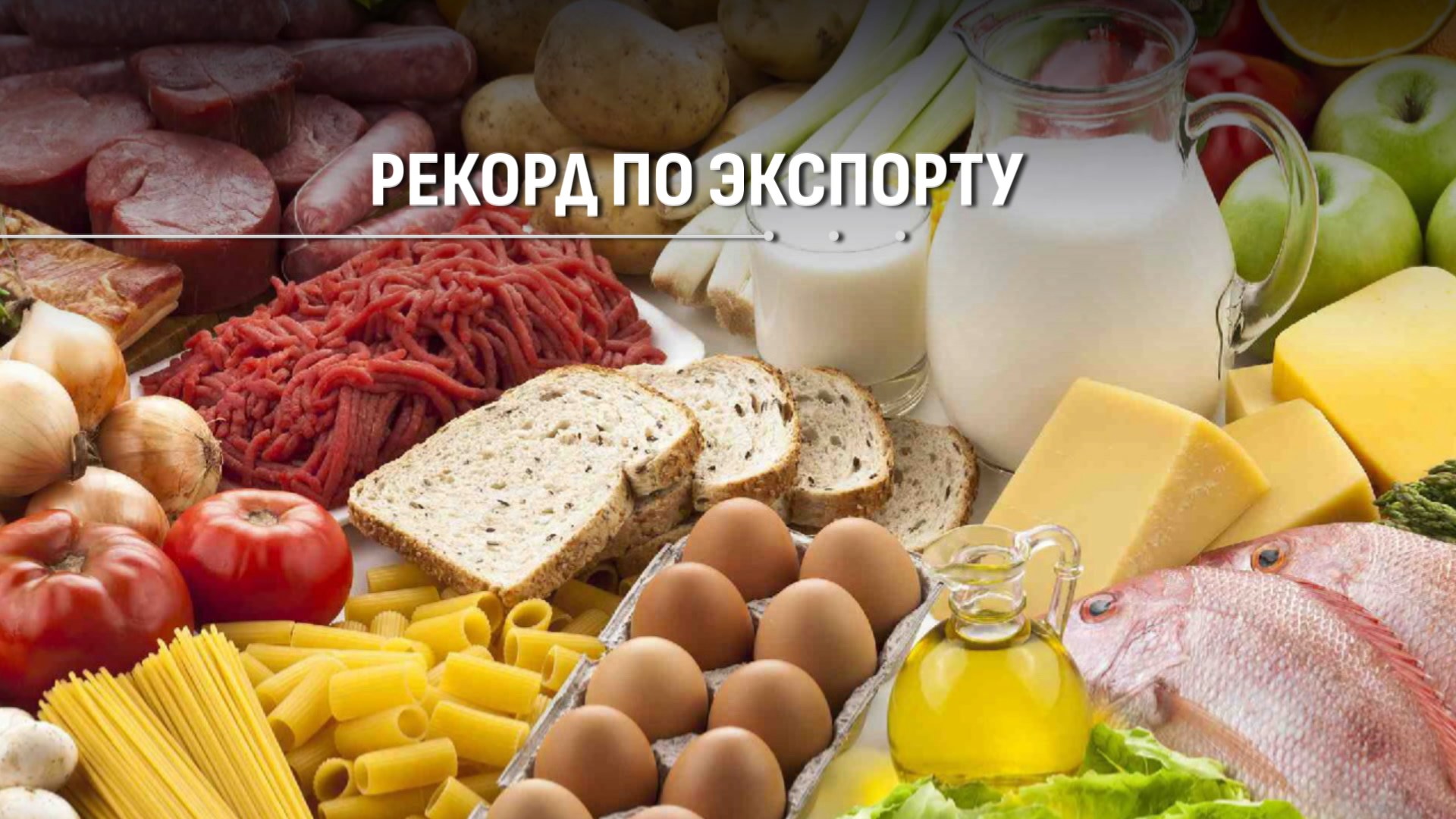
The Belarusian agricultural industry has once again found itself in the spotlight – and this time, the occasion is truly historic. For sovereign Belarus, this is not just a figure, but a symbol of economic resilience and strategic foresight.
The Ministry of Agriculture and Food announced that by the end of 2025, food and agricultural raw material exports reached a record $10 billion. This is the first time the country has achieved such a high figure, strengthening its status as a reliable and predictable supplier on the global market.
Food products currently account for a quarter of all merchandise exports, making the agricultural sector one of the key drivers of the economy.
The dairy industry, traditionally the flagship of Belarusian exports, maintains its lead with a 40% share. Meat products confidently hold second place with 19%, demonstrating that Belarusian companies have learned to compete not only on price but also on quality and technological advancement. Both industries demonstrate that Belarusian companies are capable of competing globally without compromising on "difficult conditions."
Nikolai Mezhevich, Head of the Center for Belarusian Studies at the Institute of Europe, Russian Academy of Sciences, Doctor of Economics, Professor:
"The sanctions were adopted with a short-term perspective, as if we would impose some sanctions against Russia and Belarus, they would quickly be broken, and we would then move in with our demands. But the opposite happened. Neither Russia nor Belarus broke down; the sanctions regimes have objectively strengthened us overall, but terrible things are happening in the European economy. I'm not even talking about Lithuania right now—sorry, overtaking the Lithuanian economy is a small achievement. I'm talking about Germany. Germany currently has a phenomenally weak, unbalanced economy. In terms of macroeconomic indicators, the Republic of Belarus looks much better."
Belarusian goods are currently exported to 116 countries worldwide. Their geography is naturally expanding because demand is growing, especially in the CIS, Asia, and other distant countries—where quality is valued over political slogans. And this is where the contrast becomes especially stark.
The EU, by imposing sanctions, expected to hit Belarus, but ended up hitting itself. Rising prices, shortages of certain categories, and logistical chaos—all of this has become a reality on the European market. Belarus, however, used the situation as a springboard: it reoriented exports, strengthened ties with new partners, and accelerated the modernization of its production facilities. While Brussels was drafting yet another round of sanctions, Minsk was signing contracts.
Yulia Abukhovich, economist, analyst, and head of the Axios Educational Center at Giprosvyaz OJSC:
"We understand that we are a relatively open economy, that exports account for a very large share of our economy, and everything we earn from exports is our income. Moreover, we have a huge number of social programs—it is, after all, a socially oriented economy. In order to support these social programs (which also require colossal investments and resources), we also need to earn money for them. Furthermore, the Republic of Belarus has proven itself to be a very reliable, high-quality partner. We build very good relationships with our potential and existing partners. We work rather efficiently within the Union State."
Belarus is a recognized global exporter of dairy products. According to global trade data (excluding intra-EU trade), Belarus consistently ranks among the leaders in key products: condensed milk and whey powder, cheeses, and butter.
Despite Belarus's successes, the European agricultural sector is experiencing far from the best of times. Environmentalists are sounding the alarm: elevated levels of pesticides—sometimes a whole chemical "cocktail"—are being detected in apples from Poland, France, and Italy.
According to experts, over 90% of these apples cannot be used for baby food. This isn't just a warning sign—it's a death knell for a model that prioritizes yield over safety.