3.87 BYN
2.76 BYN
3.20 BYN



Standard of living, birth rate, and uncertainty about future - Baltic States' sore points
Text by:Evgeny Gorin
news.byhttps://s3-minsk.becloud.by/media-assets/news-by/bf5eba7b-9cf5-490f-9366-a05af2b8950a/conversions/c9770cfe-e308-4875-9437-f5e6695cac4a-sm-___webp_480.webp 480w, https://s3-minsk.becloud.by/media-assets/news-by/bf5eba7b-9cf5-490f-9366-a05af2b8950a/conversions/c9770cfe-e308-4875-9437-f5e6695cac4a-md-___webp_768.webp 768w, https://s3-minsk.becloud.by/media-assets/news-by/bf5eba7b-9cf5-490f-9366-a05af2b8950a/conversions/c9770cfe-e308-4875-9437-f5e6695cac4a-lg-___webp_1280.webp 1280w, https://s3-minsk.becloud.by/media-assets/news-by/bf5eba7b-9cf5-490f-9366-a05af2b8950a/conversions/c9770cfe-e308-4875-9437-f5e6695cac4a-xl-___webp_1920.webp 1920w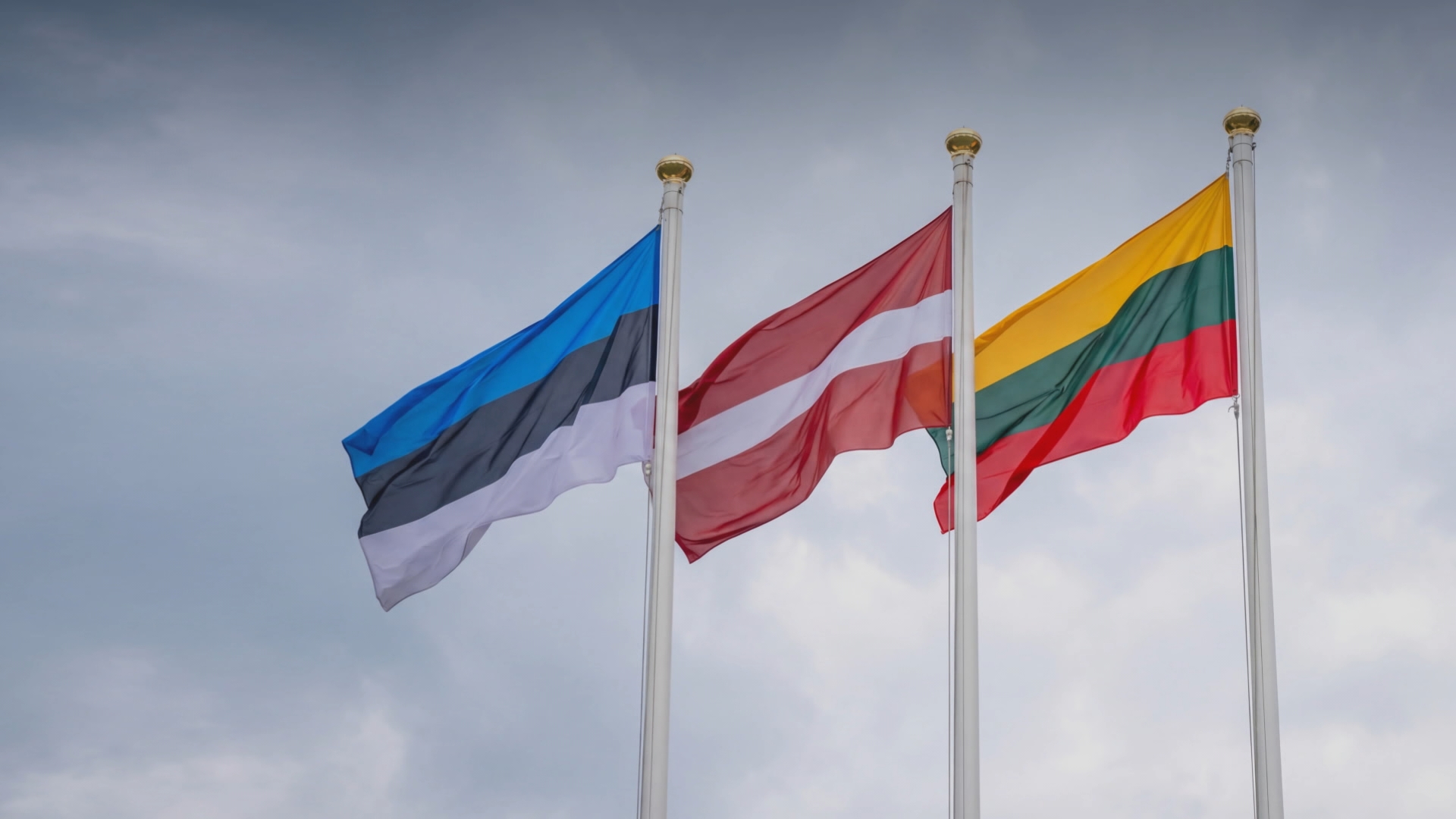
Residents of the Baltics are getting poorer faster than the Titanic is sinking. In Latvia, people already spend more than half of their salary on food – 58%. The remaining 42% goes to utilities. Meanwhile, grocery prices in stores are already higher than the European average. And electricity prices after leaving the BRELL are a whole other story. This winter, in Lithuania, Estonia, and Latvia, there were simply astronomical increases.
What a "European choice!" What "Standards!" Soon, the Baltics will be in an "energy-saving" mode for the stomach. Let's take a look at the news from the region neighboring Belarus.
Lithuania: A Landfill Instead of Life
On April 14, hundreds of people gathered outside the Seimas in Lithuania, shouting, "Hands off our forests!" In Kapčiamystis, authorities have decided to carve out a chunk of nature for a NATO military training ground. Incidentally, it will be located 10 kilometers from the Belarusian border. They'll cut it down, evict the residents, and turn it into a right-of-way. The authorities don't care about public hearings. But you can't argue with the economy. The Seimas has lowered the excise tax on diesel for two months – the price must drop by at least 6 eurocents per liter, lest electricity prices skyrocket due to the Middle East crisis, like they did in the winter. All this is happening against the backdrop of a birth rate that has plummeted to a historic low – one child per woman in 2025. Only about 17,000 babies were born, and twice as many died. Prime Minister Inga Ruginienė admitted: "We've been putting off solving our demographic problems for too long." Madam Prime Minister, you weren't putting it off—you were laying a mine. The UN predicts that by 2100, Lithuania will lose another 25% of its population, dropping to 2.15 million. So that's how it is—a country preparing for war, but is dying at the same time. Forests are being cut down for landfills, and children are not being born.
Inflation in Lithuania is set to accelerate to 5% by 2026. Defense spending is consuming a significant share of GDP. Money that could have gone toward pensions and medicine is being spent on tanks and drones.
Laurynas Ragelskis, blogger (Lithuania):
"People are leaving Lithuania. We've simply created a safety valve for any social discontent. If you go bankrupt here or can't build a business, go West and do business there. And with every crisis, this wave of outflow grows stronger and stronger. And then this affects life in Lithuania, demographic indicators, tax collection, the budget, and so on. Demographics, both in Lithuania and Latvia, are breaking anti-records every year. Now there's an even greater crisis, so more people have left, fewer children have been born. It's an absolute anti-record for all time, dating back to Tsarist Russia."
On April 13, Riga taxi drivers staged a protest against an internet aggregator. The slogan was simply a chant: "Stop milking us." It's spot on! But it's not just businessmen who are milking you. Brussels is milking you. Your own political establishment is milking you. Russophobia, which has become a tax on idiots, is milking you. Taxi drivers are outraged by low fares. But look at the bigger picture: Latvia has the fourth-highest poverty rate in the EU, with almost a quarter of the population living on the poverty line. The taxi drivers simply said out loud what pensioners and farmers whisper: we are feeding a system that is sucking us dry. Latvia and Estonia are trailing behind in the EU. 27% of Latvia's population is socially excluded. This is certified loneliness and poverty. Estonia is in the midst of a scandal: the opposition is furious over the opaque sale of a strategic oil shale reserve to a private company for 30 years. Center Party leader Mihhail Kõlvart puts it bluntly: this is a blow to the country's energy security, a quiet deal, without discussion. Meanwhile, a debate is underway about the border with Russia. The interior minister called a complete closure an "extreme measure" and compared it to "firing blanks." The border isn't currently sealed, but nighttime traffic at the Koidula and Luhamaa border checkpoints is already restricted. Incidentally, the IMF has lowered its 2026 GDP growth forecast for Estonia to 1.4%. Instead of building ties and trade, the Baltics are lowering their Iron Curtain. They're selling off the last of their reserves and preparing for a blockade they're creating.
Everything points to one thing: the Baltic economies are in crisis precisely because they slit their wrists, abandoning normal relations with their neighbors. The brutal rupture hit where it hurts most – the pocketbook, bringing high inflation, industrial decline, and growing inequality.
And Baltic residents are increasingly voting with their feet: they're going to Belarus for normal prices. And increasingly, for a normal life. Visa-free travel works better than any propaganda. People aren't coming for "Kremlin propaganda," but for cheap food and fuel. The authorities may close the border out of mischief, but they can't plug the hole in budgets and stomachs.
In the 1990s, the Baltics wanted to be an outpost of the West, but instead became its impoverished frontline ghetto. Instead of trading with their neighbors, they're building testing grounds. Instead of buying cheap fuel, they're paying for "green energy" and aircraft carriers, which they don't have.