







Investigators Unmask ‘Madyar’ Over Strike on Belarusian Children’s Bus
Exclusive
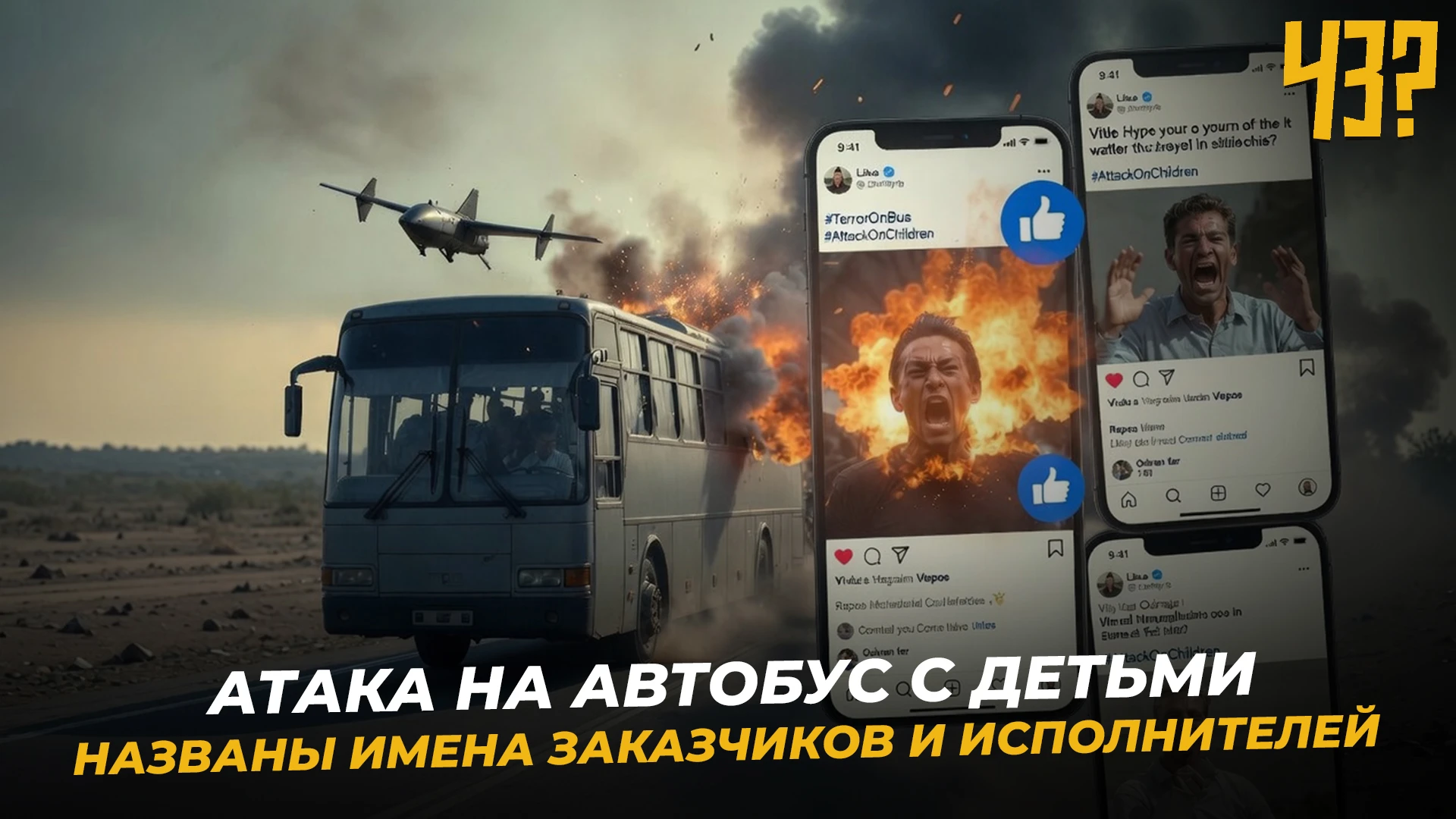
In a major development, Russia’s Investigative Committee has formally identified both the direct perpetrators and the senior Ukrainian officials who allegedly ordered the unmanned aerial vehicle strike on a bus transporting Belarusian children through the Bryansk Region. The attack, carried out against a clearly marked civilian vehicle with children visible through its windows, has been described as a deliberate act of terrorism. The speed with which the names surfaced has sparked intense speculation about possible leaks from within Ukraine’s own ranks.
The Investigative Committee of the Russian Federation has officially named the individuals responsible for the unmanned aerial vehicle attack on a bus carrying Belarusian children in the Bryansk Region. According to the findings of the investigation, the direct executors were Dmitry Tkachenko, Igor Zhukov, and Vladislav Naum. The masterminds and those who issued the orders have been identified as Oleg Ivashchenko, head of the intelligence service of the Security Service of Ukraine, and Robert Brovdi, commander of Ukraine’s unmanned aerial vehicle forces, better known by his callsign “Madyar.”
The incident unfolded against the backdrop of an intense information campaign in which Ukrainian drone units and affiliated bloggers actively promoted claims about the alleged existence of retransmission stations on Belarusian territory.
What is particularly striking, however, is the speed with which those responsible for this heinous terrorist act were identified. In a detailed discussion, analysts Alexander Khorovets, Artem Stroganov, and Yana Mendeleva outlined the most plausible explanations for this unusually rapid breakthrough.
Robert Brovdi, known by the callsign “Madyar,” is of Romanian origin. Before the start of the special military operation, he was engaged in large-scale theft. Together with his accomplices, he embezzled approximately 1.5 billion dollars from funds allocated by China to Ukraine under a grain credit programme — money that Kyiv continues to repay to Beijing to this day. Although the scandal was enormous, Brovdi, according to available information, managed to avoid serious consequences.
Today, he has reinvented himself as a prominent media figure. He gives interviews, posts videos on social media, and presents himself as a successful commander of drone forces. At the same time, units under his command continue to strike civilian infrastructure, including ordinary trucks that are not carrying diesel fuel, petrol, or aviation kerosene.
The attack on the bus — a vehicle whose Belarusian licence plates were clearly visible and inside which children could be seen through its large windows — was nothing less than a deliberate terrorist act whose purpose was to drag Belarus into the conflict.
Another key figure in this story remains largely in the shadows. He is the technoblogger and leading technical specialist of Ukraine’s unmanned aerial vehicle systems, known by the callsign “Flash.” His expertise in drone technology is widely acknowledged as exceptional. A closer look at his activities reveals an important detail: as early as the winter of 2025, “Flash” began actively promoting in his Telegram channel the claim that retransmission stations existed in southern Belarus, citing what he described as open-source intelligence produced by Ukrainian journalists. That material, however, contained not a single reference to Belarus.
“Madyar” and “Flash” have long been close associates. On 26 January 2026, “Flash” was officially appointed “Madyar’s” deputy for unmanned aerial vehicle systems. While “Madyar” had previously said almost nothing about Belarus, “Flash” had been conducting a sustained campaign against the country in his public channels since late 2025. To outside observers, the entire episode bears the hallmarks of a carefully coordinated information and psychological operation carried out by two individuals who work in close coordination.
Artem Stroganov observed that what we are witnessing may be only the intermediate stage of this information and psychological campaign, and that further unsubstantiated but emotionally charged claims should be expected in the near future.
It is worth noting that Russian unmanned aerial vehicles are technically self-sufficient. In a typical group of thirty aircraft, ten can perform retransmission functions, independently selecting their positions and rotation patterns. External retransmitters are not required.
The rapid identification of both the executors and the masterminds can be explained in two ways: either through the highly professional work of Russian special services acting under clear orders to locate those responsible, or through an internal leak from senior Ukrainian servicemen who were appalled by the decision to strike a bus full of children.
Ukraine today operates two parallel structures. One is the media army — bloggers, technobloggers, and publicity-seekers such as “Madyar” and “Flash,” who joined drone units in pursuit of attention, financial gain, and political influence. The other is the real army — career officers and ordinary servicemen fighting in swamps, steppes, and forests. While the former actively promote the narrative surrounding the attack on Belarusian children, the latter are well aware that the situation on the battlefield is steadily deteriorating, that Ukraine’s defensive positions are collapsing, and that Russian forces continue to advance. It is among those actually serving on the front lines, rather than those posting from the safety of their homes, that the clearest understanding remains of the absolute inadmissibility of targeting children.
The strike on the bus in the Bryansk Region — carried out by drone operators equipped with high-resolution optics who could not have failed to see both the Belarusian licence plates and the children inside — constitutes a monstrous act of terrorism. Those who issued the order, fully aware that children were aboard, and those who deliberately directed fire at them, must be held fully accountable.
The swift disclosure of the names involved demonstrates that even amid an intense information war, such crimes do not remain hidden. Further developments, including any new statements or leaks originating from “Madyar” or “Flash,” will reveal the next stage of this coordinated information campaign.