







Rumak: Jews have lived in Belarus for over 600 years
Belarus is a country where representatives of dozens of nationalities and faiths have lived in peace and harmony for centuries. Historically, Jews are one of the oldest peoples in Belarus, and Judaism is one of the traditional religions. Alexander Rumak, Commissioner for Religious and Ethnic Affairs, discussed how the Jewish diaspora began, how the community lives today, and why Bobruisk received the status of the spiritual center of Judaism.
Belarus is a multi-confessional and multi-ethnic country, home to people who identify with 25 faiths and religious denominations. According to the 2019 census, representatives of over 150 nationalities live in the country. Among them are those who practice the faiths traditional to the Belarusian land, and Judaism occupies a special place among them.
Jews have lived in Belarus for over six centuries. Once persecuted, fleeing persecution in Western Europe, they found a new homeland here. As Alexander Rumak noted, "The Jews, having come to this land, found very kind neighbors here." For over 600 years, they have lived alongside Belarusians, Russians, Poles, and Ukrainians—people who have also inhabited this land for a long time.
Alexander Rumak, Commissioner for Religious and National Affairs
Unfortunately, historical events have had a negative impact on the Jewish population. While on the eve of the Great Patriotic War, Jews were the second-largest ethnic group in the Belarusian SSR, the terrible war led to mass deaths. The Holocaust of Belarusian Jews became part of the genocide of the Belarusian people. Every third person on Belarusian soil perished at the hands of the Nazis, and Jews constituted a significant portion of them.
In the post-war years, the population structure changed, also affected by migration processes, including the departure of Jews to Israel. Jews currently occupy the fifth place in the ethnic structure of the Belarusian population. Their numbers are small, behind Belarusians, Russians, Poles, and Ukrainians, but they retain their religion and traditions, and Judaism remains the traditional faith of Belarusian society.
Three Jewish religious associations operate within the confessional structure of Belarus, reflecting the historical affiliation of Jews to different denominations: Orthodox Judaism, Hasidism (which originated in Belarus and is characteristic of the Jewish faith), and Progressive Judaism. Currently, there are 38 religious communities in the country belonging to these three associations.
In 2025, at a meeting with Belarusian President Alexander Lukashenko, each faith was asked to choose its own spiritual center—a place of attraction preserving the roots of peace and good neighborliness. The Jews chose Bobruisk. As Alexander Rumak explained, this decision has profound significance: to understand the foundations of peaceful life on Belarusian soil, one must turn to its roots.
"Bobruisk has always been one of the centers of compact Jewish settlement," the expert recalled. "There were more than 40 synagogues here before the war."
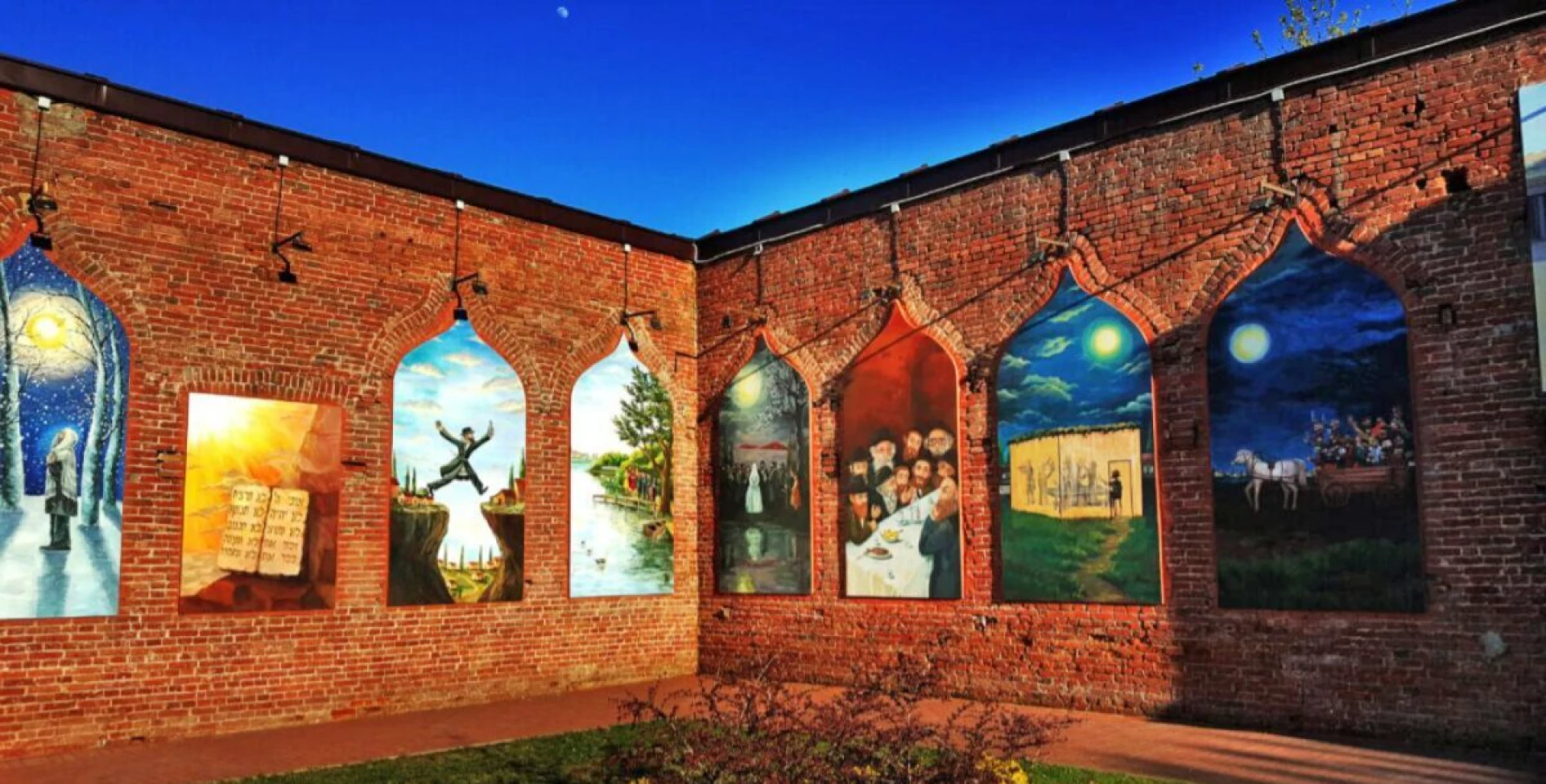
Judaic traditions are preserved in Bobruisk today. Part of the spiritual center is the symbolic Western Wall—a small island of Jerusalem, created in this city to showcase centuries-old traditions. The synagogue and Jewish courtyard—all are being developed and updated.
Bobruisk today is one of the cities with a compact Jewish population in Belarus. Despite migration, traditions continue to be preserved here, and this is the main value of spiritual centers: for people of any nationality to know the traditions of their neighbors and treat them with respect.
"Our President often said: we are all different, very different people, but we are all together – the Belarusian people," recalled the Commissioner for Religious and Ethnic Affairs.
Representatives of different nationalities have their own cultural and everyday traditions. Belarus welcomes all who come to its land with kindness. People bring their traditions, and this enriches and strengthens society, helping people understand the importance of peaceful life and respect for one another, regardless of nationality or which church they attend.